Waste processing facilities in Coimbatore overloaded, excess waste openly dumped
The Hindu
Coimbatore's MCCs and MRFs struggle with overcapacity, non-functional machinery, and improper waste management, leading to open dumping issues.
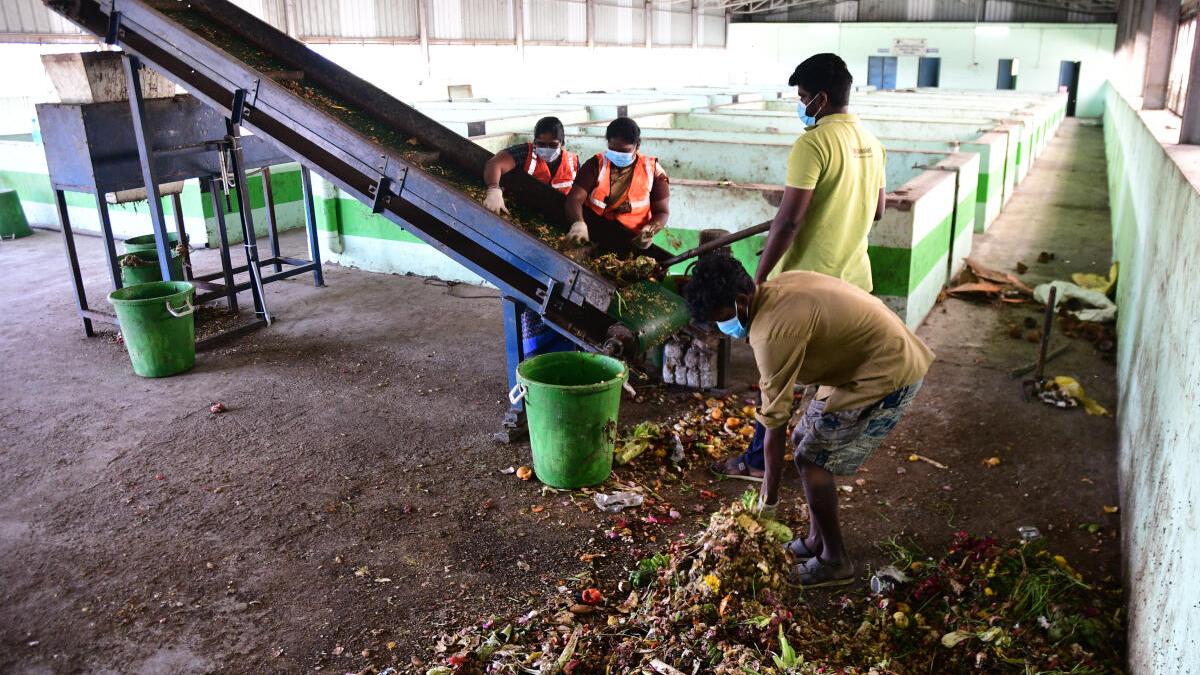
Coimbatore city’s micro composting centres (MCCs), designed to process wet waste, and material recovery facilities (MRFs), meant for handling dry waste, are reportedly failing to meet their intended purpose. Overcapacity, non-functional machinery, and improper waste management have left both systems struggling to cope with the load.
According to Coimbatore Corporation records, the city has 21 MCCs and eight MRFs with processing capacities of two to five tonnes per day. Many MCCs are reportedly handling waste volumes well beyond their designated capacities, further exacerbating inefficiencies.
For instance, the MCC at Chokkampudur processes an average of 8 tonnes of waste daily, despite a capacity of 5 tonnes. Workers also claim it takes at least three months to convert waste into manure, contrary to the Corporation’s stated timeline of 45 days.
Eight MCCs are managed by private waste management companies, which also handle bulk waste from gated communities, apartments, and hotels in the city. However, these companies lack dedicated facilities to process the waste they collect and depend on Corporation-run MCCs instead.
These companies collect between 10 and 50 tonnes of bulk waste daily. Despite the maximum capacity of five tonnes per day, some MCCs allegedly process significantly more, with the excess waste often being openly dumped due to non-functional shredding machines and dewatering equipment.
K.S. Mohan, secretary of the Kurichi-Vellalore Pollution Prevention Action Committee, alleged, “On an average, 150 tonnes of bulk waste is generated in the city daily. The eight private companies fail to process this properly. With MCCs and MRFs handling only a maximum of five tonnes each, the excess waste is openly dumped in the dump yard, vacant plots, or quarries. Of the eight companies, one does not even have MCC or MRF facilities and resorts to open dumping.”
There is also a shift towards converting MCCs into MRFs for profitability. At these MRFs, waste is segregated into recyclable and non-recyclable materials, with recyclable plastics sold for profit. This focus on recyclables often leaves non-recyclable waste improperly managed, either sent to cement factories or openly dumped.


Supreme Court quashes copyright case against filmmaker Sujoy Ghosh over 'Kahaani 2,' overturning previous court rulings.

G. Sudhakaran announces his campaign against Minister R. Prasad in Cherthala, citing unwarranted remarks and party value erosion.

Union Minister Jayant Chaudhary received a death threat from an unknown caller, leading to a police investigation and security review.

Villivakkam faces civic challenges despite infrastructure improvements, with residents demanding better healthcare, transport, and green spaces ahead of elections.

Explore the struggles of Konaseema women lured by Gulf job promises, facing exploitation and seeking safe repatriation.

CM Stalin accuses the Opposition in Tamil Nadu of being controlled by Delhi, stressing the need for state autonomy in upcoming elections.

BRS legislators protest Telangana's unfulfilled Congress promises before the 2026-27 budget presentation, demanding accountability for the Six Guarantees.

Join the Irular community in Mamallapuram to celebrate Masi Magam, reconnecting with their culture and traditions on the seashore.

Women in India face stigma, delayed diagnosis, financial barriers, and discrimination throughout their tuberculosis journey.

CPI(M) leader in Kerala faces charges for alleged sexual relations under false marriage promise, leading to woman's suicide attempt.

Chennai-based Harry MacLure has started a petition to help take his latest film, Calcutta, I’m Sorry, showcasing the talent of the Anglo-Indian community to a global audience

Legendary director Mani Ratnam is teaming up with Vijay Sethupathi and Sai Pallavi for his next film. The movie is produced by the filmmaker’s own Madras Talkies and Lyca Productions

Humayun Kabir claims a Muslim Chief Minister or Deputy CM is possible in West Bengal's upcoming elections, shaping political dynamics.