Washington Post: Justice Department to pursue Trump prosecutions past the election, even if he wins
CNN
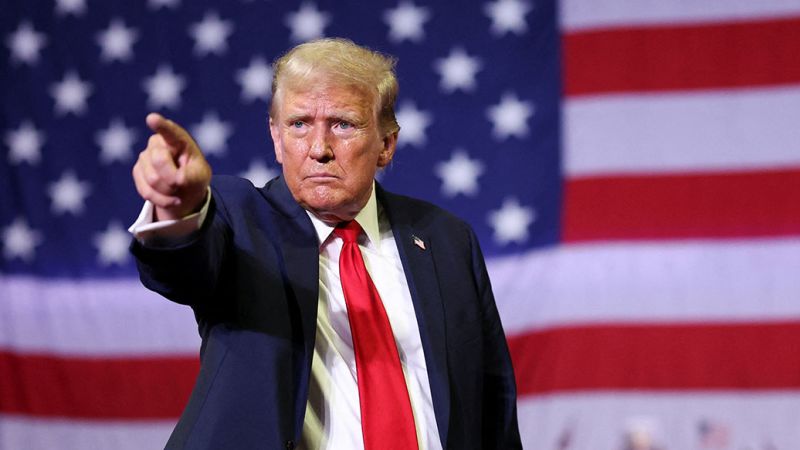
Justice Department officials will continue to pursue the federal criminal cases against Donald Trump past Election Day, even if he wins, The Washington Post reported Tuesday.
Justice Department officials will continue to pursue the federal criminal cases against Donald Trump past Election Day, even if he wins, The Washington Post reported Tuesday. The plan is due to a view that DOJ rules against charging or prosecuting a sitting president would not kick in until Inauguration Day in January, people familiar with the discussions told The Post. The Washington Post’s reporting comes a day after the Supreme Court ruled that Trump may claim immunity from criminal prosecution for some of the actions he took at the end of his presidency. The court’s decision is likely to further delay a trial on the federal election subversion charges brought by special counsel Jack Smith, leaving Trump poised to avoid pre-election trials in the most significant criminal prosecutions he faces after being found guilty in his hush money trial in May. (His sentencing in that trial has been postponed until September in the wake of the court’s ruling.) Officials who were not part of the special counsel’s deliberations told CNN they believed the long-standing DOJ policy against criminally charging a sitting president does not extend to a president-elect. The department policy applies to a “sitting president,” the officials told CNN – so even if Trump were to win reelection in November, he could still stand trial before he was inaugurated in January 2025.


Markwayne Mullin will serve as Donald Trump’s next Department of Homeland Security secretary, elevating the US senator to helm the agency at the center of the president’s controversial immigration enforcement effort and an ongoing shutdown.

President Donald Trump’s sudden turnabout and, according to him, rapidly advancing peace talks made for an abrupt shift in the administration’s approach to the Iran war.

The Supreme Court’s conservative majority appeared dubious of state laws that allow the counting of mail ballots that arrive at election offices after Election Day as justices heard oral arguments in a challenge to Mississippi’s five-day grace period for mail ballots.

The chief district judge in New Jersey appointed Robert Frazer, a career prosecutor, to serve as US attorney for the state, ending for now a dispute over the legality of the office’s leadership that threatened to derail criminal investigations.

Tens of thousands of taxpayer dollars were spent on expenses for hair and makeup artists and a horse for the advertisement showcasing outgoing Department of Homeland Security Secretary Kristi Noem in front of Mount Rushmore, according to invoices seen by CNN.

President Donald Trump was presented Sunday with a potential off-ramp to the more than month-long Department of Homeland Security shutdown: fund every part of the department except enforcement operations by Immigration and Customs Enforcement, two sources familiar with the conversations told CNN.

Immigration and Customs Enforcement agents are heading to 13 airports today to help with crowd management as travelers at some airports wait in hours-long security lines amid the DHS shutdown. Follow here for the latest.

A consortium of the nation’s top architectural and historic preservation groups is targeting President Donald Trump’s plans to temporarily close and extensively renovate the Kennedy Center, filing a new lawsuit Monday that asks a federal judge to indefinitely halt the project.

ICE agents sent to airports as TSA callouts remain high; separately, two people have died after a plane collided with a fire truck at New York’s second biggest airport. Follow for live updates

Mike Pence used to dream of following two successful Donald Trump terms with his own turn in the White House.

An Air Canada plane was damaged after colliding with a vehicle on a runway at New York’s LaGuardia Airport Monday, according to video from the scene and air traffic control audio.

A statue of Christopher Columbus has been erected outside of an ornate federal office building on the White House grounds — the latest sign of the Trump administration’s efforts to reshape cultural and historical representations across the nation’s capital.

Kentucky Gov. Andy Beshear, speaking in JD Vance’s home state of Ohio on Saturday, tore into the vice president, questioning his Appalachian roots and telling voters they “deserve better.”