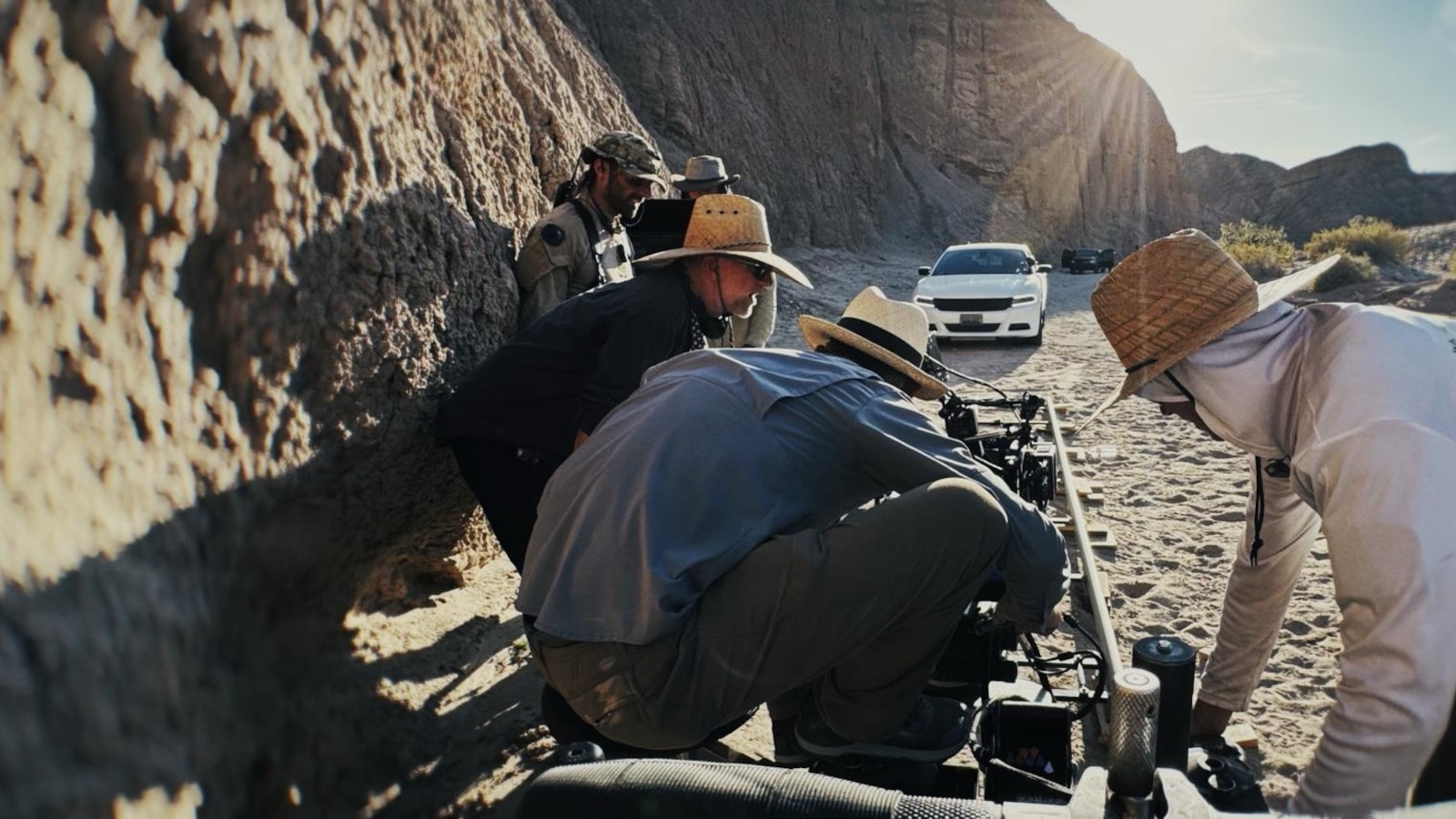
VistaVision, a vintage format left for dead, is revived in 'One Battle After Another' and more
ABC News
VistaVision, the large-scale film format used largely in the 1950s, is enjoying a big-screen revival
NEW YORK -- When Paul Thomas Anderson told his cinematographer Michael Bauman that he wanted to shoot “One Battle After Another” on VistaVision — a large-scale film format born in the 1950s — he had some questions.
“Question one was: Is this even going to be reliable?” Bauman recalls.
For much of the past 60 years, the few remaining VistaVision cameras have been mostly collecting dust on shelves. Though the format was widely used in the 1950s, when Alfred Hitchcock shot “Vertigo” on it and Cecil B. DeMille used it for “The Ten Commandments,” VistaVision went dormant by the early 1960s.
Yet at the March 15 Academy Awards, a movie made largely with decades-old antique cameras is poised to win best picture. Even in 2026, when most films are shot digitally and AI has begun filtering into moviemaking, “One Battle After Another” has — with film equipment borrowed from collectors and museums — showed that a vintage, analog film system can still astonish moviegoers.
“One Battle After Another” presented a major new test for an old format. A sprawling American epic filmed largely in dusty, rural locations, Bauman estimates it meant running 1.5 million feet of film through antique cameras.


The Oscars producers are turning this year’s nominated songs into big showpieces that celebrate the films behind them


Florida woman accused of firing gunshots at Rihanna's Los Angeles home has been charged with attempted murder

A Florida woman is expected to appear in court after police say she fired shots at Rihanna’s Los Angeles home while people were inside

Gustavo Dudamel starts a new era as music director of the New York Philharmonic in September, and he wants it to feel bold and modern

The winner of last year's Iditarod Trail Sled Dog Race in Alaska says he's feeling intense pressure to repeat as champion

Tommy DeCarlo, who sang with the band Boston for nearly 20 years after posting a Myspace tribute to the band’s original singer, has died at 60

A deep and wide-ranging biography of former Defense Secretary Robert McNamara has won a $50,000 prize

Simon & Schuster has named a former Amazon

Family, friends and fans are gathering for the funeral of urban salsa music pioneer Willie Colón

“Country” Joe McDonald, a hippie rock star of the 1960s whose “I-Feel-Like-I’m-Fixin’-To-Die Rag” was a four-lettered rebuke to the Vietnam War that became an anthem for protesters and a highlight of the Woodstock music festival, died Sunday at 84

Madonna has answered the call of a Spanish soccer club that was seeking a long-lost jersey worn by the pop icon over three decades ago

Andris Nelsons is leaving as music director of the Boston Symphony Orchestra after the board decides not to renew him