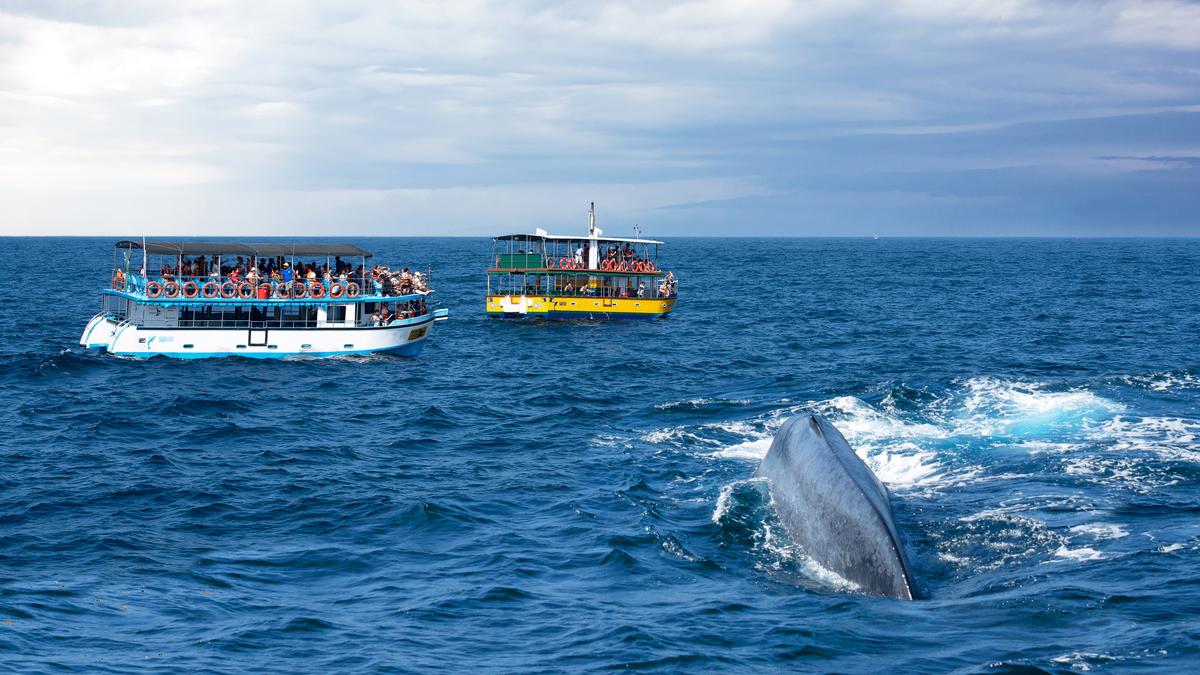
Visit Sri Lanka’s southern coast between November and April to spot blue whales and dolphins
The Hindu
Weligama, Mirissa and Galle, towns on Sri Lanka’s southern coast, are a haven for tourism, hosting surfers and marine enthusiasts. Visit them to watch blue whales, swim with turtles and explore coral reefs
For a weekend getaway, Sri Lanka presents a diverse array of experiences, including stunning beaches, lush forests, tea estates, cultural monuments, shopping malls and vibrant streets.
The trio of towns Weligama, Mirissa, and Galle, on the country’s southern coast, offers a blend of experiences that epitomise the island’s diverse allure. Weligama — the name translates to Sandy Village — serves as the perfect introduction to the region’s coastal charm.
Located 175 kilometres south of Colombo, a journey through Weligama’s streets reminds you of the rustic charms of early 2000s. Its beaches, fringed with fine golden sand and dotted with rocky mounds, create the ideal canvas for relaxation and fun activities. There are several other smaller beaches located around it like pearls on a necklace, each offering its own unique character. Just a short distance away is Mirissa, with its crescent-shaped beach filled with coconut palms, offering a gateway to marine encounters.
Whale watching in Mirissa, located eight kilometres away from Weligama, offers a poetic maritime experience that provides a rare glimpse into the world of marine giants. You have to leave before dawn at Mirissa Harbour, paying $50 (₹4,400) per head for a group tour, to witness blue whales in their natural habitat. Travelling up to 12 nautical miles into the sea, boats search for a glimpse of these gentle giants, who often come to the surface during their quest for food. During the nearly six-hour boat cruise, you can encounter numerous dolphins swimming at an arm’s length from the boats.
Once a blue whale is sighted, boats go as close as 50 feet and turn their engines off while you watch the gigantic creature emerge from the depths of the ocean, their massive forms breaking the surface of water with a quiet majesty. The peak season for whale watching runs from November to April, with highest chances of sighting occurring between January and March.
Chandi Lakmal, a tour operator in Weligama, says the tourist season is when they make money for livelihood. “From December to March, I work up to 18 hours a day, as a tour guide. During the off-season, I go out to the sea for fishing, which usually provides me with little money to survive. Most years, we earn enough during the tourist season to comfortably live off the rest of the year. It is hard work, but it pays off,” Lakmal says.
A word of caution: as your adventure takes you into seas bordering international waters, be prepared for rough tides. Those with sensitive stomachs may want to eat only a light snack before departing. Additionally, keep in mind that cellular coverage is non-existent in these territorial waters, so plan your travel accordingly.


Vibha Batra’s latest book, Spotless (Hachette India) is a novel in verse for young adults

In its first edition, the Madras Art Salon spotlights the works of journalist and artist Narayan Lakshman at The Botanical Club, a social space in the British Deputy High Commission, Chennai

Cholesterol enhances melanoma cell invasion by making nuclei squishier, revealing a potential treatment target in cancer progression.

The designers reinterpret the Swedish artist’s symbolic forms and colour energy through contemporary resortwear silhouettes

Discover the inspiring legacy of Bibha Chowdhuri, a pioneering woman in physics and a trailblazer in STEM history.

Discover the inspiring legacy of Bibha Chowdhuri, a pioneering woman in physics and a trailblazer in STEM history.

Ashdeen’s Spring 2026 collection features saris inspired by the designer’s Parsi gara archive

Red ochre burials, ritual markings and myths across cultures show that red repeatedly marks liminal thresholds such as puberty, sacrifice and death; anthropologists argue that the colour functions as a technology of collective ritual and value, binding communities through shared symbolic acts

India approves 23 institutions for quantum labs under the National Quantum Mission, aiming to advance quantum technology and research.

India approves 23 institutions for quantum labs under the National Quantum Mission, aiming to advance quantum technology and research.

The Gaza conflict exacerbates environmental damage, emitting millions of tonnes of CO2 and threatening climate stability in West Asia.

Chefs and cookery experts share smart kitchen hacks, hybrid cooking methods and appliance tips to help households reduce LPG use without compromising on food

Discover groundbreaking research on Titan's lakes, bat vaccinations, and the unique aroma of ripening bananas in just one minute.