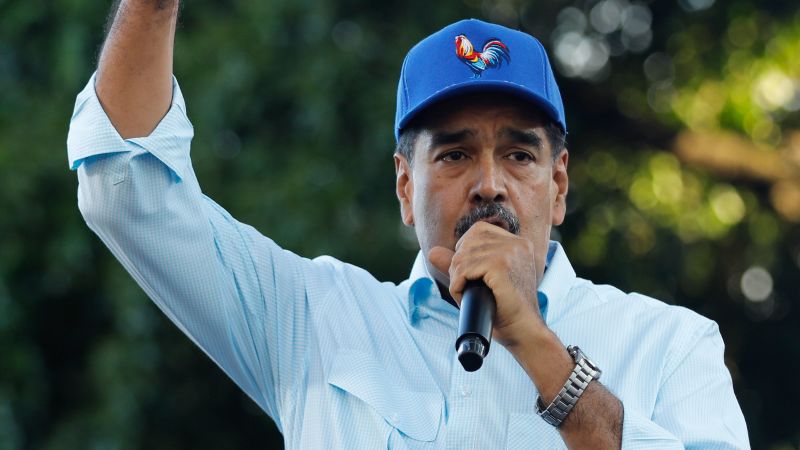
Venezuela’s ‘little commandos’ took on Maduro. Now they may be leading a new wave of migration
CNN
They gathered thousands of voting machine receipts – critical evidence in the opposition’s case that the election was stolen.
They were the self-styled political “commandos” with aspirations of bringing down the authoritarian government of Venezuela’s President Nicolas Maduro. Now, the opposition says, hundreds of its activists and electoral witnesses are fleeing the country amid the fallout from last month’s contested presidential election. CNN spoke to about half a dozen Venezuelans who have fled their country in the past month, some swapping clothes or hiding between bushes on their way to safety. Many migrated illegally, moving at night, and hiding during the day to avoid being stopped at dozens of checkpoints set up by Venezuelan government forces. Others said they were waved past by officers they believed to be sympathetic to the opposition’s cause. Most asked for their interviews to remain anonymous fearing government forces could go after their loved ones if they realized they had left the country. “I left my mom, she’s 84… my husband did the same. My mom told me: ‘Be strong my love, everything will be alright; joy will come back to Venezuela, I’ll be here waiting for you. If I’m not here anymore by the time you come, I’ll know at least you are a free person,’” said one woman, who fled the country with her husband and son. Her transgression in Venezuela? Helping to gather over 1,200 “actas” – the printed voting machine receipts that have become critical to the opposition’s case that the election was stolen by Maduro – the strongman leader who has ruled the country with an iron fist since the death of Hugo Chavez in 2013. Before the July 28 vote, one independent poll predicted that up to a third of Venezuela’s population would consider leaving the country if Maduro were reelected. Speaking to CNN just a few weeks later from Colombia, Ecuador, Chile and the United States, these political dissidents now may represent a new migration wave, as Venezuelans flee renewed repression at home. Viviana Save, an opposition organizer from the Andean state of Trujillo, says the repression began for her well before the election. Speaking to CNN from an undisclosed location outside Venezuela, Save said she had been moving from home to home since July 20 out of fear she’d be arrested by government forces.


A statue of Christopher Columbus has been erected outside of an ornate federal office building on the White House grounds — the latest sign of the Trump administration’s efforts to reshape cultural and historical representations across the nation’s capital.

Kentucky Gov. Andy Beshear, speaking in JD Vance’s home state of Ohio on Saturday, tore into the vice president, questioning his Appalachian roots and telling voters they “deserve better.”

President Donald Trump has said ICE agents will head to US airports tomorrow amid a partial government shutdown. Follow for live updates

Cuba is working to restore the electricity supply after another island-wide blackout left more than 10 million people without power.

President Donald Trump said Sunday border czar Tom Homan will be in charge of deploying Immigration and Customs Enforcement agents to airports on Monday, with Homan telling CNN the agents will help with security at entrances and exits to ease the Transportation Security Administration’s workload.

Donald Trump wants us to believe that a deal with Cuba is close at hand. After this past week, I am not so sure.

President Donald Trump has said ICE agents will head to US airports tomorrow amid a partial government shutdown. Follow for live updates

President Donald Trump said Sunday border czar Tom Homan will be in charge of deploying Immigration and Customs Enforcement agents to airports on Monday, with Homan telling CNN the agents will assist with security at entrances and exits to ease TSA workload amid a partial government shutdown.

Janet Mills and her allies are counting on a gender gap to narrow Platner’s wide lead ahead of the June 9 primary to decide who will face incumbent Republican Sen. Susan Collins. They are betting that the unfiltered style that has brought Platner widespread attention as someone who could help Democrats reach young men will backfire with women.

Why do people “pledge allegiance” to a “state” that is no longer a state? And what spurs someone to not just attack innocent people, but to then make a statement of loyalty while doing so?

A Supreme Court case examining state deadlines for election ballots sent in the mail is just the tip of the spear in President Donald Trump’s war on mail-in voting.

As a shrinking number of Transportation Security Administration agents work to keep hourslong security lines moving despite not being paid, President Donald Trump stepped into the fray Saturday, announcing he will send Immigration and Customs Enforcement officers to airports by Monday if Congress doesn’t agree to a plan to end the partial government shutdown.

Donald Trump wants us to believe that a deal with Cuba is close at hand. After this past week, I am not so sure.