Uzbekistan votes on changes that extend President's tenure, promise human rights reform
The Hindu
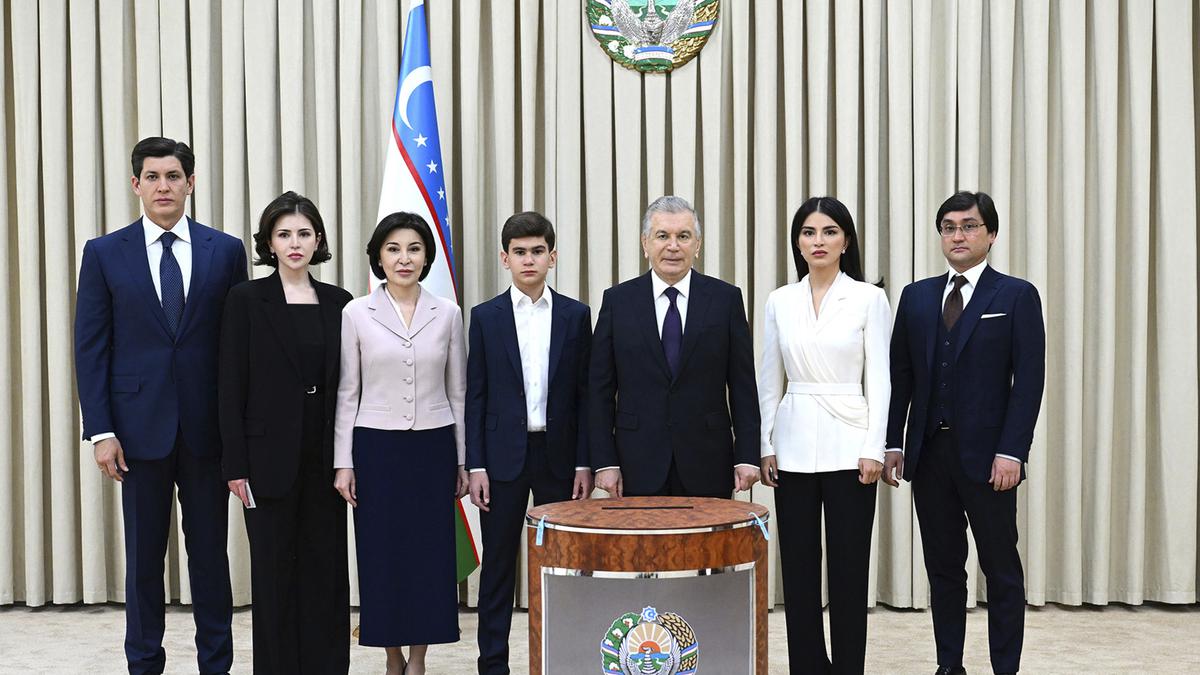
Voters in Uzbekistan, the most populous former Soviet Central Asian republic, cast ballots on April 30 in a referendum on a revised Constitution that promises human rights reforms but that also would allow the country’s President to stay in office until 2040.
Voters in Uzbekistan, the most populous former Soviet Central Asian republic, cast ballots on April 30 in a referendum on a revised Constitution that promises human rights reforms but that also would allow the country's President to stay in office until 2040.
Approval appears certain. Backers have conducted an array of promotional events featuring local celebrities, and elections in Uzbekistan are widely regarded as noncompetitive.
With four hours until the polls closed, the Central elections commission reported turnout at more than 62%, well above the 50% threshold for the referendum to be valid.
The proposed changes include lengthening the presidential term from five to seven years, while retaining the existing two-term limit.
Although President Shavkat Mirziyoyev is in his second term, the change in term length would allow him to run twice more after his current tenure ends in 2026.
Other changes include abolishing capital punishment and boosting legal protections for citizens, including those accused of crimes.
Under Mr. Mirziyoyev's predecessor, Islam Karimov, Uzbekistan was one of the region's most repressive countries.


Saudi Arabia expels Iranian military staff amid escalating tensions and ongoing missile attacks during the U.S.-Israeli war on Iran.

Russia claims control of Potapivka village in Ukraine's Sumy region amid ongoing military efforts to establish a buffer zone.

Iranian missile strikes on Israeli towns cause widespread damage and injuries, marking a significant escalation in the ongoing conflict.

As Gor makes first trip as U.S. Special envoy to South Asia, Delhi watches strategic signals closely
Sergio Gor's inaugural trip as U.S. Special Envoy to South Asia signals strategic U.S. engagement amid regional tensions.

Slovenians vote in a tight election between liberal and populist candidates, impacting the country's future domestic and foreign policies.

Netanyahu asserts U.S.-Israel alliance fights Iranian threats, emphasizing global security after missile strikes on Israeli and European targets.

Israeli settlers attack Palestinian villages in the West Bank, causing injuries and destruction amid ongoing settlement expansion.

Britain asserts no evidence of Iran planning missile strikes on Europe, despite Israeli claims of missile capabilities.

UNESCO reports over half of countries have banned phones in schools due to concerns about attention, cyberbullying, and social media impact.

Analysis reveals a U.S.-operated Patriot missile likely caused a pre-dawn explosion in Bahrain, injuring numerous civilians.

Sri Lanka raises fuel prices by 25% amid ongoing West Asia conflict, impacting petrol and diesel costs significantly.

Iran strikes near Israeli nuclear research center as Trump threatens attacks on Iranian power plants
Iran's missile strikes near Israel's nuclear site escalate tensions as Trump threatens retaliation against Iranian power plants.

Saudi Arabia intercepts one of three ballistic missiles targeting Riyadh amid ongoing regional tensions and threats from Iran.