US, South Korean warship makers sign deal that could help narrow naval race with China
CNN
America’s largest military shipbuilder has signed a deal with a South Korean company that experts say could be a big step in helping the US Navy build new warships to keep pace with rival China in fleet size.
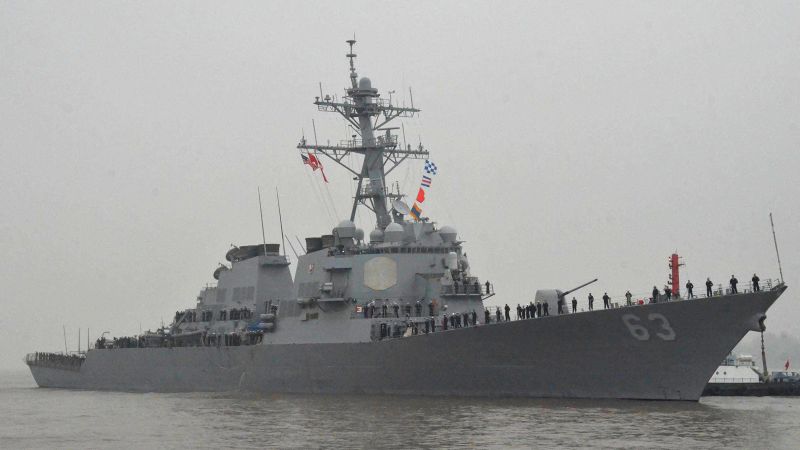
America’s largest military shipbuilder has signed a deal with a South Korean company that experts say could be a big step in helping the US Navy build new warships to keep pace with rival China in fleet size. Virginia-based HII (Huntington Ingalls Industries) and South Korea’s Hyundai Heavy Industries inked the memorandum of understanding (MOU) on Monday at a defense exhibition in Maryland. “Today’s agreement reflects our commitment to explore all opportunities to expand US shipbuilding capacity in support of national security,” HII Executive Vice President Brian Blanchette said at a ceremony at the Sea Air Space 2025 exposition. “By working with our shipbuilding allies and sharing best practices, we believe this MOU offers real potential to help accelerate delivery of quality ships.” A Hyundai Heavy Industries statement noted that both HII and the South Korean shipyard build Aegis destroyers, the backbones of the US and South Korean surface fleets. Aegis ships provide protection against missile threats, including powerful ballistic missiles in the arsenals of rivals China and North Korea. “This MOU is particularly significant as it marks the first collaboration between two leading shipbuilding companies from Korea and the US, both of which have the capability to construct the world’s most advanced Aegis ships,” the statement said.


The Iran war has driven oil prices to their highest levels in years. Now, a wave of attacks in the past 24 hours on energy production sites across the Middle East have turned the spotlight on another crucial fossil fuel: liquefied natural gas, or LNG.

Oil and natural gas prices spiked Thursday, as Iran ramped up strikes on energy infrastructure across the Middle East and attacked one of the world’s most important liquefied natural gas (LNG) facilities in Qatar.

In normal times, the Federal Reserve would more or less ignore an oil price shock like the one we’re in now.

Property brokerage Compass on Wednesday dropped its lawsuit against Zillow, ending a legal clash over how home listings can be marketed online.

Fed officials didn’t make any rate moves at their March meeting and released an updated forecast for the path of the American economy as the war in Iran stretches on.

Fed officials are set to announce their latest rate decision Wednesday afternoon, along with a new forecast for the path of the American economy as the war in Iran stretches on.

“The speed with which American democracy is currently dismantled is unprecedented in modern history,” one of the world’s top democracy researchers says in a new report.

Oil prices held steady Wednesday after Iraq clinched a deal to resume some crude exports via Turkey. It’s not a ton of oil, but it’s what amounts for good news these days as the Strait of Hormuz remains largely blocked.

The US-Israeli war with Iran, now stretching into its third week, is dashing hopes that the Federal Reserve will lower interest rates at all this year.

A federal judge says the Trump administration must let more than 1,000 sidelined Voice of America employees return to work by next week.

Former judges side with Anthropic and raise concerns about Pentagon’s use of supply chain risk label
Nearly 150 retired federal and state judges have filed an amicus brief on Tuesday supporting AI company Anthropic in its lawsuit against the Trump administration for designating it a “supply chain risk,” CNN has learned.

Attacks on commercial ships in the Middle East this month have all but closed the vital Strait of Hormuz to oil tankers. One of the few alternative routes for oil exports from the region goes through the Red Sea. But now even that lifeline is in danger.

When Mona Panjwani opened One40 Rooftop, a swanky restaurant in lower Manhattan last year, one of the biggest dilemmas besides the menu was choosing the reservation platform.