Urban spider found building soundproof webs to keep noise out Premium
The Hindu
Discover how spiders adapt their webs to urban noise pollution, shedding light on the impact of human activity on wildlife.
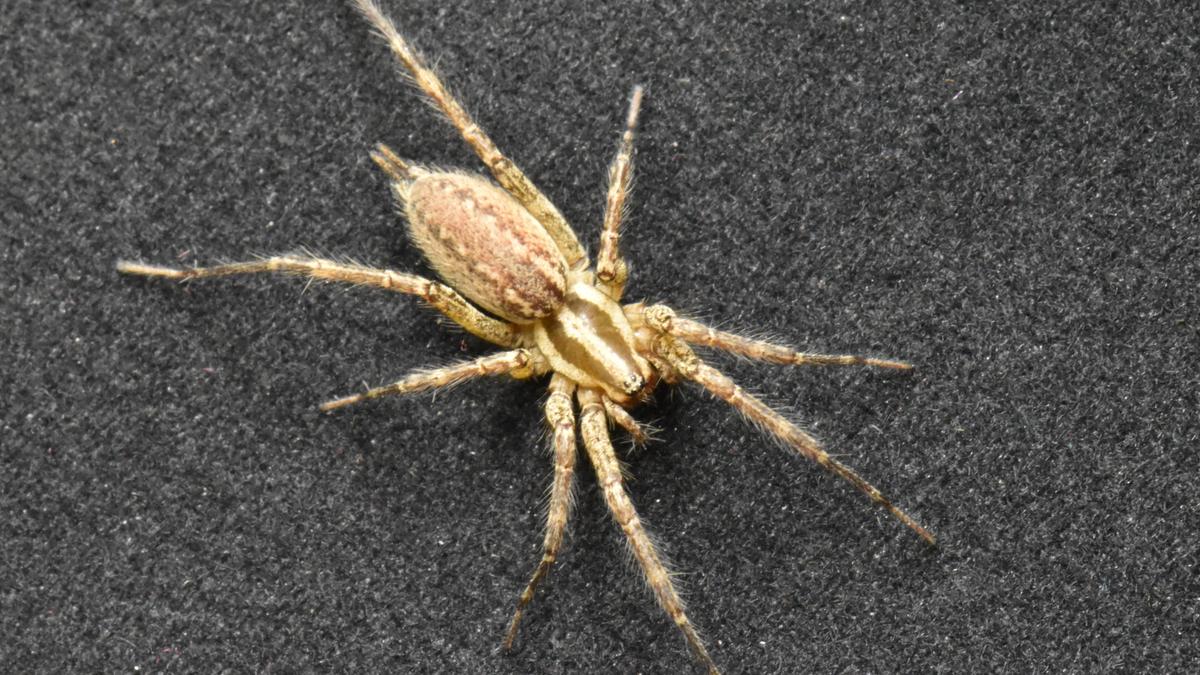
The next time you sweep away a cobweb without a second thought, consider this: the silken structure is an engineering marvel. According to new research published last week in Current Biology, a North American spider species can change how its webs transmit vibrations.
The authors have reported that spiders in urban environments can build webs that filter out loud ambient vibrations. Conversely, spiders from quieter rural spaces build webs that amplify biologically relevant vibrations they need to pick up in their noisy environment.
Spiders and their remarkable weaving abilities have been celebrated in folklore for thousands of years. West African folklore tales of Ananse, the trickster spider that could turn human, celebrate him as a wise creator. In Greek mythology, Arachne was a skilful woman who defeated Athena in a contest by weaving a flawless tapestry. She was turned into a spider in her afterlife, and goes on to create beautiful webs, or so the tale tells us.
Webs are tools of creation in mythology as well as material science. Spider silk is known to be an amazing natural material with unique properties. It has inspired researchers to develop materials derived from spider silk with applications in tissue engineering and regenerative medicine. They are also studying the unique combination of strength and flexibility in spider silk for use in textile production.
A few decades ago, researchers began to study how vibrations in webs transmit critical information for spiders.
For the first time, however, researchers from the University of Nebraska-Lincoln, Brandi Pessman and Eileen Hebets, have shown that spiders can alter how they receive vibratory information in loud environments.
Vibratory information from the web is crucial for spiders because they don’t have ears. Pessman, the lead author of the study, said, “Webs are more than just nets that catch bugs. They’re actually extensions of the spider’s sensory system.”


Explore 2026's wallpaper trends in India, highlighting botanicals and handmade designs that enhance modern homes with nature-inspired aesthetics.

Mercedes-Benz CLA 250+ with EQ Technology review: design, performance, range and features explained. Discover how the new electric CLA combines advanced AI, long range, fast charging and futuristic styling for the next generation of luxury EVs.

AI tool for sparrow conservation

BTS’s comeback with ‘Arirang’ marks a major global music event. When does the album release, and where can you watch their concert live stream? We have all the details

The 2026 U.S. cholesterol guidelines urge starting screening and treatment at 30 to prevent cardiovascular disease effectively.

Olam Festival 2026 in Thiruvananthapuram returns March 27-29 with 120+ vendors, music, art, and cultural zones.

A few storytellers in Thiruvananthapuram share their journeys, challenges, and evolving methods on World Storytelling Day, inspiring young minds.

76-year-old Kurian Jacob from Kerala triumphs with seven medals, including five golds, at the Open Masters Games in Abu Dhabi.

Explore the nature of the human mind as an emergent property of brain activity and complex neural interactions.

CERN's Large Hadron Collider discovers the Xi-cc-plus particle, enhancing understanding of quantum mechanics and baryon behavior.

Vibha Batra’s latest book, Spotless (Hachette India) is a novel in verse for young adults

In its first edition, the Madras Art Salon spotlights the works of journalist and artist Narayan Lakshman at The Botanical Club, a social space in the British Deputy High Commission, Chennai

Cholesterol enhances melanoma cell invasion by making nuclei squishier, revealing a potential treatment target in cancer progression.