Urban foraging: How to look for edible and medicinal wild plants growing in your city
The Hindu
Discover the urban bounty of wild edible plants in Bengaluru with Shruti Tharayil's Wild Food Walks this weekend.
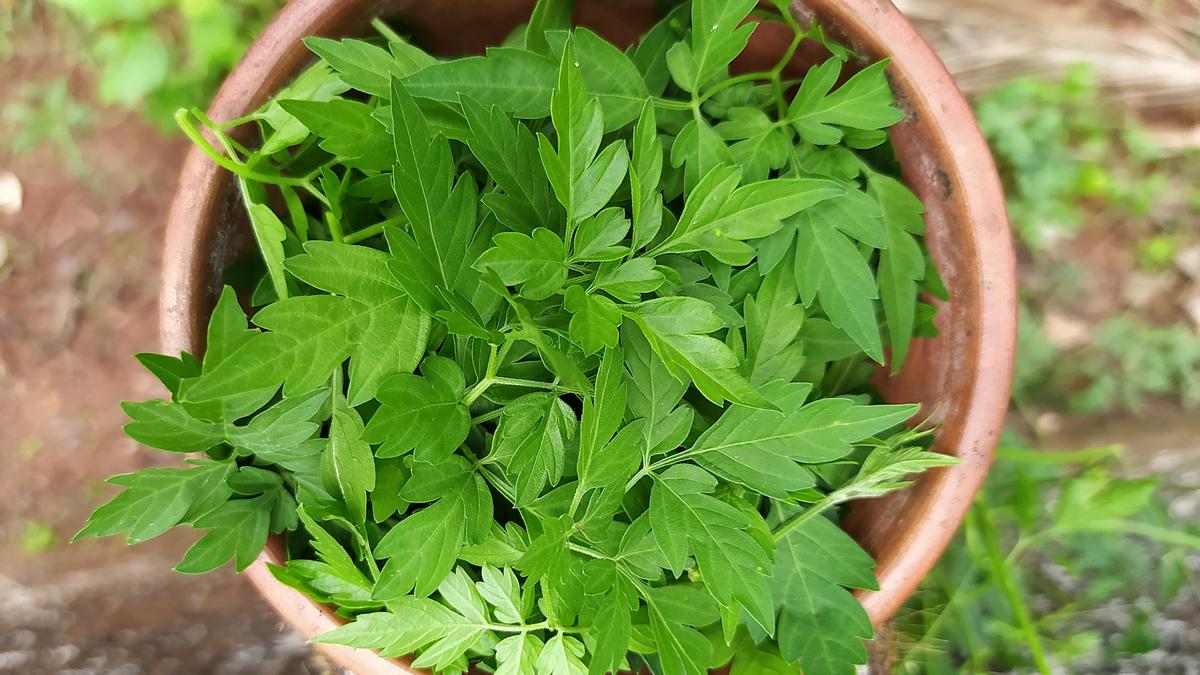
Our cities still hold many surprising secrets. Not just concrete jungles, they are also home to a thriving ecosystem of wild edible plants. The plants and trees that we see everyday are not only ornamental and ecological in their purpose. While we may associate fresh produce with farms and markets, a wealth of nutritious greens and herbs can be found right under our noses.
Shruti Tharayil, founder of Forgotten Greens, is on a mission to uncover this urban bounty. Through her Wild Food Walks, she guides participants on a journey of discovery, teaching them to identify, forage, and cook with wild plants found in city landscapes. This weekend she hosts walks in Cubbon Park and Lalbagh in Bengaluru.
Foraging your greens does not always mean heading outside urban confines, Shruti explains. “We have these preconceived notions that wild food is only available in a forest, or that to get wild food you have to go to a remote village. That is what I try to debunk through my work. We have enough wild food growing in our cities, it is just that we do not have the eyes to see it.”
Shruti works as an educator, writer and independent researcher. She consults for diverse projects and communities on topics of decolonising and re-imagining food systems in today’s context. Hailing from the Ezhava community in Kerala, who used to be foragers, she is usually on the road cycling across south India. On these trips, she learns about food from indigenous,and pastoral communities.
Which greens grow wild in Bengaluru?
The diversity of the plants is always a surprise. Shruti has done these walks previously in Cubbon Park, but shares that each time she goes to the park, she discovers something new. For example, oxalis corniculata, commonly known as wood sorrel, grows abundantly in Cubbon Park. This can be consumed raw in salads, chutneys, or cooked with lentils. “There are also stinging nettle plants in Cubbon Park. You can make soups out of it. It is highly nutritious and a superfood,” she adds. The sessile joyweed or alternanthera sessilis is another commonly found plant. It is versatile in its usage — it can be added to dal, salads, stir-fries, and is suitable for modern recipes like noodles or pesto too.
A recipe that Shruti recommends is patthila thoran, a dish cooked commonly during the monsoons in Kerala. Patthila literally translates to ‘ten leaves’, and it uses different greens that are available. The walk will teach participants to not only identify the greens, but also explain how to recognise which plants are safe to eat and which are poisonous.


Environmental activist Bolisetty Satyanarayana urges urgent action to protect Kolleru Lake from ecological degradation and illegal aquaculture.

A 27-year-old man was murdered in east Bengaluru, with police suspecting a financial dispute as the motive.

A survey reveals a drastic decline in Thiruvananthapuram's house sparrow population, prompting calls for urgent conservation efforts.

AIADMK announces candidates A. Anbalagan and A. Gandhi for Puducherry Assembly elections in Oupalam and Orleanpeth constituencies.

Shorts News: Landslide hits Mandi after rain, nine houses evacuated

Three men arrested in Delhi for hoarding 74 LPG cylinders, facing charges under the Essential Commodities Act.

Bengaluru police summon Muthappa Rai's son, Ricky Rai, after a Lamborghini was caught performing dangerous stunts, raising public safety concerns.

LPG cargo ship from the US arrives at New Mangalore Port as charges waived amid West Asia conflict concerns.

Modi convenes ministerial meeting to address energy supply challenges amid West Asia conflict and ensure stable logistics nationwide.

CPI(M) negotiates with DMK over seat allocation for Tamil Nadu Assembly elections, aiming for six seats amid alliance talks.

Join our webinar to explore the necessity and impact of foreign universities establishing campuses in India.

PM Modi praises Bihar's rich culture and history in a heartfelt letter to CM Nitish Kumar on Bihar Diwas.

Former Minister Semmalai urges parties to limit freebies and prioritize development for Tamil Nadu's future prosperity.