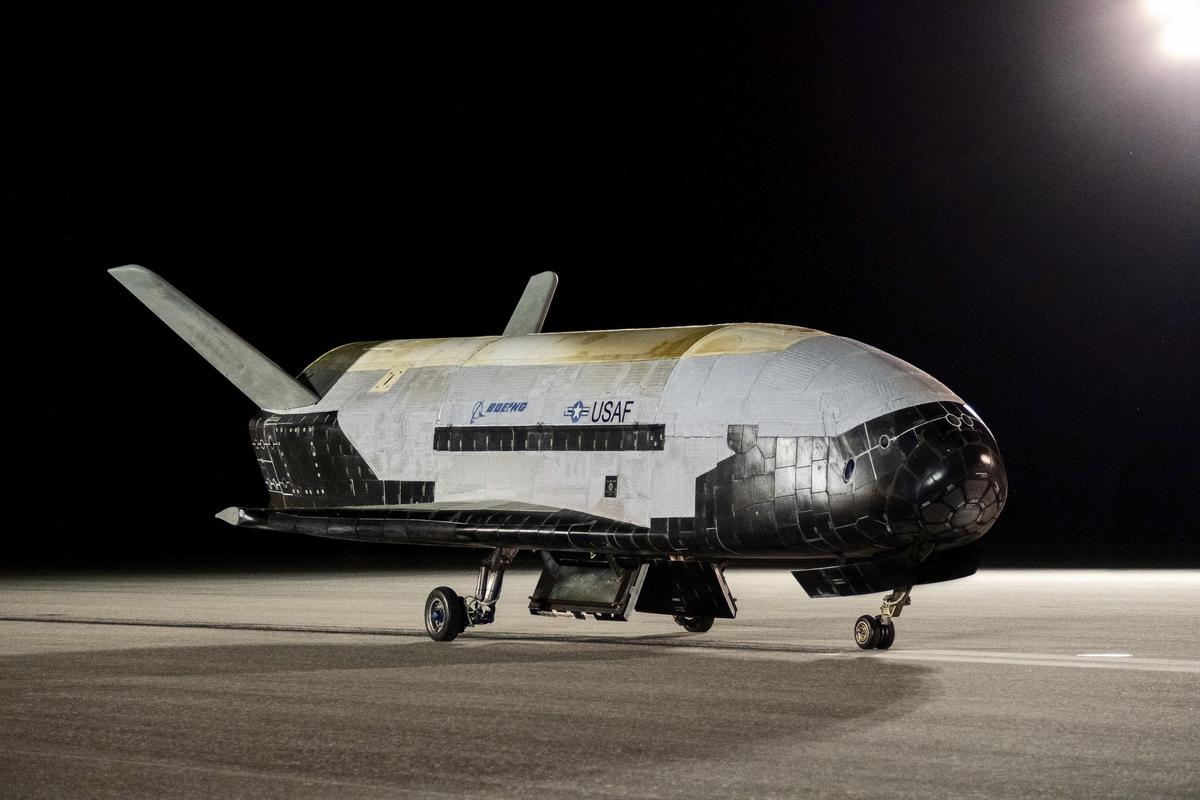
Unmanned, solar-powered US space plane back after 908 days
The Hindu
An unmanned U.S. military space plane has landed after spending a record 908 days in orbit for its sixth mission and conducting science experiments
An unmanned U.S. military space plane landed early Saturday after spending a record 908 days in orbit for its sixth mission and conducting science experiments.
The solar-powered vehicle, which looks like a miniature space shuttle, landed at NASA’s Kennedy Space Center. Its previous mission lasted 780 days.
“Since the X-37B’s first launch in 2010, it has shattered records and provided our nation with an unrivaled capability to rapidly test and integrate new space technologies,” said Jim Chilton, a senior vice president for Boeing, its developer.
For the first time, the space plane hosted a service module that carried experiments for the Naval Research Laboratory, U.S. Air Force Academy and others. The module separated from the vehicle before de-orbiting to ensure a safe landing.
Also Read | NASA’s Moon rocket endured hurricane, set for 1st test flight
Among the experiments was a satellite dubbed the FalconSat-8 that was designed and built by academy cadets in partnership with the Air Force Research Laboratory. It was deployed in October 2021 and still remains in orbit.
Another experiment evaluated the effects of long-duration space exposure on seeds.


Discover the Minor Planet Centre, the key hub for tracking and verifying observations of small solar system bodies.

Discover the Minor Planet Centre, the key hub for tracking and verifying observations of small solar system bodies.

In this week's Science for All newsletter, XX explains

Test your knowledge with the quiz on Science films at the Oscars through history

Set between the Siwalik hills and the plains, Butwal offers travellers a mix of regional cuisine, pilgrimage trails to Lumbini and the comfort of Hyatt’s new hospitality landmark

Explore 2026's wallpaper trends in India, highlighting botanicals and handmade designs that enhance modern homes with nature-inspired aesthetics.

Mercedes-Benz CLA 250+ with EQ Technology review: design, performance, range and features explained. Discover how the new electric CLA combines advanced AI, long range, fast charging and futuristic styling for the next generation of luxury EVs.

AI tool for sparrow conservation

BTS’s comeback with ‘Arirang’ marks a major global music event. When does the album release, and where can you watch their concert live stream? We have all the details

The 2026 U.S. cholesterol guidelines urge starting screening and treatment at 30 to prevent cardiovascular disease effectively.

Olam Festival 2026 in Thiruvananthapuram returns March 27-29 with 120+ vendors, music, art, and cultural zones.

A few storytellers in Thiruvananthapuram share their journeys, challenges, and evolving methods on World Storytelling Day, inspiring young minds.

76-year-old Kurian Jacob from Kerala triumphs with seven medals, including five golds, at the Open Masters Games in Abu Dhabi.