University of Guelph’s entry in research competition hopes to pass deep space taste test
Global News
The final judging in the Deep Space Food Challenge happened on Feb 7. The winner of the $380,000 first prize will be announced in March.
Canada GOOSE are waiting with bated breath to see if their entry will pass the muster.
The team from the University of Guelph is one of the final four institutions competing in the Canadian Space Agency’s Deep Space Food Challenge.
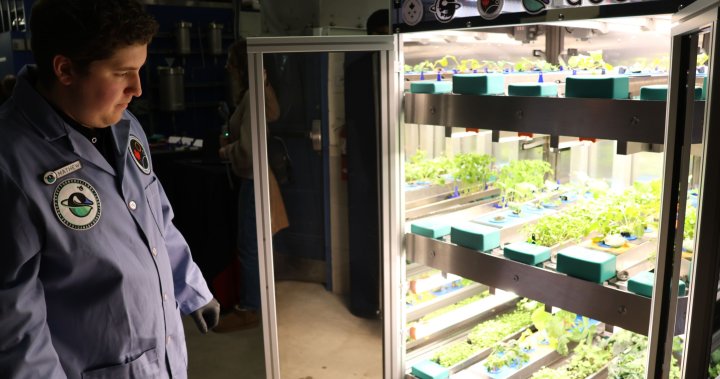
Final judging took place on Feb. 7 inside the campus’ Controlled Environment Systems Research Facility.
“We got a dozen crops going from basic micro crops to root crops like turnips, fruit crops like tomatoes, beans, and few others,” said Mike Dixon, professor emeritus and director of the facility. “We cover the waterfront of nutritional requirement for explorers.”
The Deep Space Food Challenge was launched in partnership with Impact Canada in 2021. The goal is to develop new technologies to produce food for both future space missions, and harsh or remote environments on earth.
Canada GOOSE (which stands for Growth Options for Outer Space Environments) is competing against two universities in Montreal (McGill and Concordia) and Ecoation Innovative Solutions Inc. from Kingsville, Ont. Each entrant received $100,000 for being in the final four.
Simulating the production of food like fruits and vegetables in an outer space environment seems like a difficult task, but Dixon said they were able to use simple, basic methods that are no different than what people use on earth.
“Controlling the light quality and quantity, carbon dioxide, water, nutrients, temperature and humidity… that’s farming,” he said. “We manage those environment variables very precisely.”


Two days after the first day of spring, parts of Atlantic Canada and Quebec will see another blast of winter with Environment Canada forecasting several centimetres of snow.

UNESCO recognized several Maritime historical groups including the executive director of the Black Loyalist Heritage Centre for their work on the Black Loyalist archive.

Aid shipments are beginning to arrive in Cuba and a Russian oil delivery is expected this month, but fuel shortages remain critical.

Tensions flared as CAQ leadership rivals clashed over Quebec’s “third link” project in the first debate to replace Premier François Legault.

Toronto police have charged a 60-year-old man with second-degree murder in connection with the death of Xian Wei Shao, whose remains were discovered in a north end home last week.

Finance Minister François-Philippe Champagne says the government has found ways to cut spending by $60 billion but cautions that published spending cuts require important context.

Three Canadians from Quebec who were stranded in the Persian Gulf since Feb. 28 have returned home following a coordinated repatriation effort.

Federal departments announced that they plan to cut more than 12,000 jobs over three years as part of the Carney government’s spending review plan.

Canada’s Integrated Threat Assessment Centre says the U.S.-Israeli war against Iran has heightened an already present threat against Jewish Canadians and public officials.

Edward Warner, his wife Tania and his seven-year-old step-daughter Ayla were coming back from a friend's baby shower on Saturday when they went through an ICE checkpoint in Sarita.

A fire chief from a village that battled flames during Saskatchewan's destructive wildfire season last year says the province's latest budget does not provide enough funding.

Manitoba’s upcoming budget will include more child care funding and a smaller deficit, as the NDP government aims to balance finances by 2027.

A member of the Royal Canadian Air Force in Winnipeg has just been crowned the World's Strongest Firefighter, outlifting athletes from around the world.