U.S. Fed holds interest rates, now sees just one cut this year
The Hindu
US Federal Reserve leaves key lending rate unchanged, signaling only one rate cut this year amid inflation concerns.
The US Federal Reserve left its key lending rate unchanged on Wednesday and penciled in just one rate cut this year, down from the three expected in March after inflation stalled in the first quarter.
The Fed voted unanimously to keep its benchmark interest rate between 5.25 and 5.50%, and said that "modest" progress had been made toward its long-term inflation target of 2%.
The announcement suggests that central bank officials remain wary about cutting rates too soon, despite consumer inflation data published earlier Wednesday, which pointed to a slowdown in the rate of price increases in May.
The annual consumer price index (CPI) came in at 3.3% last month, down 0.1 percentage point from April and unchanged on a monthly basis, the Labor Department said. This was slightly below expectations.
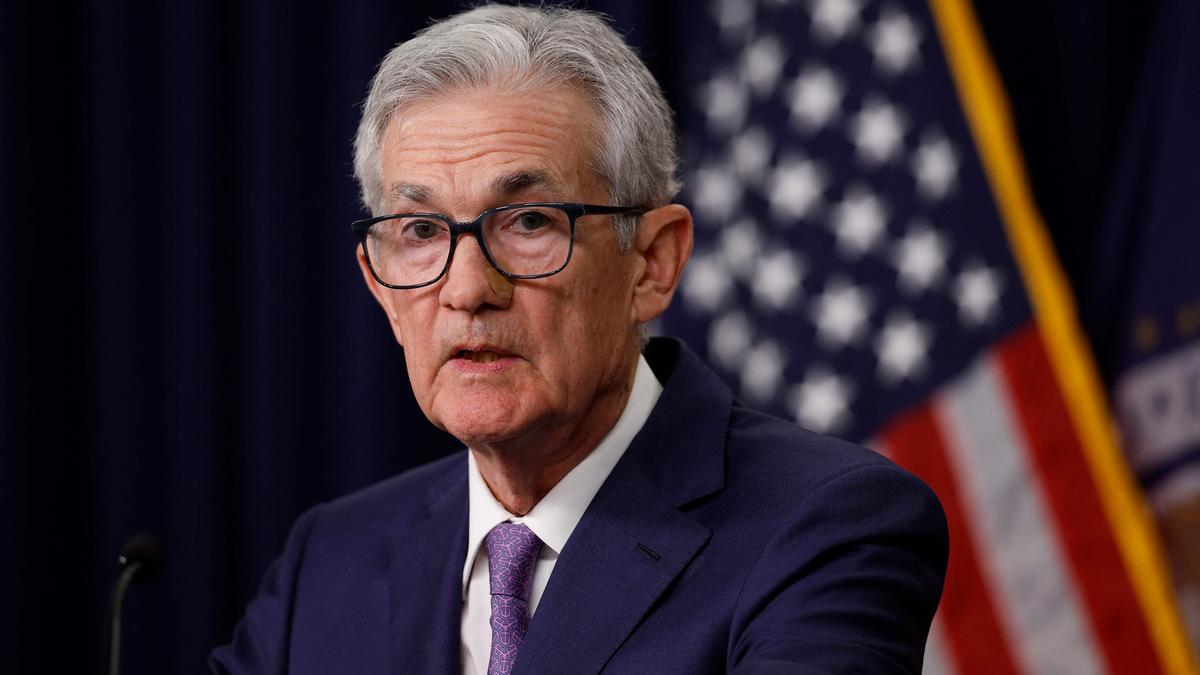
Fed chair Jerome Powell welcomed the inflation data during a press conference on Wednesday, but added that the US central bank needs to see more "good inflation readings" before it gains sufficient confidence to consider cutting interest rates.
He added that if the US economy remains strong and inflation persists, the Fed would be "prepared to maintain the current target range for the federal funds rate as long as appropriate."
The surprise of the day came in the Fed's updated economic forecasts from the 19 members of its rate-setting Federal Open Market Committee (FOMC).


The rupee declines 20 paise to 93.73 against the dollar as global oil prices rise and investor uncertainty persists.

Siemens said on Monday that the Iran war has led to customers holding back on new investments as prices increase for raw materials and energy.

OpenAI said its close ties with Microsoft could be a potential risk to its business, telling investors that the software company is responsible for “a substantial portion of our financing and compute,” CNBC reported

LPG crisis: Alternative solutions are being considered, with ammonia cylinders being increasingly used for industrial applications amid delays in commercial LPG deliveries.

India monitors U.S. military pause on Iran as oil prices dip; External Affairs Minister engages with GCC nations for support.

India monitors U.S.-Iran tensions as Trump pauses attacks, leading to a significant drop in oil prices.

Union Minister Ashwini Vaishnaw launches three initiatives to enhance India's creative economy through AI training, citizen platforms, and advanced tech access.

Two Indian-flagged LPG tankers approach the Strait of Hormuz, navigating safely amidst regional tensions to reach Indian ports.

Gold and silver prices plummet over 7% due to West Asia tensions, inflation fears, and a stronger dollar.

Asian shares fall as rising oil prices and escalating Iran conflict diminish hopes for U.S. interest rate cuts.

Japan's SoftBank Group said Saturday it plans to build a huge new gas-fired power plant in the US state of Ohio

Silver prices plunge 9% to ₹2.06 lakh per kg in futures trade amid weak global cues and rising macroeconomic pressures.

OpenAI plans to nearly double its workforce to 8,000 from 4,500 by the end of 2026, the Financial Times reported on Saturday, citing two people with knowledge