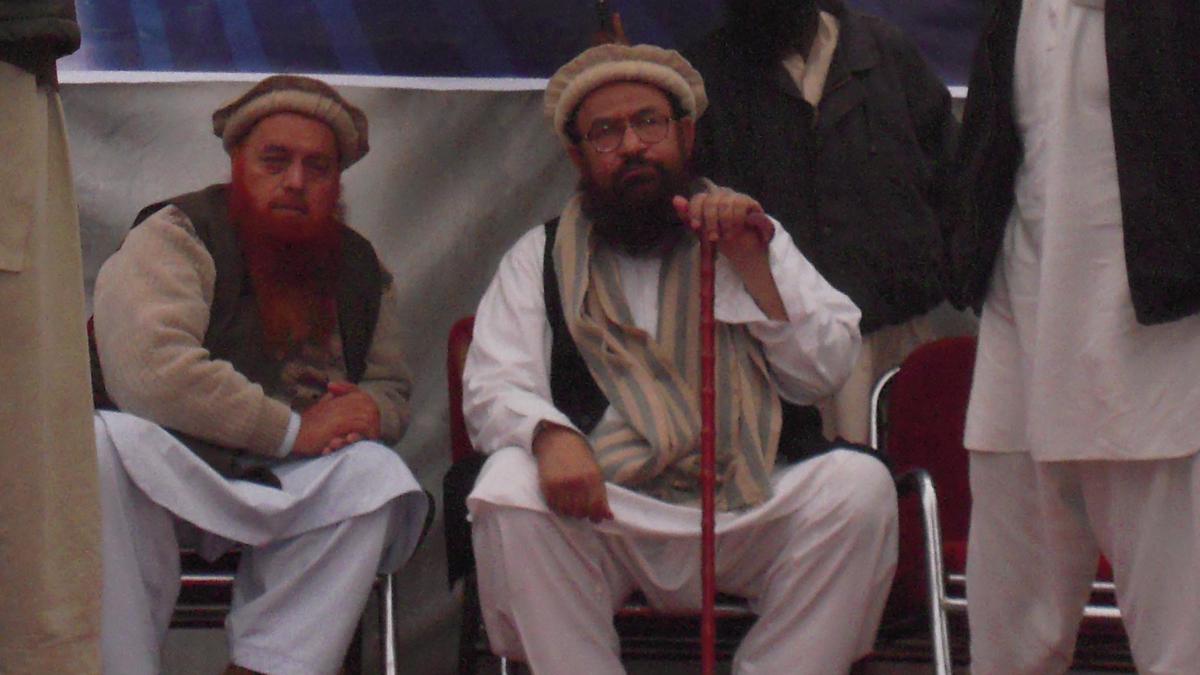
U.N. anti-terror committee blacklists LeT’s Abdul Rehman Makki
The Hindu
China had placed a “technical hold” on the India-U.S. proposal to blacklist Abdul Rehman Makki in June 2022
The ISIL and Al Qaeda Sanctions Committee of the U.N. Security Council has placed Jamat-ud-Dawa’s Abdul Rehman Makki, fundraiser and a key planner of the Pakistan-based terrorist outfit Lashkar-e-Taiba, in its sanctions list.
“Abdul Rehman Makki and other LET/JUD operatives have been involved in raising funds, recruiting and radicalising youth to violence and planning attacks in India, particularly in Jammu and Kashmir (J&K),” said the Committee, explaining the reasons that prompted it to add Makki to the blacklist.
India and the United States had listed Makki as a terrorist under national laws and had jointly proposed to blacklist him under the U.N. Security Council’s ISIL and Al Qaeda Sanctions Committee on June 1, 2022. But China placed a “technical hold” on the India-U.S. proposal during that occasion and stopped that process. At that time, India had termed China’s “technical hold” as “extremely unfortunate”.
For adding Makki’s name in the sanctions list, the Committee on January 16, has cited seven terror attacks including the 2000 Red Fort attack, the 2008 Rampur attack, and the 2008 Mumbai attacks. The 2018 attack in Gurez that killed four Indian Army soldiers was also linked to him by the Committee.
The anti-terror committee further said that Makki is the head of the LeT political affairs and has served in the LeT’s foreign relations department and the Shura (governing body). “He is also a member of JUD’s Markazi (Central) team and Daawati (proselytization) team,” said the Committee highlighting that he is the brother-in-law of Hafiz Saeed who is “wanted by the Indian Government”.


U.S. detects unidentified drones over Fort McNair, prompting officials to consider relocating Rubio and Hegseth amid security concerns.

FBI probes whether ex-counterterrorism official Joe Kent leaked classified info amid ongoing DOJ investigations into Trump critics.

Democrats walked out of a Justice Department briefing on Epstein files, demanding Attorney General Bondi testify under oath.

Iran-Israel war: Follow live updates from The Hindu on the West Asia conflict on March 19, 2026

U.S. Intelligence warns that India-Pakistan relations pose nuclear conflict risks, despite recent de-escalation efforts by President Trump.

U.S. eases sanctions on Venezuela's oil, allowing sales to boost global supply amid rising prices during the Iran conflict.

U.S. considers troop deployments as Iran war escalates, evaluating options to secure oil passage and strengthen military operations.

Pakistan and Afghanistan agree to a temporary ceasefire for Eid celebrations amid escalating conflict and recent deadly strikes.

Iran threatens retaliation against Gulf energy facilities following U.S.-Israel strikes, escalating tensions in the region.

Iran arrests over 100 alleged monarchist and spy networks amid ongoing conflict, as authorities intensify crackdowns across the nation.

Indonesia arrests four military officers linked to an acid attack on activist Andrie Yunus, sparking calls for an independent investigation.

Sri Lanka's Minister Bimal Rathnayake announces support for Indian refugees, urging political sensitivity from Tamil Nadu and India.

Trump temporarily waives maritime law to lower energy costs amid rising gasoline prices from the Iran-Israel conflict.