Two Union soldiers to posthumously receive Medal of Honor for carrying out daring mission behind Confederate lines
CNN
Two Union soldiers from the American Civil War are being posthumously awarded with the Medal of Honor by President Joe Biden on Wednesday, more than 160 years after being executed for their part in a daring mission against the Confederacy.
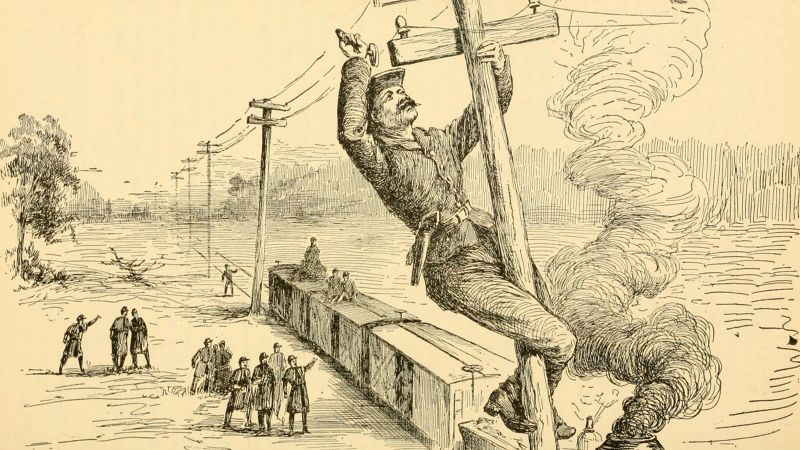
Two Union soldiers from the American Civil War are being posthumously awarded with the Medal of Honor by President Joe Biden on Wednesday, more than 160 years after being executed for their part in a daring mission against the Confederacy. “Private Philip G. Shadrach and Private George D. Wilson will receive the Medal of Honor posthumously for their gallantry and intrepidity while participating in a covert military operation 200 miles behind Confederate lines on April 12, 1862,” a White House official said. “In one of the earliest special operations in US Army history, Union Soldiers dressed as civilians infiltrated the Confederacy, hijacked a train in Georgia and drove it north for 87 miles, destroying enemy infrastructure along the way.” Biden will award the medals in a ceremony at the White House with descendants of Shadrach and Wilson expected to attend. The pair were members of the 2nd Ohio Volunteer Infantry Regiment in 1862 when they joined 20 other Union soldiers, and two civilians, to infiltrate Confederate territory. The raid, according to the Congressional Medal of Honor Society, involved the soldiers commandeering a locomotive known as the General that was on its way toward Chattanooga. They would stop occasionally along the route to “tear up track, switches, and bridges, inflicting as much damage as possible.” The Confederates began chasing the General in handcars and locomotives, at some points even on foot, eventually catching up to them and forcing the Union soldiers to abandon it. They were all captured within two weeks, and found guilty of “acts of unlawful belligerency,” according to the Congressional Medal of Honor Society.


Markwayne Mullin will serve as Donald Trump’s next Department of Homeland Security secretary, elevating the US senator to helm the agency at the center of the president’s controversial immigration enforcement effort and an ongoing shutdown.

President Donald Trump’s sudden turnabout and, according to him, rapidly advancing peace talks made for an abrupt shift in the administration’s approach to the Iran war.

The Supreme Court’s conservative majority appeared dubious of state laws that allow the counting of mail ballots that arrive at election offices after Election Day as justices heard oral arguments in a challenge to Mississippi’s five-day grace period for mail ballots.

The chief district judge in New Jersey appointed Robert Frazer, a career prosecutor, to serve as US attorney for the state, ending for now a dispute over the legality of the office’s leadership that threatened to derail criminal investigations.

Tens of thousands of taxpayer dollars were spent on expenses for hair and makeup artists and a horse for the advertisement showcasing outgoing Department of Homeland Security Secretary Kristi Noem in front of Mount Rushmore, according to invoices seen by CNN.

President Donald Trump was presented Sunday with a potential off-ramp to the more than month-long Department of Homeland Security shutdown: fund every part of the department except enforcement operations by Immigration and Customs Enforcement, two sources familiar with the conversations told CNN.

Immigration and Customs Enforcement agents are heading to 13 airports today to help with crowd management as travelers at some airports wait in hours-long security lines amid the DHS shutdown. Follow here for the latest.

A consortium of the nation’s top architectural and historic preservation groups is targeting President Donald Trump’s plans to temporarily close and extensively renovate the Kennedy Center, filing a new lawsuit Monday that asks a federal judge to indefinitely halt the project.

ICE agents sent to airports as TSA callouts remain high; separately, two people have died after a plane collided with a fire truck at New York’s second biggest airport. Follow for live updates

Mike Pence used to dream of following two successful Donald Trump terms with his own turn in the White House.

An Air Canada plane was damaged after colliding with a vehicle on a runway at New York’s LaGuardia Airport Monday, according to video from the scene and air traffic control audio.

A statue of Christopher Columbus has been erected outside of an ornate federal office building on the White House grounds — the latest sign of the Trump administration’s efforts to reshape cultural and historical representations across the nation’s capital.

Kentucky Gov. Andy Beshear, speaking in JD Vance’s home state of Ohio on Saturday, tore into the vice president, questioning his Appalachian roots and telling voters they “deserve better.”