Twenty years on, reflection and regret on 2002 Iraq war vote
The Hindu
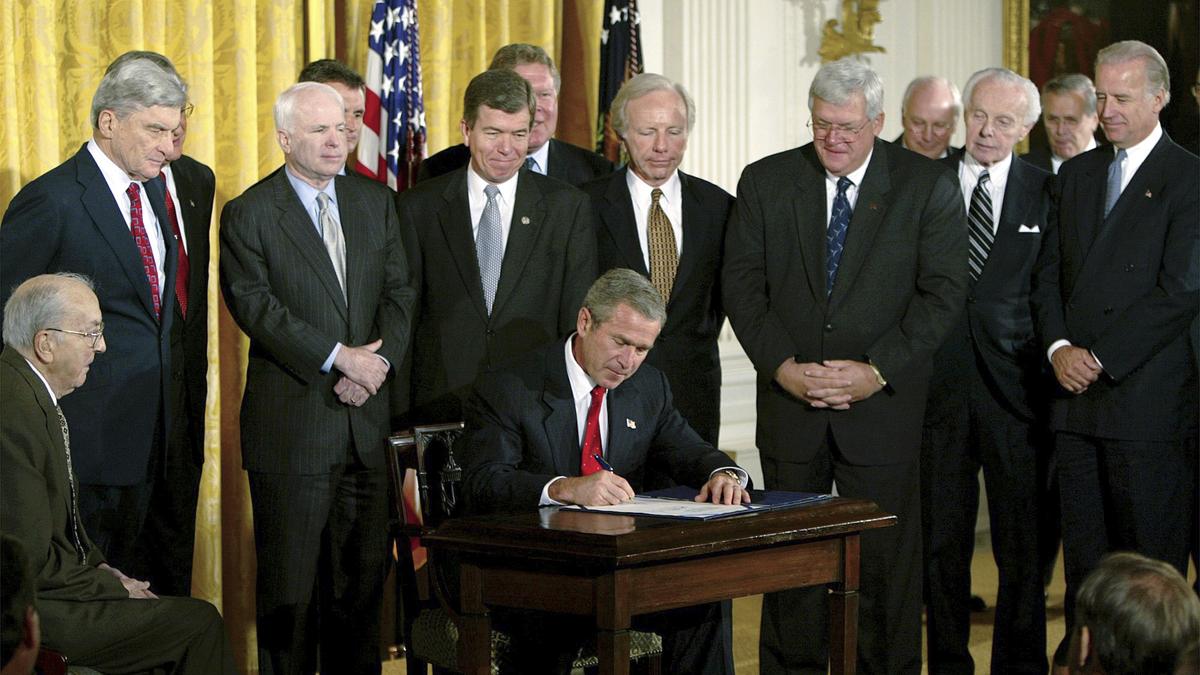
The October 2002 votes in the House and Senate to authorise war with Iraq were grave moment in American history that would have reverberations for decades
Michigan Sen. Debbie Stabenow was sitting in Defence Secretary Donald Rumsfeld’s conference room at the Pentagon, listening to him make the case that Saddam Hussein was hiding weapons of mass destruction.
At some point in the presentation — one of many lawmaker briefings by President George W. Bush’s administration ahead of the October 2002 votes to authorise force in Iraq — military leaders showed an image of trucks in the country that they believed could be carrying weapons materials. But the case sounded thin, and Ms. Stabenow, then just a freshman senator, noticed the date on the photo was months old.
“There was not enough information to persuade me that they in fact had any connection with what happened on September 11, or that there was justification to attack,” Ms. Stabenow said in a recent interview, referring to the 2001 attacks that were one part of the Bush administration’s underlying argument for the Iraq invasion. “I have a son and a daughter — would I vote to send them to war based on this evidence? In the end the answer for me was no.”
As with many of her colleagues, Ms. Stabenow’s “nay” vote in the early morning hours of October 11, 2002, didn’t come without political risk. The Bush administration and many of the Democrat’s swing-state constituents strongly believed that the United States should go to war in Iraq, and lawmakers knew that the House and Senate votes on whether to authorise force would be hugely consequential.
Indeed, the bipartisan votes in the House and Senate that month were a grave moment in American history that would reverberate for decades — the Bush administration’s central allegations of weapons programs eventually proved baseless, the Middle East was permanently altered and nearly 5,000 U.S. troops were killed in the war. Iraqi deaths are estimated in the hundreds of thousands.
Only now, 20 years after the Iraq invasion in March 2003, is Congress seriously considering walking it back, with a Senate vote expected this week to repeal the 2002 and 1991 authorisations of force against Iraq. Bipartisan supporters say the repeal is years overdue, with Saddam's regime long gone and Iraq now a strategic partner of the United States.
For senators who cast votes two decades ago, it is a full-circle moment that prompts a mixture of sadness, regret and reflection. Many consider it the hardest vote they ever took.


Russia claims control of Potapivka village in Ukraine's Sumy region amid ongoing military efforts to establish a buffer zone.

Iranian missile strikes on Israeli towns cause widespread damage and injuries, marking a significant escalation in the ongoing conflict.

As Gor makes first trip as U.S. Special envoy to South Asia, Delhi watches strategic signals closely
Sergio Gor's inaugural trip as U.S. Special Envoy to South Asia signals strategic U.S. engagement amid regional tensions.

Slovenians vote in a tight election between liberal and populist candidates, impacting the country's future domestic and foreign policies.

Netanyahu asserts U.S.-Israel alliance fights Iranian threats, emphasizing global security after missile strikes on Israeli and European targets.

Israeli settlers attack Palestinian villages in the West Bank, causing injuries and destruction amid ongoing settlement expansion.

Britain asserts no evidence of Iran planning missile strikes on Europe, despite Israeli claims of missile capabilities.

UNESCO reports over half of countries have banned phones in schools due to concerns about attention, cyberbullying, and social media impact.

Analysis reveals a U.S.-operated Patriot missile likely caused a pre-dawn explosion in Bahrain, injuring numerous civilians.

Sri Lanka raises fuel prices by 25% amid ongoing West Asia conflict, impacting petrol and diesel costs significantly.

Iran strikes near Israeli nuclear research center as Trump threatens attacks on Iranian power plants
Iran's missile strikes near Israel's nuclear site escalate tensions as Trump threatens retaliation against Iranian power plants.

Saudi Arabia intercepts one of three ballistic missiles targeting Riyadh amid ongoing regional tensions and threats from Iran.

Iran's death toll exceeds 1,500 amid escalating war, with heavy airstrikes and shifting U.S. and Israel strategies reported.