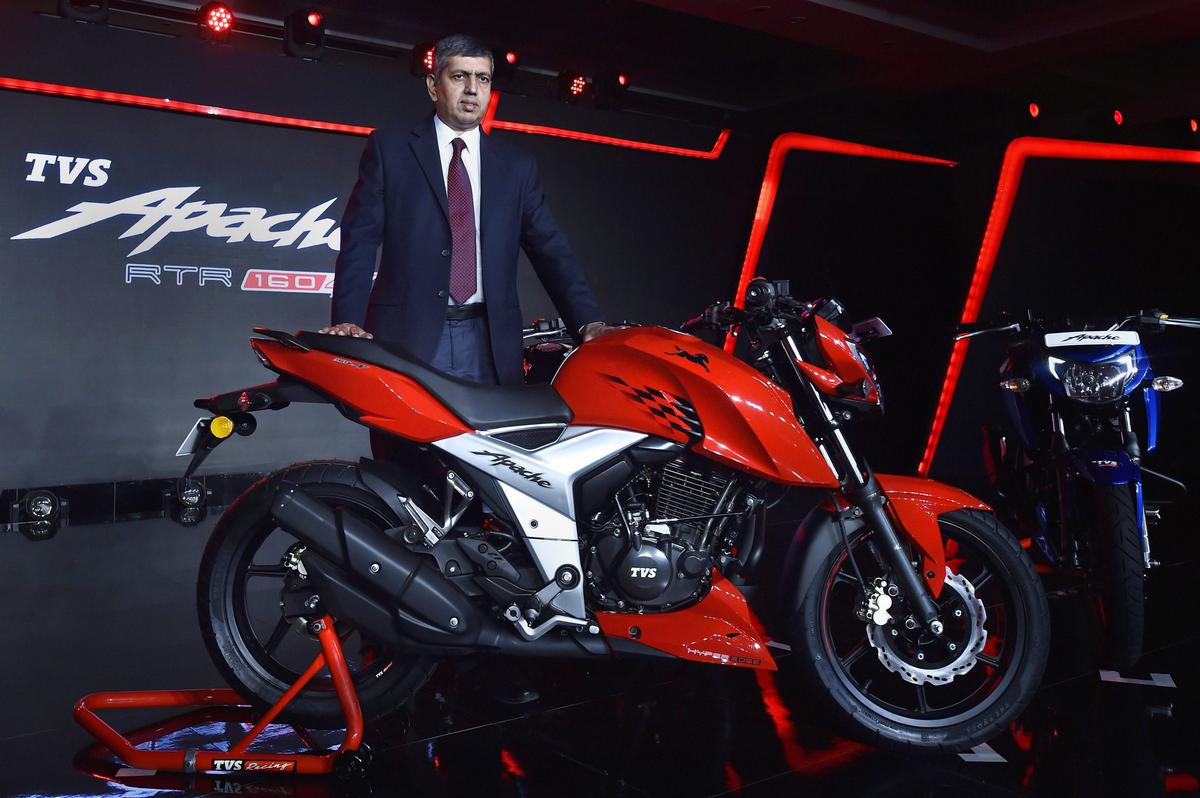
TVS Motor rolls out 2023 TVS Apache RTR 160 4V at ₹1.30 lakh (ex-showroom)
The Hindu
The motorcycle is powered by a 159.7 cc, oil-cooled, fuel injected engine and mated to a five-speed gearbox
Two and three-wheeler major TVS Motor Company on Tuesday rolled out its 2023 Special Edition of its popular motorcycle 160 4V Apache RTR equipped with a host of features.
The 2023 TVS Apache RTR 160 4V Special Edition in pearl white is priced at ₹1.30 lakh (ex-showroom Delhi) and available at its dealerships across the country.
The 2023 TVS Apache RTR160 4V Special Edition comprises of new pearl white colour, dual tone seat, adjustable clutch and brake levers, rear radial tyre among many others.
The motorcycle is powered by a 159.7 cc, oil-cooled, fuel injected engine and mated to a five-speed gearbox.
The special edition variant comprises a 'lightweight bullpup muffler' enhancing the RTR exhaust, increase the power to weight ratio with one kilogram weight reduction.
"...we are delighted to introduce the new 2023 TVS Apache RTR 160 4V Special Edition, offering a new refreshed colour option with uniquely colour coordinated black and red alloys, a lightweight bullpup exhaust and an array of exciting features," TVS Motor Company, head-business premium Vimal Sumbly said.
"The new special edition is a testament to our commitment towards providing world-class products and redefining the definition of performance motorcycling," he said.


OpenAI on Tuesday announced key leadership appointments for its nonprofit arm and committed to investing at least $1 billion through the division

EU antitrust chief Teresa Ribera, who has voiced concerns about Big Tech extending its dominance into artificial intelligence, will meet the CEOs of Alphabet, Meta Platforms and OpenAI

OpenAI is close to securing about $10 billion in fresh funding from investors, boosting its valuation to $850 billion, including the money raised, a person familiar with the matter said, confirming an earlier report in Bloomberg News

Discover the key changes in the New Income Tax Rules 2026, simplifying compliance and enhancing deductions for taxpayers.

Palantir, which won a contract to supply AI systems to Britain’s Financial Conduct Authority, will not have access to regulatory intelligence, an FCA official said

Arm Holdings announced a new artificial intelligence data centre chip on Tuesday which it said will add billions of dollars of revenue

Amazon said on Monday its Amazon Web Services region in Bahrain has been “disrupted” amid the current conflict in the Middle East

Petroleum Ministry directs reforms to enhance natural gas infrastructure, streamline approvals, and ease transition from LPG to PNG.

The Sora decision means the end of a blockbuster $1 billion deal between Disney and the ChatGPT maker that was announced a little more than three months ago.

Regulator mandates city gas distributors to provide piped gas to educational institutions within five days, supporting India's transition from LPG to PNG.

NHAI's Raajmarga InvIT listed on BSE, enhancing investor participation in highway infrastructure with strong demand and oversubscription.

HDFC Life Insurance faces ₹172 crore Income Tax order for alleged violations, plans to appeal the decision.

Air-conditioner makers in India are looking forward to FY27 with hope as the war in West Asia threatens to impact plastic component availability and consumer sentiment, adding to the challenges around raw material price and new energy label, a senior executive of a leading company has said.