'Turkish salmon': the Black Sea's new rose-coloured gold
The Peninsula
Sitting in his spacious office with a view of the Black Sea, Tayfun Denizer smiles: his rainbow trout, raised in submerged cages, have made him a weal...
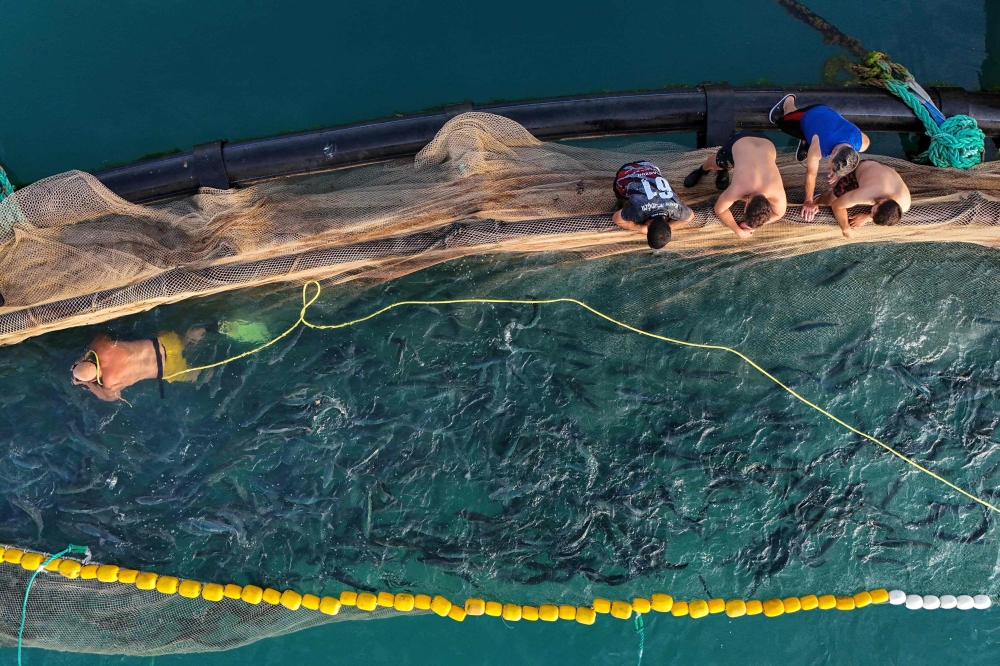
Sitting in his spacious office with a view of the Black Sea, Tayfun Denizer smiles: his rainbow trout, raised in submerged cages, have made him a wealthy man. "Our exports surged from $500,000 in 2017 to $86 million last year, and this is just the beginning," said Denizer, general manager of Polifish, one of the Black Sea's main producers of what is marketed as "Turkish salmon". In its infancy just a decade ago, production of trout -- which in Turkey is almost exclusively farmed for export -- has exploded in line with the global demand for salmon, despite criticism of the intensive aquaculture required to farm it. Last year, the country exported more than 78,000 tonnes of trout raised in its cooler northern Black Sea waters, a figure 16 times higher than in 2018. And it brought in almost $498 million for Turkish producers, a number set to increase but is still far from the $12.8 billion netted by Norwegian salmon and trout giants in the same year.
Stale Knudsen, an anthropologist at Norway's Bergen University and a specialist on Black Sea fishing, said Russia offered "an available market that was easy to access, near Turkey". For him, the "spectacular success" of trout is also down to Turkey's experience and the technology used in farming sea bass and sea bream, a field in which it leads Europe. Turkish producers have also benefitted from the country's large number of reservoirs where the fish are a raised for several months before being transferred to the Black Sea.


Doha, Qatar: Virtuocity, Qatar s largest purpose built esports arena located in Doha Festival City, has marked a significant milestone with one of the...

Doha, Qatar: Sidra Medicine, a member of Qatar Foundation, continues to play a vital role in Qatar s national healthcare system, maintaining uninterru...

Rio de Janeiro, Brazil: Chasing an endless summer, one shorebird species undertakes a grueling annual journey from the Arctic to the tip of South Amer...

About halfway down Shop Street in downtown Galway, Ireland, there s often a crowd outside Chipeen, where they serve hundreds of pounds each day of wha...

Doha, Qatar: Virtuocity, Qatar s largest purpose built esports arena located in Doha Festival City, has marked a significant milestone with one of the...

Doha, Qatar: In a powerful demonstration of its commitment to holistic education, a team of students and teachers from The Next Generation School (TNG...

Doha: Eid Al Fitr is usually a time of joy, gatherings, and community as the holy month of Ramadan comes to an end. In Qatar, Eid 2026 will begin o...

San Francisco: U.S. chipmaker Nvidia unveiled a series of artificial intelligence (AI) innovations spanning graphics, computing infrastructure and sof...

Doha, Qatar: Minister of Awqaf and Islamic Affairs H E Sheikh Ghanem bin Shaheen bin Ghanem Al Ghanem received Qatari students who participated in the...

Paris, France: The European Space Agency announced Thursday it has re established communication with a spacecraft that is part of its Proba 3 mission,...

Doha: The outreach programmes organised by the Sheikh Abdulla Bin Zaid Al Mahmoud Islamic Cultural Center continued at several locations across the co...

Paris, France: Unusually strong winds and warm ocean water likely drove a rapid plunge in Antarctic sea ice in recent years, scientists said on Wednes...

Doha, Qatar: The General Directorate of Endowments at the Ministry of Awqaf and Islamic Affairs has received a series of new charitable contributions...