Trump wants to play market hero. But the economic damage is done
CNN
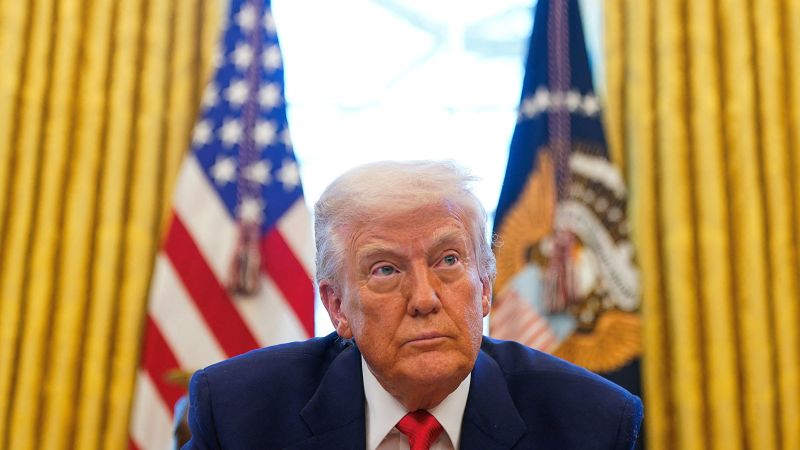
“I guess they say it was the biggest day in financial history,” President Donald Trump told reporters Wednesday afternoon. Later, in an apparent hot-mic moment, he told a fawning senator that the market was up almost seven percentage points. “Nobody’s ever heard of it. It’s gonna be a record.”
“I guess they say it was the biggest day in financial history,” President Donald Trump told reporters Wednesday afternoon. Later, in an apparent hot-mic moment, he told a fawning senator that the market was up almost seven percentage points. “Nobody’s ever heard of it. It’s gonna be a record.” It was a historic day, indeed — the third “best” day in the S&P 500’s history. After Trump announced that he was instituting a 90-day pause on most new tariffs (minus China), the Dow added 2,900 points, or nearly 8%. The S&P 500 soared almost 9.5%, its best day since 2008, and the Nasdaq had its second-best day ever, rising more than 12%. And it was all thanks to Trump — the guy whose extreme agenda (and contradictory messaging around it) became a noose around the neck of global financial markets that were about to enter a doom spiral. Wall Street’s reaction to his reversal on tariffs is not a victory lap for investors — it’s a gasp for oxygen. Asset prices remain well below where they were a week ago, before Trump announced the tariffs. The past week cost US stocks $6 trillion in value as market participants prepared for a wildly uncertain future, all while knowing the president is prone to pulling the rug out from under their feet. Trump is clearly loving the sea of green on the TV stock ticker. But it’s going to take a lot more than one day of stock gains to undo the damage — to the economy and to America’s reputation — that his policies have done.


Fed officials are set to announce their latest rate decision Wednesday afternoon, along with a new forecast for the path of the American economy as the war in Iran stretches on.

“The speed with which American democracy is currently dismantled is unprecedented in modern history,” one of the world’s top democracy researchers says in a new report.

Oil prices held steady Wednesday after Iraq clinched a deal to resume some crude exports via Turkey. It’s not a ton of oil, but it’s what amounts for good news these days as the Strait of Hormuz remains largely blocked.

The US-Israeli war with Iran, now stretching into its third week, is dashing hopes that the Federal Reserve will lower interest rates at all this year.

A federal judge says the Trump administration must let more than 1,000 sidelined Voice of America employees return to work by next week.

Former judges side with Anthropic and raise concerns about Pentagon’s use of supply chain risk label
Nearly 150 retired federal and state judges have filed an amicus brief on Tuesday supporting AI company Anthropic in its lawsuit against the Trump administration for designating it a “supply chain risk,” CNN has learned.

Attacks on commercial ships in the Middle East this month have all but closed the vital Strait of Hormuz to oil tankers. One of the few alternative routes for oil exports from the region goes through the Red Sea. But now even that lifeline is in danger.

When Mona Panjwani opened One40 Rooftop, a swanky restaurant in lower Manhattan last year, one of the biggest dilemmas besides the menu was choosing the reservation platform.

What could get more expensive because of the war in Iran?

Gas prices have skyrocketed due to the US-Israel war on Iran, putting even more financial strain on many Americans’ wallets.

United Food and Commercial Union Local 7, the union representing the 3,800 striking workers, said that JBS failed to meet its demands during contract negotiations over higher wages, life-saving safety equipment and improved healthcare.

Every day brings a new complaint — or three — from the Trump administration about the American news media’s coverage of the Iran war.

Traffic through the strait, normally the conduit for a fifth of global oil output, has been severely curtailed since the start of the Iran conflict. But Iran itself is shipping oil through the waterway in almost the same volumes as before the war, earning the cash needed to sustain its economy and war effort.