Trump’s oil blockade pushes Cuba to the brink Premium
The Hindu
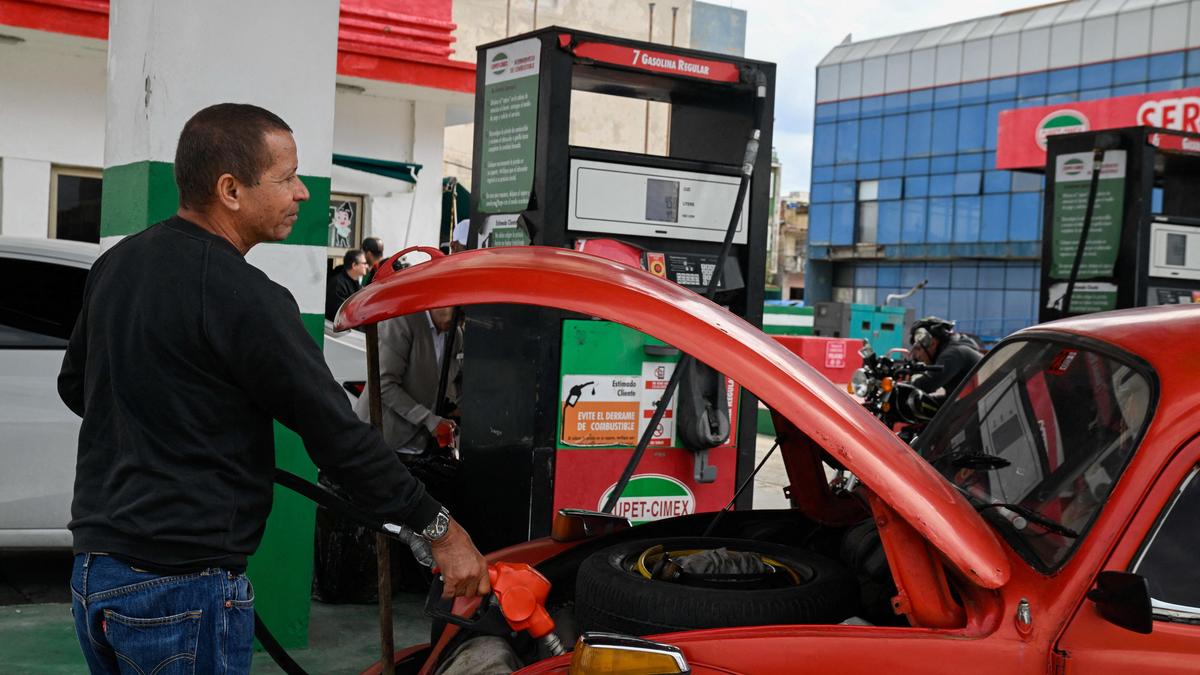
Cuba faces a critical energy crisis as Trump's oil blockade and sanctions threaten its fuel supply and daily survival.
In what is potentially an existential crisis for the socialist nation, Cuba is left with just 15 to 20 days of oil at current levels of demand and domestic production, according to the data analytics firm Kpler. The crisis was triggered by the U.S. military operations in Venezuela that abducted President Nicolás Maduro.
The attack followed a naval blockade that led to the U.S. illegally interdicting ships transporting oil from Venezuela to countries, including Cuba. It has been exacerbated by an executive order signed by U.S. President Donald Trump on January 29, which threatens punitive tariffs on any country selling oil to Cuba.
Cuba’s dependence on oil is structural as it accounts for 83% of total power generation and oil products make up 56% of total energy consumption across industry, transport, agriculture and households. For a country that imports roughly 80% of its food, power blackouts are catastrophic, as they disrupt refrigeration that is vital to preserving perishables.
The Venezuelan oil that flowed to Cuba, under the oil-for-doctors scheme instituted by former Venezuelan President Hugo Chávez, was a major lifeline for the nation and its primary source of imported oil. In 2022, Venezuela supplied 75% of Cuba’s crude oil imports. This dropped to 58% in 2023, when Cuba diversified as Mexico emerged as a significant supplier with a 31% share. By 2025, after Mr. Trump returned to power, oil imports had shrunk drastically. Venezuela still supplied an average of 46,500 barrels of oil per day to Cuba in December 2025, before this dropped to zero following Mr. Maduro’s abduction.
Mexico stepped in to fill the gap, but the January 29 order put enormous pressure on the country and its President Claudia Sheinbaum. She initially called the halting of a planned shipment a “sovereign decision”. But Mr. Trump claimed on Saturday that Ms. Sheinbaum had agreed to stop oil shipments at his request—a claim she explicitly denied, stating, “We never discussed with President Trump the issue of oil with Cuba.”
She later said Mexico was “exploring all diplomatic avenues” to send fuel as humanitarian aid. The threat that Mexico’s crude could be seized if Mr. Trump proceeded with a total oil blockade appears to have constrained Mexico’s options, particularly with a key free-trade pact with the U.S. and Canada up for renegotiation this year.


Trump urges allies to secure the Strait of Hormuz, but Japan and Australia refuse to send naval support amid rising tensions.

AI-created videos circulating on Elon Musk's X depict American soldiers captured by Iran, an Israeli city in ruins, and US embassies ablaze; a surge of lifelike deepfakes despite a policy crackdown to curb wartime disinformation.

Explore the implications of "no quarter" in warfare, its legal prohibitions, and recent controversial remarks by U.S. officials.

Iran-Israel war: Follow live updates from The HIndu on the West Asia conflict on Marh 16, 2026

Trump warns NATO's future is at risk if allies don't assist in opening the Strait of Hormuz amid rising oil prices.

Nilufer Koc critiques U.S. colonial mindset on Kurdish issues, emphasizing the need for Kurdish rights in Iran's future political landscape.

Taiwan reports a resurgence of Chinese military flights, with 26 aircraft detected near the island after a recent decline.

Israel's Foreign Minister dismisses reports of imminent Lebanon talks, reaffirming alignment with the U.S. in the Iran conflict.

Sri Lanka implements a QR code system to ration fuel sales amid global supply challenges, limiting weekly quotas for vehicles.

Iran's Foreign Minister claims war with the U.S. and Israel will end only when assurances against future attacks are guaranteed.

Jaishankar's Brussels visit aims to strengthen India-EU ties post Free Trade Agreement, focusing on strategic partnership and regional issues.

Trump states the U.S. is not ready for a deal to end the Iran war amid escalating tensions and military strikes.

Pakistan conducts airstrikes on military facilities in Afghanistan, targeting Taliban hideouts amid escalating border tensions.