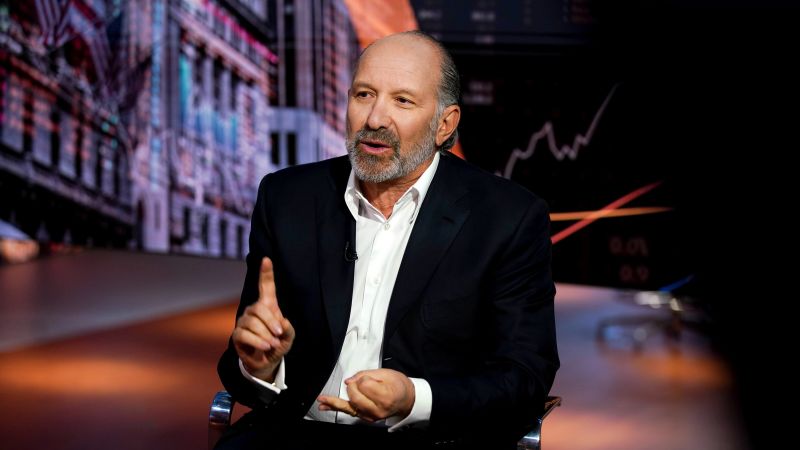
Trump’s Commerce secretary pick is a crypto booster with ties to one of the industry’s most controversial players
CNN
Trump’s Commerce secretary pick backed a crypto company that can’t seem to stay out of trouble
Howard Lutnick, the Cantor Fitzgerald CEO who’s been tapped to run the US Commerce Department, has in recent years become a prominent cheerleader for Tether, the company behind one of the world’s biggest crypto assets. But even by the standards of crypto — an alternative financial ecosystem in which some of the biggest frauds of the 21st century have taken place — Tether is a murky entity that has been dogged by investors’ concerns about its operations. It is effectively an unregulated, offshore bank that’s become a tent pole of the $3 trillion crypto industry. The way it works, briefly: You give a buck to Tether and it gives you a digital token, the lowercase-T tether, that essentially functions as a digital US dollar in the crypto-verse. The tether token is known as a stablecoin, a kind of crypto that was created to hold its value steady while others, like bitcoin and ether, swing wildly minute to minute. (Yes, even though they’re called crypto-currencies, they’re actually a garbage way to buy things.) While there’s a lot to say about the risks of tether, let’s focus for a moment the capital-T company that issues it and its No. 1 banker in the US, Lutnick. Tether was founded a decade ago by Brock Pierce, a former child actor of “The Mighty Ducks” fame, and a former plastic surgeon named Giancarlo Devasini. The company is now one of the biggest players in crypto, with a daily trading volume that eclipses even bitcoin, the world’s most popular token. And like many companies in the largely unregulated space, it has come under regulatory and legal scrutiny.


Oil prices edged lower on Friday after a tumultuous day that saw the international benchmark surge above $119 a barrel as the Middle East conflict deepened energy supply fears.

The war in Iran has delivered what economists call a “black swan” event — an unforeseen shock so destructive, no one is immune to it.

The war in Iran is driving up the cost of buying a home in America.

Eight state attorneys general have filed an antitrust lawsuit to block Nexstar’s pending acquisition of Tegna, which would strengthen the right-leaning Nexstar and shrink the number of station owners in the US.

The Iran war has driven oil prices to their highest levels in years. Now, a wave of attacks in the past 24 hours on energy production sites across the Middle East have turned the spotlight on another crucial fossil fuel: liquefied natural gas, or LNG.

Oil and natural gas prices spiked Thursday, as Iran ramped up strikes on energy infrastructure across the Middle East and attacked one of the world’s most important liquefied natural gas (LNG) facilities in Qatar.

In normal times, the Federal Reserve would more or less ignore an oil price shock like the one we’re in now.

Property brokerage Compass on Wednesday dropped its lawsuit against Zillow, ending a legal clash over how home listings can be marketed online.

Fed officials didn’t make any rate moves at their March meeting and released an updated forecast for the path of the American economy as the war in Iran stretches on.

Fed officials are set to announce their latest rate decision Wednesday afternoon, along with a new forecast for the path of the American economy as the war in Iran stretches on.

“The speed with which American democracy is currently dismantled is unprecedented in modern history,” one of the world’s top democracy researchers says in a new report.

Oil prices held steady Wednesday after Iraq clinched a deal to resume some crude exports via Turkey. It’s not a ton of oil, but it’s what amounts for good news these days as the Strait of Hormuz remains largely blocked.

The US-Israeli war with Iran, now stretching into its third week, is dashing hopes that the Federal Reserve will lower interest rates at all this year.