Trump administration highlights drug cartels as major national security threat but omits climate change
CNN
The US intelligence community’s annual threat assessment led with the threat from drug cartels for apparently the first time in the report’s nearly 20-year history, according to Senate Intelligence Chairman Tom Cotton and a CNN review of previous assessments, highlighting a top agenda item for President Donald Trump.
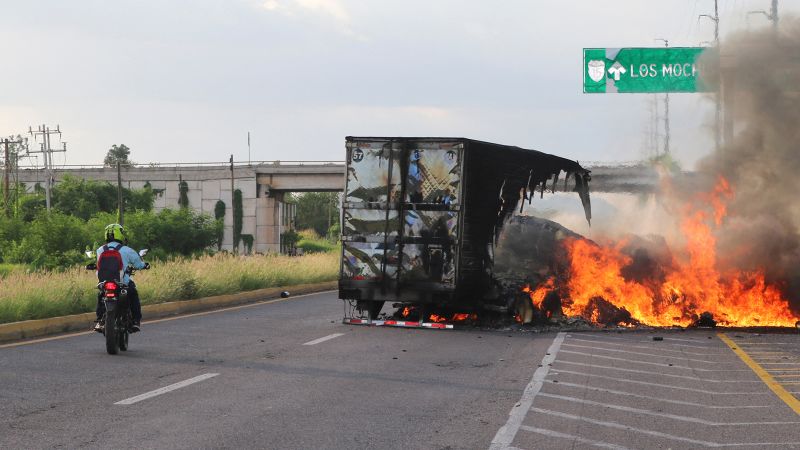
The US intelligence community’s annual threat assessment led with the threat from drug cartels for apparently the first time in the report’s nearly 20-year history, according to Senate Intelligence Chairman Tom Cotton and a CNN review of previous assessments, highlighting a top agenda item for President Donald Trump. The assessment also omitted any reference to the national security implications of climate change, a sharp reversal from previous intelligence assessments, including those under Trump’s first administration. Drug cartels in Mexico and other parts of the Western Hemisphere “endanger the health and safety of millions of Americans and contribute to regional instability,” the intelligence assessment says. Fentanyl and other potent synthetic opioids caused more than 52,000 deaths in the US in the 12 months ending in October 2024, according to the assessment. That’s actually a 33% decrease from the year prior and may be attributed to the increased availability of the overdose-countering medicine naloxone, the document says. The decline in drug deaths doesn’t appear to have made the cartels less potent. “Mexico-based [transnational criminal organizations] are ramping up lethal attacks in Mexico against rivals and Mexican security forces using IEDs, including landmines, mortars, and grenades,” the intelligence assessment says. In the first weeks of Trump’s return to the White House, the US military significantly increased its surveillance of Mexican drug cartels, with sophisticated spy planes flying at least 18 missions over the southwestern US and in international airspace around the Baja peninsula, CNN previously reported.


Cuba is going dark under US pressure. How the crisis unfolded and why its troubles are far from over
Almost three months after the US effectively imposed an oil blockade on Cuba that worsened its energy crunch, nearly every aspect of Cuban society has been feeling the strain.

The Department of Homeland Security has been ensnared by a partial government shutdown as Congress did not act to fund the agency by the end of Friday. But nearly all DHS workers will remain on the job — even if many won’t get paid until the lapse ends — and the public probably won’t notice much of a change.

The USS Gerald R. Ford aircraft carrier is moving away from operations tied to the Iran war and sailing to the US Navy’s base in Crete for repairs after a fire broke out in the ship’s laundry area last week, a US official said.

An American college student visiting friends for spring break has gone missing in Spain, his family said, adding police have his phone.

A typically friendly setting for one of their own turned tense on Capitol Hill Wednesday with senators grilling Markwayne Mullin for roughly three hours as he vies to become President Donald Trump’s next Department of Homeland Security chief.

Top Trump administration officials testified publicly Wednesday for the first time since the launch of the Iran war three weeks ago.

The White House is temporarily lifting key limits on the shipping of oil, gas and other commodities throughout the US, in its latest effort to counter rising energy prices sparked by its war with Iran.

Any attempt by the United States to take control of Cuba would be met with “impregnable resistance,” Cuban President Miguel Díaz-Canel said Tuesday, as power returned to some parts of the island following a nationwide grid collapse.

Deputy Attorney General Todd Blanche defended the Justice Department’s handling of the Jeffrey Epstein files and asserted it does not have new evidence to prosecute anyone for crimes related to the convicted sex offender, in an interview released Tuesday.

TSA workers face reality of working without pay as passengers unaware of the shutdown see long lines
More than a third of the security screeners at Hartsfield-Jackson Atlanta International Airport didn’t show up to work Tuesday, the airport’s general manager said, causing passengers to have to wait in line for up to two hours.

Any attempt by the United States to take control of Cuba would be met with “impregnable resistance,” Cuban President Miguel Díaz-Canel said Tuesday, as power returned to some parts of the island following a nationwide grid collapse.

Many assume JB Pritzker’s run for president is just a year away. His effort to engineer a victory for his lieutenant governor, Juliana Stratton, in Illinois’ Senate primary was also a victory for him and a political operation with national ambitions.

Lt. Gov. Juliana Stratton’s win in the Senate Democratic primary was also a win for Gov. JB Pritzker, while big-spending groups like AIPAC got mixed results in Tuesday’s contests.