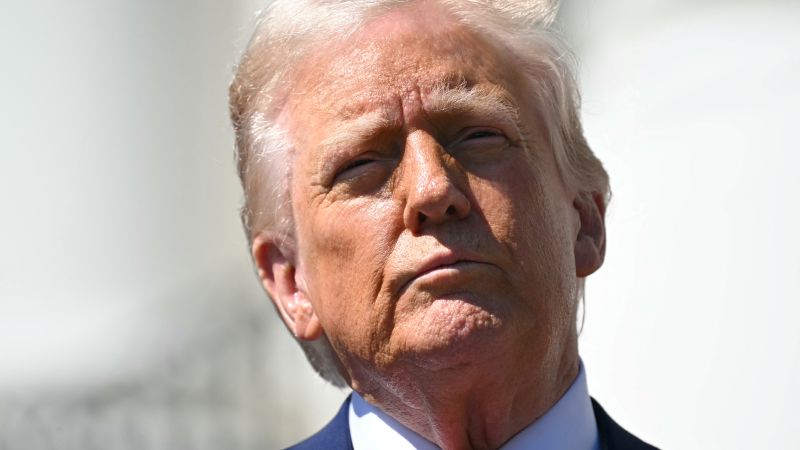
Trump administration has tightly restricted access to president’s daily intelligence brief
CNN
The Trump administration has tightly restricted the number of people who have access to President Trump’s highly classified daily intelligence report, five sources familiar with the move told CNN.
The Trump administration has tightly restricted the number of people who have access to President Donald Trump’s highly classified daily intelligence report, five sources familiar with the move told CNN. Administration officials planned from the earliest days of Trump’s second term to cut access to the so-called President’s Daily Brief, or PDB — in part because during his first term, details from the report were sometimes leaked to the press, which contributed to the president’s sense that the intelligence community was trying to undermine him. Initially, White House Chief of Staff Susie Wiles was personally approving who had access, one of the sources said. Now Tulsi Gabbard, who was sworn in as Trump’s director of national intelligence in February, oversees the document and has taken responsibility for who has access. It’s not unusual for new administrations to rejigger who has access to the PDB. And career intelligence officials responsible for putting it together typically approach a new administration to ask who should receive it and officials often move at first to limit access. But Trump, since he was first elected in 2016, has harbored a deep mistrust of the intelligence community, and in his second administration he has appointed officials who openly share his suspicions. Current and former officials say the move to limit access to the PDB comes against the backdrop of the president and his top officials’ determination to quash leaks and bring to heel what they see as subversive elements within the intelligence community — highlighting what one US official described as “ongoing large distrust issues.” That distrust — which reached its full expression in Trump’s sense that the FBI’s investigation into his 2016 campaign’s ties to Russia was a politically-motivated “witch hunt” and a “hoax” — continues to reverberate in the administration’s muscular approach to managing the intelligence community.


Veterans’ advocates are raising concerns that a new agreement between the departments of Veterans Affairs and Justice could take away veterans’ autonomy over their health care decisions and deter them from seeking care, particularly those facing homelessness.

Admirers of Cesar Chavez and public officials are scrambling to respond to claims about the man who has been honored with holidays, statues and school names in communities around the country.

The co-founder of Super Micro Computer and two others were charged with diverting $2.5 billion worth of servers with Nvidia’s artificial intelligence chips to China, in violation of US laws barring exports to that country without a license.

The Treasury Department will begin to manage federal student loans in default, taking on a key function of the Education Department as the Trump administration further pushes to dismantle it.

The Justice Department on Thursday seized several websites it says were used by Iran as part of “psychological operations” targeting perceived advisories and spreading terrorist propaganda.

Sen. Thom Tillis on Thursday blasted talk of ending the Senate filibuster to pass the “SAVE America Act” as a “foolish and lazy idea” and warned his party that pushing the president’s priority through the so-called talking filibuster would hand control to Democrats.

On two major occasions, the Trump administration has gestured at Israel being mostly responsible for major inflection points in the Iran war — even though the evidence on both counts isn’t totally clear.

Conservative hardliners who supported subpoenaing Attorney General Pam Bondi in the House Oversight Committee’s Jeffrey Epstein probe are now indicating that they are open to changing their position after Bondi met with the panel for a briefing that turned contentious with Democrats.

Cracks emerge in GOP over Iran war cost as administration floats more than $200B request to Congress
Cracks are emerging among congressional Republicans over the Iran war with key lawmakers skeptical about spending hundreds of billions of dollars to prolong the conflict and several refusing to support any money without a clear White House strategy.

Jeffrey Epstein’s longtime employee and attorney Darren Indyke testified on Thursday that he “had no knowledge whatsoever” of the convicted sex offender’s wrongdoing and rejected “any suggestion” he assisted or facilitated his former boss’ crimes.

Democratic Sen. John Fetterman cast the deciding vote Thursday to advance Markwayne Mullin’s nomination to serve as US Department of Homeland Security secretary, crossing party lines to send President Donald Trump’s nominee to the full Senate for consideration.

A US F-35 fighter jet made an emergency landing at US air base in the Middle East after it was struck by what is believed to be Iranian fire, according to two sources familiar with the matter.

In 2025 a record number of more than 22,000 Cubans arrived in Uruguay, according to to the National Migration Agency. CNN’s Dario Klein reports.