Travelling during Omicron? Canadians who tested positive for COVID-19 abroad urge caution
Global News
The risk calculation for travel has changed because of how contagious Omicron is and because different jurisdictions have their own rules, industry experts say.
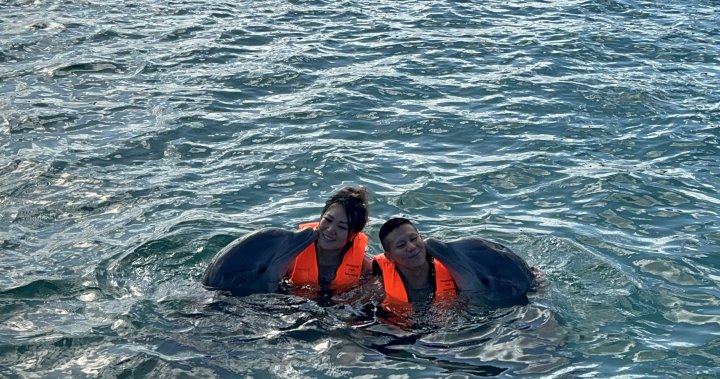
If Amy Zheng could go back in time, she says, she would do things differently.
Freshly double-vaccinated against COVID-19, the 28-year-old Toronto resident and her boyfriend Calvin Chan, 29, booked an all-inclusive vacation to a resort in Holguín, Cuba in May 2021. Their departure date was Dec. 10, less than a week before the Canadian government instituted an advisory against non-essential travel abroad.
“If I could go back and give myself a glimpse of what I was going into, I would have 100 per cent cancelled. It was not worth the stress,” Zheng told Global News in an interview.
She, like many other Canadians who have flown to sun destinations during the Omicron wave, tested positive while abroad and paid for it financially and emotionally. The risk calculation for flying south has changed because of how highly contagious the Omicron variant is and because different jurisdictions have their own rules, travel industry experts say.
The day before their scheduled flight home, Zheng says a member of the hotel staff came to their room and informed them that she had tested positive for COVID-19. Chan, with whom she shared a bed and spent the entire trip, was negative.
He flew back to Canada on their original return date so his job wouldn’t be affected and to take care of their dogs.
Despite her request for a retest, Zheng wasn’t given a second PCR test, which is considered to be more accurate than a rapid antigen test, for another five days. She spent that time in a “quarantine hotel,” which was decidedly less luxurious than the resort where they had spent most of the week. Zheng says drinking water was limited, there was no running hot water and the food was “indigestible.”


Stock index futures were steady on Tuesday, as investors hoped for a quicker resolution to the Middle East conflict that has led to a spike in energy prices.

The video game company on Friday joined thousands of American importers who have filed requests in the U.S. Court of International Trade for tariff repayments.

U.S. stocks are falling sharply Friday after getting a whiff of a worst-case scenario for financial markets: a weakening economy combined with high inflation.

The price for a barrel of benchmark U.S. crude shot up 8.5 per cent Thursday to settle at US$81.01 per barrel, the highest level since the summer of 2024.

Under the terms of the voluntary pledge, companies intend to build or buy new sources of power generation for their data centers and cover the expense of infrastructure upgrades.

Oil prices leaped, and stock markets slumped worldwide following military strikes by the United States and Israel on Iran, including Wall Street and the TSX.

'The core thesis is simple. Intelligence tools have changed what it means to build and run a company,' CEO Jack Dorsey said in a letter to shareholders of the financial tech firm.