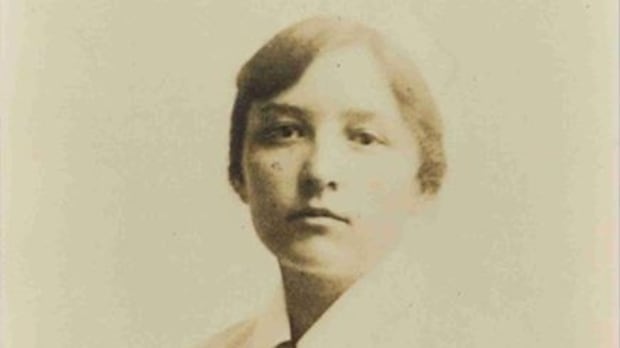
Trailblazing Kanien’kehá:ka nurse now a national historic person
CBC
Edith Anderson Monture has garnered yet another accolade nearly 30 years after her death, thanks in part to her grandson.
A Kanien’kehá:ka (Mohawk) woman from Six Nations of the Grand River in Ontario, Anderson Monture was recently deemed a person of national historic significance under Parks Canada's National Program of Historical Commemoration.
Anderson Monture, one of the first First Nations women to become a registered nurse in Canada, died at the age of 105 at her home in the community in 1996.
Her grandson, John Moses, a member of the Delaware Nation who is Kanien’kehá:ka through his maternal family, said he was thinking of more than just his trailblazer grandmother when he made the nomination to Parks Canada.
"My main motivation was hopefully this will serve as an incentive for other young Indigenous people out there who are looking for role models within the health-care professions," he said.
Anderson Monture struggled to be accepted to a Canadian nursing school, which almost exclusively admitted white students. At the time, First Nations people also faced involuntary enfranchisement (loss of Indian status) for pursuing higher education.
She moved to the United States to attend nursing school in New York state, and completed her degree in 1914. She then volunteered as a nurse with the U.S. military in the First World War, treating wounded soldiers in France.
After the war, she became a midwife and also supported local First Nations voting efforts by hosting a polling station in her home, Moses said.
He said he hopes people are able to reflect on the complexity of his grandmother’s achievements.
"It's very gratifying to see that this national designation has occurred but at the same time, we have to be cognizant of all aspects of the story being told," he said.
"It was Canada's racist policies under the Indian Act of Grandma's era that obliged her to seek her nurses training [in the U.S.] in the first place."
Erin Millions, a non-Indigenous associate professor of history at the University of Winnipeg, co-nominated Anderson Monture.
She told Parks Canada that Anderson Monture’s life and work should be remembered as extraordinary and exceptional.
"Her exclusion from Canadian nurse training programs, however, highlights the racism and colonial policies that often prevented First Nations students from accessing post-secondary education," Millions said in a Parks Canada news release.


Toronto resident Winhan Wong's lung cancer journey began in 2016, with a nagging cough that just wouldn't go away.

Last month, Assembly of First Nations National Chief Cindy Woodhouse Nepinak pointed out on social media that history was made this year because there are a record 164 female chiefs serving across the country.

Most of humanity has a great propensity to think in the short-term, but generally, long-term considerations — air pollution, deforestation and emissions, for example — just aren't our thing.

As the COVID-19 pandemic began to unfold in early April 2020, Kolter Bouchard was just weeks into fatherhood when he noticed a lump on his neck.

Advocates and health care providers say they remain concerned about First Nations kids seeking services under Jordan's Principle even after the Canadian government’s recent promise of $1.55 billion in funding.

Contrary to science fiction, black holes are not portals to other dimensions or cosmic vacuum cleaners that swallow up everything around them.

An attempt to preserve files documenting some of the worst harms caused by Indian Residential Schools could soon head to Parliament.

A new survey suggests about three million Canadian adults are currently taking GLP-1 drugs such as Ozempic or Mounjaro and that many more would like to, but cost is a barrier.

For years, people living in Canada’s north have reported an increasing numbers of polar bears on shore, venturing into communities and encountering humans.

When Maureen Hayes first tested her Ottawa home for radon a little over a year ago, the initial reading was far below Canada's current threshold to take action.

Debate over legislation to update animal testing rules will resume next month, with one lawyer fearing it will end important research into cardio-vascular disease without proper debate.

Sam Pratt was around 13 when he first saw people talking about "looksmaxxing" on YouTube.

A group advocating on behalf of Indigenous people who cross the Canada-U.S. border says it’s disappointed by new travel advice from the federal government.