Traditional construction techniques to the rescue of Simhachalam TemplePremium
The Hindu
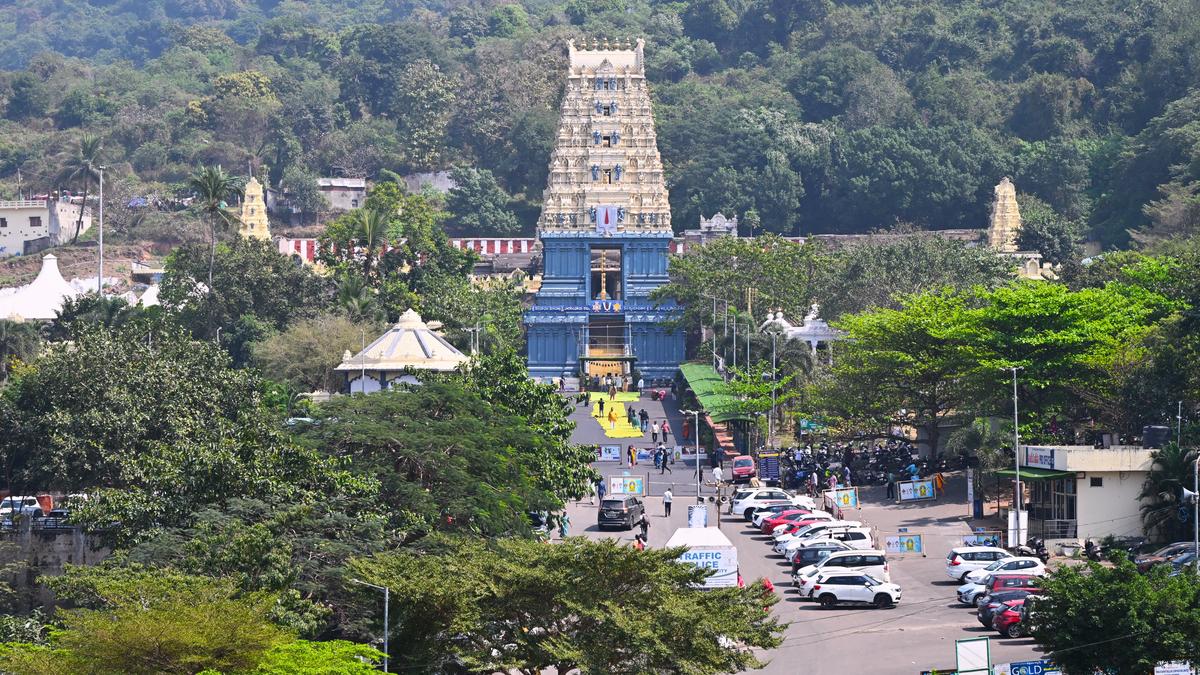
Sri Varaha Lakshmi Narasimha Swamy temple in Simhachalam, Visakhapatnam, undergoes traditional repairs to preserve ancient architecture.
The Sri Varaha Lakshmi Narasimha Swamy temple in Visakhapatnam’s Simhachalam has been drawing devotees from across Andhra and beyond for centuries. Steeped in history and myths, the architectural wonder has stood the test of time and elements, a testament to the ingenuity and resourcefulness of the ancient architects who built it.
Many of its construction techniques continue to puzzle modern engineers, and this lack of understanding became evident two decades ago when an attempt was made to arrest leaks on the temple roof using cement concrete.
When the leaks reappeared, however, the temple management turned to IIT-Tirupati and the Archaeology Department for help. As per their suggestions, a plan was hammered out to repair the roof of the main temple, the old Kalyana Mandapam and the ‘Nivedhanasala’ using traditional techniques and materials at ₹4 crore. Funds for the work would come from Lord Venkateswara Charitable and Religious Trust of Pune under the donor scheme.
On February 11, Executive Officer V. Trinadha Rao and trust representative Vishal Limkar exchanged a Memorandum of Understanding (MoU) to undertake the repairs, and the work, which began in April, is currently under way.
According to K. Muniratnam Reddy, Director-Epigraphy, Archaeological Survey of India (ASI), scientific repairs can ensure longevity for ancient rock structures. ”We have suggested the use of traditional materials—lime, Arabic tree gum, hirda, jaggery, okra, jute and urad dal,” he added. Muniratnam Reddy was visiting Simhachalam temple to participate in the MoU exchange programme.
On the preparation of the traditional mortar, he said that materials like Arabic tree gum, jaggery and jute would be boiled and kept in tanks for about a month and a half. After that, lime and surkhi would be mixed to form a concrete of sorts. Around 80% of the restoration work, being carried out by Uttaradevi Charitable Trust-Pune, has been completed, he added.
The main temple has a common roof for both Sri Swamy Varu and Ammavaru. Leaks have developed on the temple beda mandapams on the four sides (north, south, east and west), the Asthana mandapam, Kalyana mandapam, pakasala-1 and pakasala-2 (the lord’s kitchen). The common roof is spread over 24,000 sq.ft., according to the temple management.


The ‘Swastha Mysuru’ initiative aims to promote healthy living and preventive healthcare in Mysuru through community engagement and awareness.

Farmers in Ongole protest against BJP's policies, citing dangers to their livelihoods and demanding support for local agriculture.

From March 24, paneer queserotta, prawn tostadas, beef birria and more feature on MadCo's special Mexican pop up menu by Chef Mathangi Kumar alongside experimental cocktails, including a marigold highball

Revenue Minister Krishna Byre Gowda defends subsidies as crucial for economic growth, emphasising their role in boosting consumer demand during recessions.

Three doctors were arrested by the Mico Layout traffic police on Monday (March 23) after a video allegedly showing them triple-riding without helmets with one of the pillion riders seen drinking from a bottle went viral on social media.

Assembly protest ends in arrests as BJP targets Government over guarantees

Andhra Pradesh accelerates city gas distribution with streamlined approvals, enhancing access to cleaner energy and supporting sustainable urban development.

Sattankulam father-son custodial deaths case: Trial court convicts all nine accused police personnel
Nine police personnel convicted in Sattankulam custodial deaths; sentencing to be announced on March 30.

Minister Laxmi Hebbalkar supports local protests against a solid waste management plant in Turmuri, addressing residents' concerns.

Sattankulam father-son custodial deaths case: Trial court convicts all nine accused police personnel
Nine police personnel convicted in Sattankulam custodial deaths; sentencing to be announced on March 30.

Erode district conducts first EVM randomisation for April 23 Assembly elections, ensuring transparency and fairness in allocation.

TNCC conducts public consultation in Erode to gather community input for its upcoming election manifesto.

CID to investigate sexual assault allegations against suspended Moodbidri Police Inspector P.G. Sandesh, reveals Home Minister Parameshwara.