Trade deal or no trade deal, China still holds crucial minerals leverage over U.S.
CBC
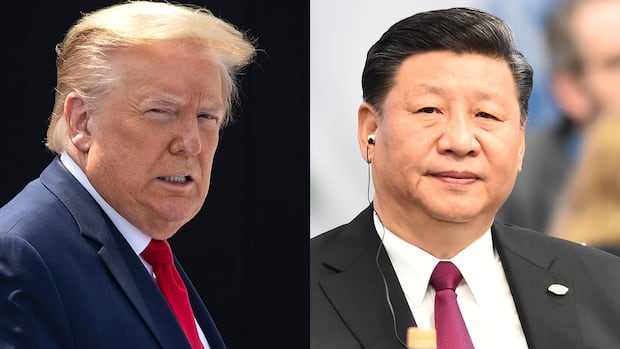
China still has substantial leverage over the U.S. in its dominance of the rare earth minerals market, despite the two countries agreeing to a framework trade deal days before a meeting between U.S. President Donald Trump and Chinese President Xi Jinping.
The meeting between the leaders, the first of Trump’s second term, is set to happen Thursday on the sidelines of the annual Asia-Pacific Economic Cooperation (APEC) summit in Gyeongju, South Korea.
It comes as the world’s two largest economies are embroiled in a trade war that has seen the countries levy tariffs higher than 100 per cent, threatening to rock the global economy — and revealing that China is willing to use its strengths as bargaining chips in the face of increasing economic threats from the White House.
There was, however, optimism that tariffs would be averted just days before Trump and Xi are slated to meet, after top officials from both countries announced a potential trade agreement following months of talks between officials, including in Geneva in May and Madrid in September.
“The tariffs will be averted,” stated U.S. Treasury Secretary Scott Bessent, who, alongside U.S. trade representative Jamieson Greer and Chinese Vice-Premier He Lifeng at the Association of Southeast Asian Nations summit in Kuala Lumpur announced a “substantial framework” for Xi and Trump’s meeting.
“I think we’re going to have a deal with China,” Trump said later.
However, the truce continues to be tenuous, considering the ebbs and flows of the U.S.-China relationship.
“There is a ceasefire going on. It doesn't mean there's disarmament,” said Mary Lovely, a senior fellow at the Peterson Institute for International Economics in Washington, D.C.
“These tools will still be available to both sides," she said, referring to tariffs and using various domestic industries as leverage.
Although the details are still murky, Bessent said the agreement included a “final deal” to transfer TikTok’s U.S operations to new ownership or face a ban, something Trump has delayed several times.
Bessent also said China could resume buying soy beans from U.S. farmers after Chinese orders stopped completely in the trade war.
He suggested the 100 per cent tariff on Chinese imports Trump threatened would not take effect Nov. 1.
But perhaps most importantly, the deal would see China delay its export controls on rare earth minerals for a year — a major pain point for Washington.
For some watchers, the agreement signals an important acknowledgement of the consequences of a blowout.


The armed man who rammed his vehicle into one of the largest Reform synagogues in the U.S. Thursday has been identified as a 41-year-old naturalized citizen born in Lebanon, according to federal officials.

With jagged cliffs rising from the Arabian Sea, the Strait of Hormuz is striking in its scenery — and these days, its emptiness. This resource superhighway, which normally hosts more than a hundred of the world’s largest oil and liquid natural gas (LNG) tankers every day, has seen no more than a handful all week.

The Canadian government said Tuesday it is alarmed by the escalation of violence and attacks in Lebanon, as the war in the Middle East expands.

In a resounding victory that is guaranteed to reshape Nepal's politics, rapper-turned-politician Balendra Shah appeared headed for a landslide win in the South Asian country's first polls since youth-led protests toppled the previous government last fall.

China’s latest blueprint for driving growth in its economy was largely written before the U.S. and Israel instigated the most far-reaching war in the Middle East in decades.

U.S. President Donald Trump's firing of Homeland Security Secretary Kristi Noem on Thursday overshadowed the announcement of his plans to nominate Republican Sen. Markwayne Mullin as her successor.

The truck carrying Nepali prime ministerial candidate Balendra Shah was swarmed by cheering supporters in the capital, Kathmandu, on Saturday, unable to inch forward as the former rapper, wearing sunglasses and a sleek black suit, danced on top of the roof.

Israel sent troops into southern Lebanon on Tuesday and warned residents of more than 80 villages to evacuate as the Iran-backed militant Hezbollah group said it was ready for an "open war" with Israel in the wake of the U.S.-Israeli war with Iran.

U.S. President Donald Trump has given Americans a short list of his objectives in attacking Iran, but when it comes to the justification for launching the war and how the conflict is expected to play out, he and his team are sending mixed messages.

Omid Golabkesh dragged his suitcase down a long hallway marking the exit of the Kapikoy border crossing in eastern Turkey. He had nearly reached the end of an exhausting journey that included a 12-hour drive to the checkpoint from his home in Tehran.