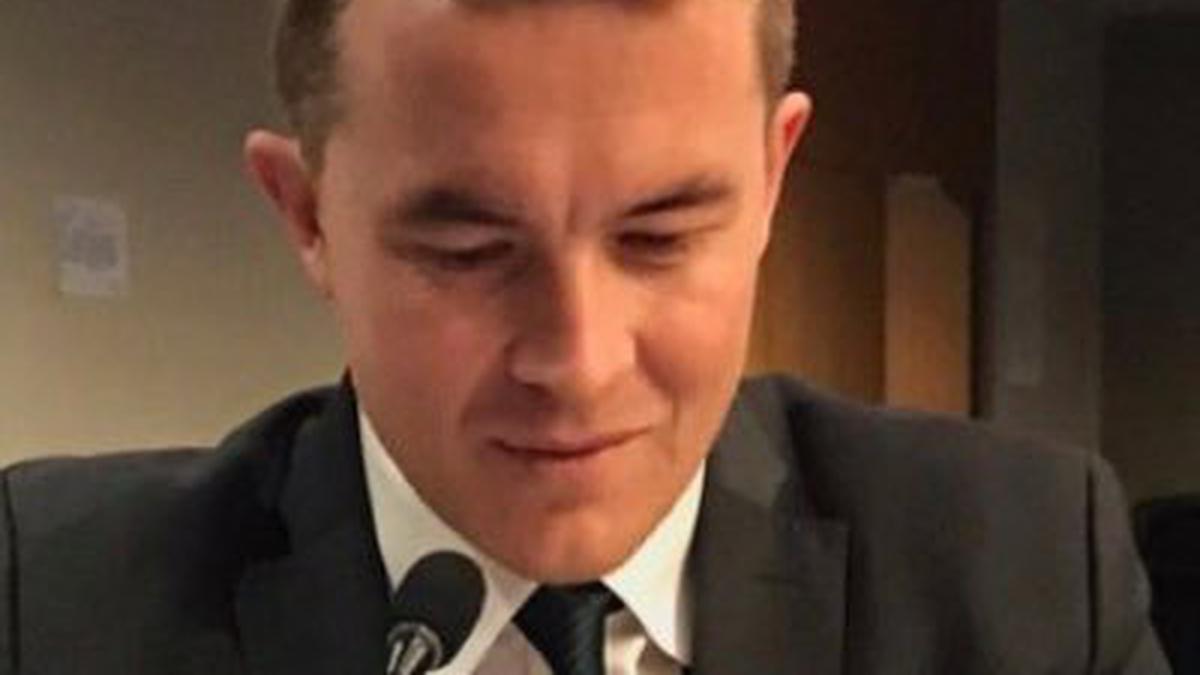
Trade deal between India, European Free Trade Association likely within a few days, says Norwegian Minister
The Hindu
India-EFTA Free Trade Agreement nears conclusion, addressing concerns over drug patents, global issues, and economic collaboration, says Norway's Deputy Foreign Minister.
The Free Trade Agreement between India and the European Free Trade Association (EFTA) is in the final stages and is expected to be concluded within the next few days, Norway’s Deputy Foreign Minister Andreas Motzfeldt Kravik said on Thursday, February 22,2024.
“We’re hopeful that we can conclude this now in the forthcoming few days. We will see how it goes. Of course, everything is still under discussion and we have to see how things play out. But we’re very optimistic. We have been at this now for several years and we’ve had very intense discussions. The respective Ministers from both sides, in terms of trade and trade policies, have been personally involved. I met with Mr. Piyush Goyal and discussed this. Again, we are very optimistic,” Mr. Kravik told The Hindu on the sidelines of the ongoing Raisina Dialogue. The EFTA consists of Iceland, Liechtenstein, Norway, and Switzerland.
The 21st round of negotiations for the trade deal were held in New Delhi from January 8 to 13. However, a possible matter of concern for India, on which there is no clarity, is the clause in the draft agreement that could delay access to affordable, generic versions of patented drugs in India by a minimum of six years, as reported by The Hindu last week.
According to a leaked draft, within six months of the trade agreement being signed, signatories should include a “specific duration” during which pharmaceutical companies applying to their country’s regulators for permission to sell a drug would not rely on “undisclosed test data” — in this case, data on the drug’s efficacy and impact on people — to gain market approval for at least six years.
During his visit, Mr. Kravik said he had held discussions on global issues, such as the situations in Gaza, Ukraine and the Red Sea, as well as on Norway’s bilateral relationship with India. Advocating greater economic collaboration between the two countries, he said, “India is now a leader in the global South and also an ascending power, a potential forthcoming superpower, and a culture that we want to collaborate more with.”
Responding to a question on the situation in the Red Sea, where the Houthis continue to target commercial shipping, Mr. Kravik said that as sea faring nations India and Norway were very much aligned on this issue. The fact is that there is a non-state stakeholder attacking civilian vessels in the Red Sea, inhibiting commercial maritime traffic which is something that cannot be accepted or tolerated, Mr. Kravik noted.
“I spoke to your Foreign Minister about this, and he mentioned he had recently been to Iran to lay down a few markers, saying that this is not something that can stand and that Iran needs... what it can do to prevent this. And I was also recently in Iran. I had the same message, also been clear directly towards the Houthis that this is not something that is acceptable, both from a standpoint of international law, from a standpoint of commercial international traffic, and not something that is tolerable from an international legal perspective,” he said, expressing hope that durable solutions can be found so that the Red Sea route can be opened again.


Nvidia will be part of OpenAI’s new funding round with an agreement that could be concluded as early as this weekend, according to the Times

Ekki Homa launches German technology sewage pumps in India, aiming for a 3% market share and expanded production capacity.

Novartis sells 70.68% stake in its Indian unit for $159 million to a consortium including WaveRise Investments and ChrysCapital.

Volkswagen India has announced the introduction of Tayron R-Line, a luxury SUV at the introductory price of ₹46.99 lakh (ex-showroom).

Sensex drops 1,236 points amid geopolitical tensions, led by declines in RIL and HDFC Bank, fueling market volatility.

India to start rare-earth permanent magnet production this year, with plans for critical mineral processing parks in multiple states.

The companies claim it to be the first-of-its-kind innovation for India, where audiences can now discover, engage, and immerse in their favourite stories simply by speaking

Mukesh Ambani announces ₹10 lakh crore investment in AI at India AI Summit 2026, promising a transformative tech revolution.

French President Emmanuel Macron told a global artificial intelligence summit in India on Thursday he was determined to ensure safe oversight of the fast-evolving technology.

President Trump’s son, Donald Trump Jr., has invested in Polymarket through his venture capital firm and is a strategic advisor for Kalshi.

Markets became volatile after a strong start, with selling in services and consumer durables stocks dragging indices down.

TATA Group and OpenAI partner to enhance AI education and infrastructure in India, driving global innovation and youth empowerment.

Explore the challenges and considerations for Indian firms eyeing Venezuelan oil imports amidst political and logistical hurdles.