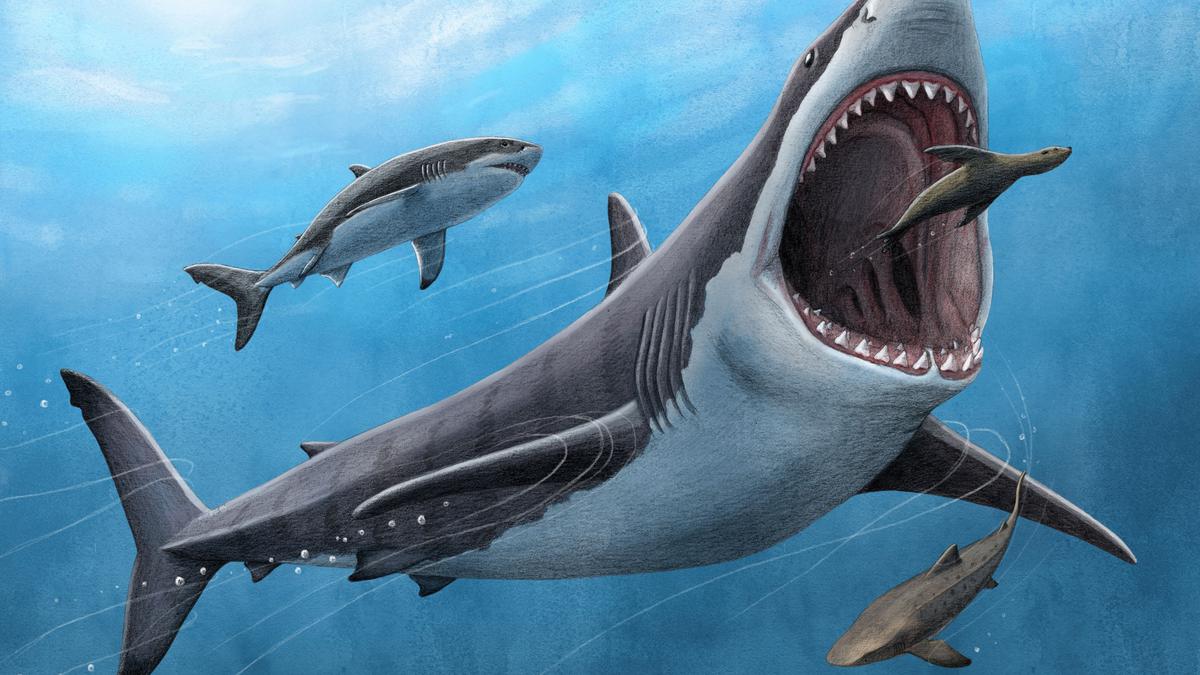
Tooth analysis confirms the megalodon - a huge ancient shark - was warm-blooded
The Hindu
Analysis of megalodon teeth are providing a fuller understanding the mineral makeup of their enamel-like tissue which confirms that the ancient shark was warm-blooded
The megalodon, a huge shark that was the scourge of the ancient oceans and is a star in modern movie theaters, is named for its "large tooth" - and for good reason. Its serrated teeth - up to about 7 inches long (18 cm) - could tear through any prey in the deep blue sea.
Those teeth now are providing a fuller understanding of this extinct predator, with an analysis of the mineral makeup of their enamel-like tissue confirming that megalodon was warm-blooded - a trait scientists suspect contributed both to its tremendous success and eventual downfall.
Researchers estimated that megalodon, which reached at least 50 feet (15 meters) and possibly 65 feet (20 meters) long while hunting marine mammals including whales, boasted an overall average body temperature of about 81 degrees Fahrenheit (27 degrees Celsius) and could keep it at about 13 degrees F (7 degrees C) above that of the surrounding seawater.
This may have made megalodon a more dynamic predator - a strong swimmer able to digest food in an energetically efficient manner and, importantly, tolerate colder water, letting it broaden its range to nearly worldwide.
Also Read | Fossils show ancient long-necked sea beast’s ‘gruesome’ decapitation
Most fish are cold-blooded - ectothermic - with body temperatures matching the surrounding water. But a few are warm-blooded - endothermic - generating their own body heat. Examples include certain sharks including the largest modern one, the great white.
"The only comparable living species today in terms of both diet and body temperature are the great white shark and, to a lesser extent, the mako shark. Though, as shown in our study, megalodon was quite a bit warmer than both of these modern apex predators, which makes megalodon unique," said geochemist and paleoclimatologist Michael Griffiths of William Paterson University in New Jersey, lead author of the research published in the journal Proceedings of the National Academy of Sciences.


Discover the Minor Planet Centre, the key hub for tracking and verifying observations of small solar system bodies.

In this week's Science for All newsletter, XX explains

Test your knowledge with the quiz on Science films at the Oscars through history

Set between the Siwalik hills and the plains, Butwal offers travellers a mix of regional cuisine, pilgrimage trails to Lumbini and the comfort of Hyatt’s new hospitality landmark

Explore 2026's wallpaper trends in India, highlighting botanicals and handmade designs that enhance modern homes with nature-inspired aesthetics.

Mercedes-Benz CLA 250+ with EQ Technology review: design, performance, range and features explained. Discover how the new electric CLA combines advanced AI, long range, fast charging and futuristic styling for the next generation of luxury EVs.

AI tool for sparrow conservation

BTS’s comeback with ‘Arirang’ marks a major global music event. When does the album release, and where can you watch their concert live stream? We have all the details

The 2026 U.S. cholesterol guidelines urge starting screening and treatment at 30 to prevent cardiovascular disease effectively.

Olam Festival 2026 in Thiruvananthapuram returns March 27-29 with 120+ vendors, music, art, and cultural zones.

A few storytellers in Thiruvananthapuram share their journeys, challenges, and evolving methods on World Storytelling Day, inspiring young minds.

76-year-old Kurian Jacob from Kerala triumphs with seven medals, including five golds, at the Open Masters Games in Abu Dhabi.

Explore the nature of the human mind as an emergent property of brain activity and complex neural interactions.