To be online, or not to be online: why social media users are opting for detox
The Hindu
Large-scale strategy pivots make social media users re-evaluate their usage of the platform, they also tend to gradually recognise the negative effects of the apps on their mental health.
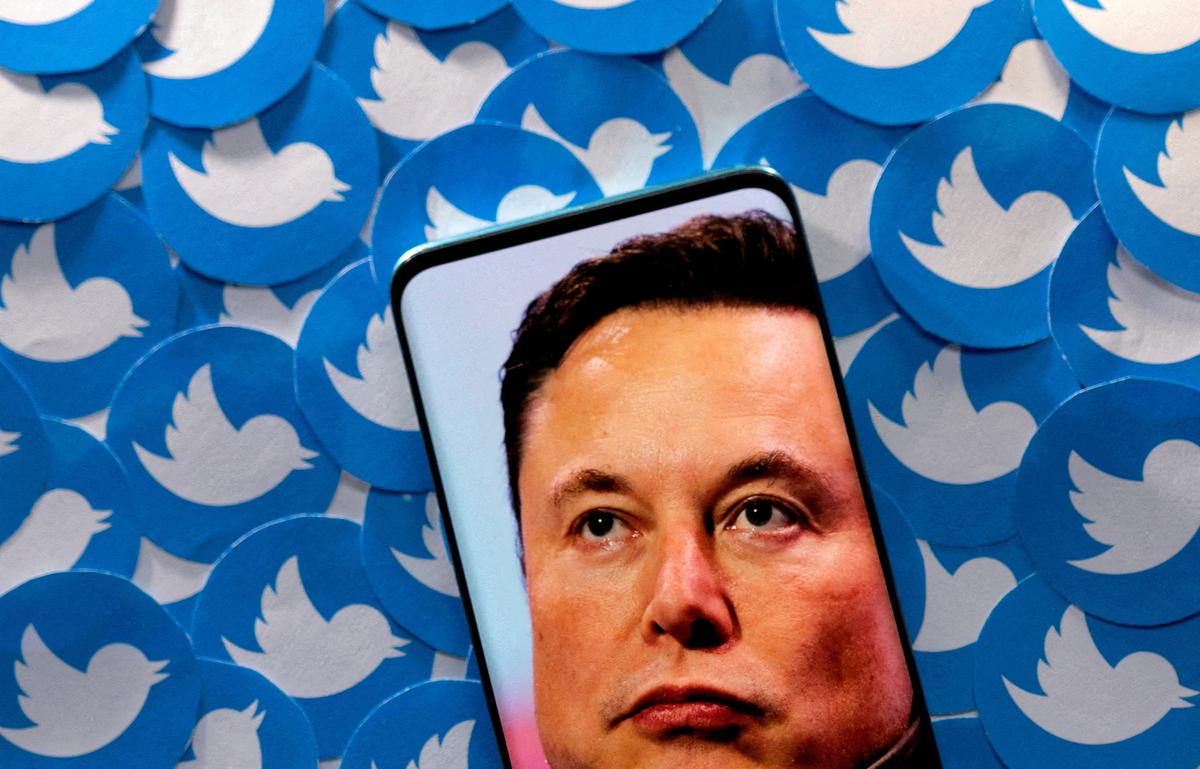
Unless you’ve been living under a rock for the last month, you know Twitter is in crisis after the company’s recent acquisition by Elon Musk, who brought in a swathe of changes which included laying off workers, critics, introducing subscription models for blue ticks, and suspending people who made jokes about him (despite stating that he would reverse all suspensions and advocate for ‘free speech’). As hate speech saw an immediate, almost five-fold rise, people started talking about leaving the ‘bird app’ for good, and open-source competitor Mastodon saw a 55% increase in sign-ups.
In an unsurprising parallel, the current state of Twitter echoes the aftermath of Instagram’s pivot to video five months ago, which led to creators calling to ‘make Instagram Instagram again’ even as internal documents showed that the share of Instagram users who believe the platform cares about them fell from close to 70% in 2019 to just about 20%. Over the past few months and years, the app’s indisputable dominance over social media has been challenged by events such as glitch-induced abrupt follower dips and random suspensions, the push to Reels, and the upheaval of ‘the algorithm’ which often leads to larger accounts losing their audience reach.
While such sudden, large-scale strategy pivots make social media users re-evaluate their usage of the platform, they also tend to gradually recognise the negative effects of the app on their mental health. This combination of factors is pushing many users, including brands, influencers, and regular people, to opt for a ‘detox’ — a self-imposed extended period of time with limited or no usage of one or more social media platforms. Most commonly seen on Instagram, these mini-exiles are gaining popularity across apps such as Twitter and Reddit too, and are driven by a desire to take a break from overstimulation, prevent mental health deterioration, and fundamentally rewire their online habits to change their relationship with social media.
“Dear Instagram, we’re taking a break,” announced The Whole Truth Foods earlier this year. “Don’t know for how long. But we need to,” said the Maharashtra-headquartered brand, which makes clean snacks and aims to demystify healthy eating. In a lengthy caption, they explained how Instagram’s changing algorithm de-prioritised educational, long-form formats and favoured content that catered to the audience’s “ever-shortening attention spans”. Recognising that they had been forced to create content that compromised on value while chasing mass appeal, The Whole Truth Foods admitted: “In our attempt to win with this algorithm, we’re beginning to lose ourselves… We feel we’ve started drifting. Away from what we set out to do. From our mission. (sic.)”
For Sukhnidh Kaur, a research fellow at Microsoft, and an influencer, the desire to detox was triggered by the realisation that Instagram’s engagement-oriented architecture was just a manifestation of corporate interests. “My creativity — which is big, exciting and all over the place, just the way I like it — was moulding itself uncomfortably to it. That made me feel stifled and inauthentic. I just wasn’t me anymore. I also began to feel a hint of worry about my relevance. That’s when I knew I had to go. ,” she said. After a year-long hiatus, Kaur is back on Instagram, but notices a difference in her mindset. “I’m consciously attempting to create and publish content that might not gain immense traction, but will make me happy. It’s like my own little rebellion. And my mood is not as determined by numbers and notifications as it used to be,” she says.
Vaibhavi Khanwalkar, Bengaluru-based journalist, uninstalled the app when the Reels update made it addictively immersive, admitting “it would’ve taken time to get out of the habit otherwise, but I was so shook by how much time I already spent on the app that it was easy to just leave it and not look at it. I only use web browser versions now.” After a year, she says, she feels calmer without all the unnecessary stimulation: “I find myself out of step in social situations now because I don’t know what’s trending. But I am happy to be ignorant.”
All these users realised that Instagram’s algorithm (with unequal prioritisation of certain types of content) was changing the app in ways that they didn’t enjoy. On Twitter, too, many users realise that the app is built to proliferate controversy — because that gets more clicks. Paromita Bardoloi, Delhi-based writer of Forty Notes of Wisdom For Every Woman, deleted her account the day after actor Sushant Singh Rajput died by suicide in 2020 and conspiracy theories took over Twitter. “We were in the midst of Covid deaths, a suicide of a young actor, and then the slandering of a young woman. I was overwhelmed beyond measure. I was losing my appetite and sleep with the barrage of information,” she says. She returned to Twitter with a new account, after a year. Musk’s actions have her on high alert. “Right now, I am fence-sitting, watching Twitter go through bizarre changes. I am still in control of myself, but anytime I feel it’s taking over my sanity, I have the deactivate button,” Bardaloi states.


CERN's Large Hadron Collider discovers the Xi-cc-plus particle, enhancing understanding of quantum mechanics and baryon behavior.

Vibha Batra’s latest book, Spotless (Hachette India) is a novel in verse for young adults

In its first edition, the Madras Art Salon spotlights the works of journalist and artist Narayan Lakshman at The Botanical Club, a social space in the British Deputy High Commission, Chennai

Cholesterol enhances melanoma cell invasion by making nuclei squishier, revealing a potential treatment target in cancer progression.

The designers reinterpret the Swedish artist’s symbolic forms and colour energy through contemporary resortwear silhouettes

Discover the inspiring legacy of Bibha Chowdhuri, a pioneering woman in physics and a trailblazer in STEM history.

Discover the inspiring legacy of Bibha Chowdhuri, a pioneering woman in physics and a trailblazer in STEM history.

Ashdeen’s Spring 2026 collection features saris inspired by the designer’s Parsi gara archive

Red ochre burials, ritual markings and myths across cultures show that red repeatedly marks liminal thresholds such as puberty, sacrifice and death; anthropologists argue that the colour functions as a technology of collective ritual and value, binding communities through shared symbolic acts

India approves 23 institutions for quantum labs under the National Quantum Mission, aiming to advance quantum technology and research.

India approves 23 institutions for quantum labs under the National Quantum Mission, aiming to advance quantum technology and research.

The Gaza conflict exacerbates environmental damage, emitting millions of tonnes of CO2 and threatening climate stability in West Asia.

Chefs and cookery experts share smart kitchen hacks, hybrid cooking methods and appliance tips to help households reduce LPG use without compromising on food