Tick season is back. How to stay safe around these risky bloodsuckers
Global News
Thanks to warming winters and milder temperatures, ticks are thriving in more parts of the country than ever before — bringing the risk of tick-borne illnesses like Lyme disease.
As Canadians flock outdoors for hiking, gardening and sunshine this spring, an unwelcome guest is making its seasonal return: ticks.
Thanks to warming winters and milder temperatures, ticks are thriving in more parts of the country than ever before — bringing a growing risk of tick-borne illnesses like Lyme disease.
Black-legged ticks, the species responsible for most Lyme disease cases in Canada, are expanding their range rapidly and are now found in parts of every southern province. This spread is closely tied to climate change, which allows ticks to survive winter and move into once-too-cold regions, putting more people and pets at risk.
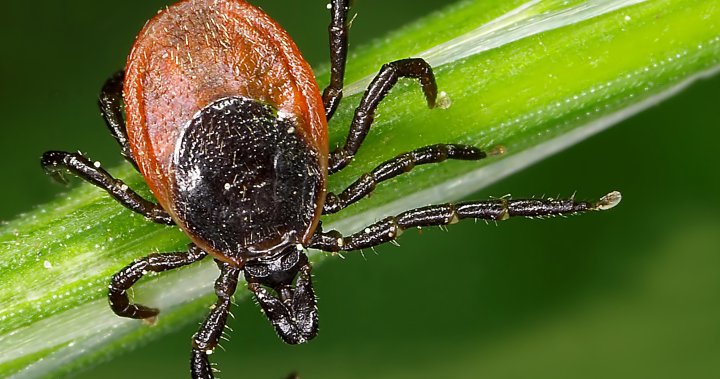
Although there are more than 40 tick species in Canada, the most common one is the black-legged tick, also known as the deer tick, and its numbers are on the rise. These ticks become active once temperatures hit 4 C, and they’ll start looking for a blood meal from animals — or humans.
“The black-legged tick and the western black-legged tick out in the West carry Lyme disease and other diseases. So when we’re bitten by ticks, we’re at risk of acquiring these diseases,” said Dr. Sarah Keating with the Canadian Lyme Disease Foundation.
This is because ticks are really good at spreading disease, she said. They have their own microbiome, just like we do, full of various microorganisms.
When a tick starts feeding, some of these organisms can move into its salivary glands. Then, as the tick injects saliva into our skin to keep the blood flowing and avoid detection, those pathogens can enter our bloodstream and potentially cause disease.
Milder winters mean more ticks can survive winter under leaf litter, Keating said.


Muslims across Canada are celebrating Eid al-Fitr while some reflect on conflict affecting loved ones abroad, as leaders highlight unity, charity and renewal.

The Iran war has raised the price of crude oil beyond US$110 per barrel in international markets, spurring affordability concerns in Canada and around the world.

The statement from Global Affairs Canada comes a day after U.S. intelligence leaders unanimously testified that reports denying foreign involvement should be retracted.

It may be the first day of spring, but Ontario’s long winter isn’t over, with more snow and icy conditions expected before a full warm-up arrives

The policy is something of a reversal from a government that killed a similar idea shortly after taking power. Back in 2019, the province said the policy would be unenforceable.

The recall states that 'the ovens in the ranges can experience a delayed ignition of the oven's bake burner, which can create a potential risk of burns.'

U.S. President Donald Trump is widening the cracks between the United States and European NATO members with his calls for allies to help him finish the war he started with Iran.

The legislation from U.S. Rep. Lloyd Smucker would launch a U.S. Trade Representative investigation into whether the Canadian law unfairly burdens American commerce.

The New York Islanders plan on moving their American Hockey League affiliate from Bridgeport, Connecticut, to Hamilton, Ont., for next season.

Mayor Michael Prue said Diageo appeared to lose steam in its attempts to quickly sell a facility in his town as soon as Doug Ford stood down his threat to ban Crown Royal.

Dillon Whitehawk has been found guilty of first degree murder in killing of Keenan Toto, but not guilty in killing of Jordan Denton.

Waterloo’s police chief says snipers may continue to be used at large events as needed, following their deployment during a St. Patrick’s Day street party.

Parents and students in Nova Scotia and Manitoba are dealing with the aftermath of what could have been two deadly school attacks, after FBI intel leads to arrests.