This Alberta mountain town plays a big role in the fitness watch craze
CBC
In a small Alberta town, an eclectic group of engineers and athletes are helping to fuel the explosive growth of fitness watches and wearables.
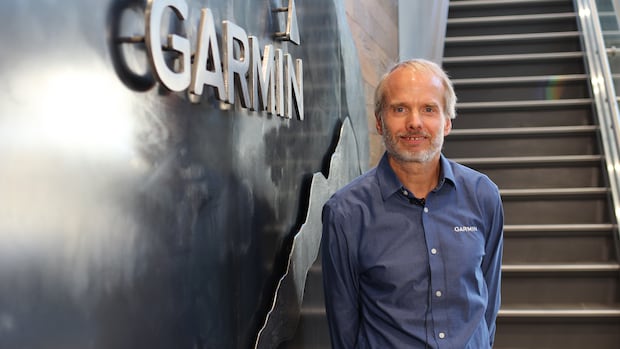
Just off the highway en route to the Rocky Mountains, the Cochrane headquarters of Garmin Canada is where the company develops the technology that pulls biometric data out of a person’s wrist and plunks it into their watch.
These days, there’s plenty of demand for that. Sales of fitness tracking devices are up, and south of the border, U.S. health secretary Robert F. Kennedy Jr. has floated a vision of the future where every American is using a wearable within the next four years.
Garmin makes everything from bike computers to GPS devices for boats and airplanes, but has carved out a niche for itself among athletes and runners with a wide-ranging catalogue of ultra-specific sport watches and wearables.
The company’s latest earnings, released this week, saw its revenue from fitness devices climb 30 per cent in the latest quarter and raised its 2025 revenue growth estimate for the fitness segment. The stock dipped slightly Wednesday as broader sales came in a little light, and its outdoor segment saw a year-over-year decline.
“It’s doing really well,” said Ivan Feinseth, partner and director of research at Tigress Financial Partners in New York, who sees the current stock dip as a buying opportunity.
But growing in a particular sector means pressure to keep it up. The company, which has built out its Canadian footprint in recent years, needs to keep coming up with new iterations of its devices while fending off lawsuits, staying ahead of the competition and keeping customers interested, especially when a slowing economy has many tightening their spending.
Garmin Canada started as another company altogether: Dynastream Innovations. In 1998, four engineers in a Cochrane garage started the company with a basic device that could clip to a person’s shoe and tell them how fast they were running and how far they’d gone.
In those days, said Dynastream co-founder Jim Rooney, if somebody wanted that information, their only option was to get in the car and drive their running route with an eye on the odometer.
From there, the company had to figure out how to get that data into a watch — and to convince people that a watch was worth wearing.
“People had stopped wearing watches; they used their phones for everything,” said Rooney, who is now managing director for Garmin Canada. “We had to give people a good reason to put those back on their wrist again and use them.”
For years, Rooney said, Dynastream made products for other major players, like Suunto, Adidas and Timex. Garmin went from being the company’s biggest competitor to being its biggest customer, said Rooney, and ultimately acquired Dynastream in 2006.
Dynastream became Garmin Canada in 2018. Since then, the company’s Canadian headquarters has undergone a massive expansion to a three-storey building in Cochrane that employs a staff of about 280 people.
Despite its growth, Rooney said they’ve chosen to keep their home base near the mountains so its many product testers can easily jet off to the mountains to try out the latest running or biking device.


The Trump administration on Friday ordered all U.S. agencies to stop using Anthropic's artificial intelligence technology and imposed other major penalties, culminating in an unusually public clash between the government and the company over AI safety.