"There Will Be Sacrifices": Sundar Pichai On Google's Green Campus Test
NDTV
Sundar Pichai wants to head the first giant company run without emissions around the clock. It will take far more than money to achieve.
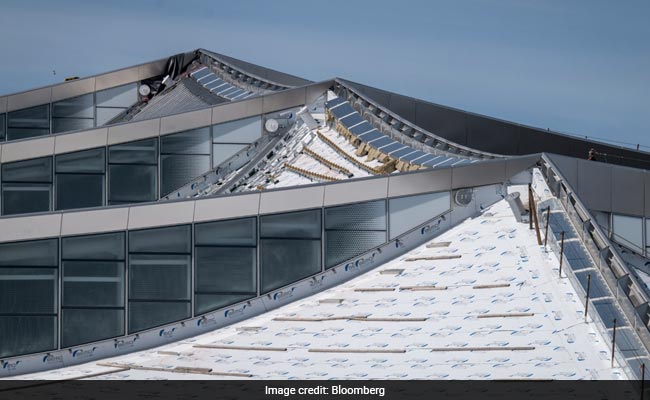
Google Bay View, the company's newest campus, consists of three squat buildings nestled near the San Francisco Bay shoreline a few miles east of its headquarters in Mountain View, Calif. The first things visitors notice are the roofs.
They curve down gently from pinched peaks, like circus tents, sloping almost to the ground. Each roof is blanketed with overlapping solar panels that glisten with a brushed metal sheen on the edges. Google calls this design Dragonscale, and indeed it looks as if a mystical beast is curled up by the water in Silicon Valley.
Google envisions its latest campus as the embodiment of a grander ambition to run its operations entirely free of carbon. The company plans to open Bay View in January to "a limited number" of employees, depending on the pandemic. Beneath the buildings, thousands of concrete pillars plunged into the ground will serve as a sort of geothermal battery, storing heat to warm the building and water supply without natural gas. The roof panels were constructed with a unique textured glass to prevent glare and with canopies that emit a soft, glowing light into the spacious atria inside. "We call this the Cathedral of Work," says Asim Tahir, who oversees energy decisions in Google's real estate division. He stands by the southern entrance in a hard hat, mask, and safety vest.
Sundar Pichai, chief executive officer of Google and its parent Alphabet Inc., pokes his head inside for a look. During the pandemic, construction crews had set strict rules limiting entry for guests, even the boss. It's the first Friday of September, and the normally reserved executive is eager to talk to Bloomberg Green about his company's climate ambitions. Outside, the air is thick with wildfire smoke, a new annual reality for all of California. Hurricane Ida is pummeling the East Coast. Each disaster underscores how late corporate America is to the climate change fight.


Zolghadr was a former Iranian Revolutionary Guard commander

Amazon Web Services (AWS) in Bahrain has been affected by drone activity amid the ongoing US-Iran war.

Trump was speaking at Memphis Safe Task Force roundtable in Tennessee

In 2005, Ghalibaf ran for president but lost

The chain of events that led to the operation began on April 14, 1988.

Image showed a black cloud of smoke rising from a field where the plane crashed.

Mohammad Bagher Ghalibaf denied he has been in talks with US officials

Leonid Radvinsky passed away following an illness.

For years, cybersecurity experts have warned that cameras could be hacked for war.

Iran threatened to close Strait of Hormuz if Donald Trump targets country's power plants


The evacuation and rescue operations are underway at the airport.