The week in 5 charts | Rajiv Gandhi assassination case convicts walk free, FTX collapse, COP27 and more
The Hindu
Here are five charts that will help you understand some of the key stories from this week
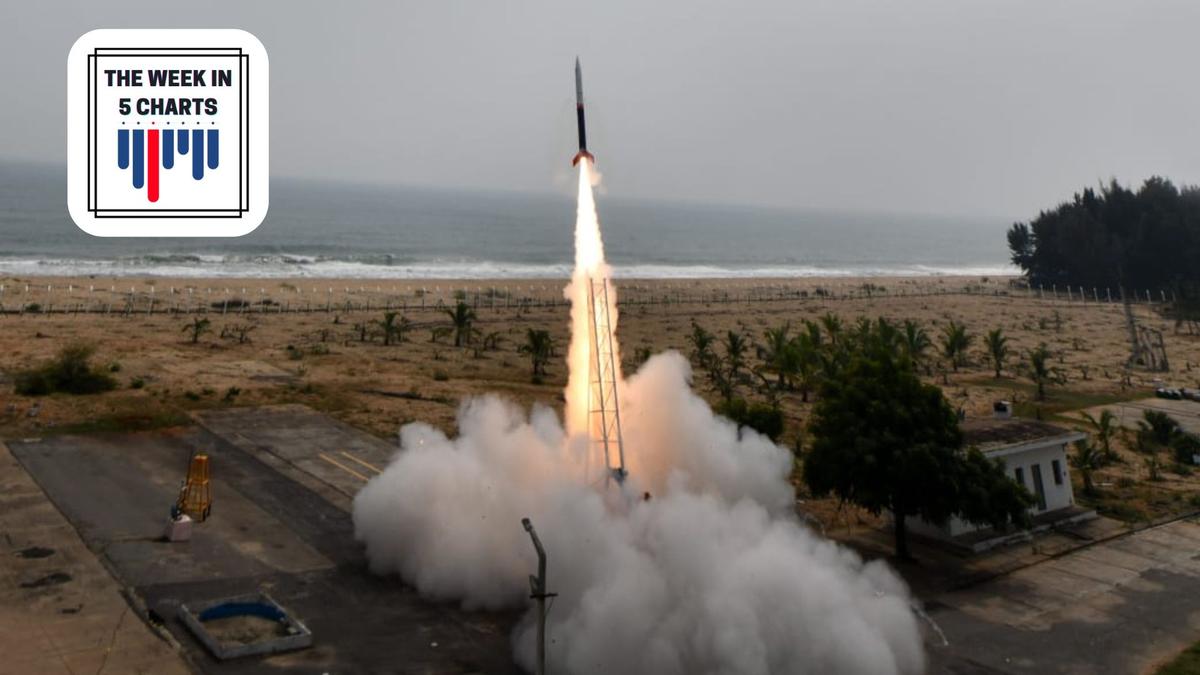
India crossed a milestone in its space journey on Friday with the first-ever launch of a rocket made by an Indian private company. Vikram-S reached an altitude of 89.5 km before splashing down into the Bay of Bengal off Sriharikota in Tamil Nadu. Launch to splashdown took around five minutes.
Globally, private rocket launches have increased. In India, it is a different picture. India’s technological improvements are known for making missions extremely affordable. However, its private sector participation had been locked out of the arena till 2020. A SpaceTech Analytics report put India’s share in the world’s space-tech companies at 3.6% or the sixth largest. The United States’ share is at 56.4%.
In 2020, the government introduced wide-ranging reforms. It established the Indian National Space Promotion and Authorization Centre (IN-SPACe) to free up regulations. Now, private companies could step into ISRO’s planetary exploration missions. ISRO’s facilities would now be open for private companies to use. This could mean saving expenses by renting out infrastructure and using ISRO’s facilities for assembling and testing satellites.
Also read | Space companies await the fineprint of reforms with big hope
Vikram-S’s maker Skyroot became the first company to take advantage of these reforms. It entered into an agreement with ISRO to use its facilities for test launches, along with ISRO’s technical expertise. Skyroot estimates that around 20,000 small satellites will be launched in the coming decade.
After two-day long and exhausting negotiations, the countries have adopted a hard-fought final agreement at the COP27 climate summit that sets up a fund to help poor countries being battered by climate disasters. Financing or a new fund to deal with loss and damage was a long-pending demand of poor and developing countries, including India. Loss and damage, the most contentious issue at the conference, refers to the most severe impacts of extreme weather on the physical and social infrastructure of poor countries, and the financial assistance needed to rescue and rebuild them. The rich countries have - until now - resisted the discussion over financing for 30 years fearing that since they historically played a major role in causing climate change, they will have to pay for it for centuries to come. Experts in India welcomed it as a testament to the tenacity of climate-vulnerable countries and a warning shot to polluters that they can no longer go scot-free with their climate destruction. However, the deal was far from perfect, with several key elements flawed or lacking. Some countries said the commitments to limiting temperatures to 1.5C represented no progress at the COP26 conference in Glasgow last year, and the language on phasing out fossil fuels was weak.
Also read | Who should pay for climate damage?


The government plans to amend the FCRA, introducing new regulations for NGO asset management and accountability for key functionaries.

The draft policy for “Responsible Digital Use Among Students”, released on Monday by the Department of Health and Family Welfare, has recommended that parents set structured routines with clear screen-time rules and prioritise privacy, safety, and open conversation with children on digital well-being.

Police Observer Sushant Kumar Saxena conducts surprise inspection at Shencottai police station, reviewing warrants and security arrangements ahead of elections.

Andhra Pradesh government to launch key projects in April, focusing on industrial growth and infrastructure development, says Nara Lokesh.

Lok Sabha refers the Corporate Laws (Amendment) Bill to a JPC amid opposition concerns over CSR provisions dilution.

SHG members in Kanniyakumari use snakes and ladders to raise election awareness and boost voter turnout.

Government accelerates consultations for early implementation of the Women’s Reservation Act to ensure women’s representation in 2029 elections.

CM A. Revanth Reddy distributes ₹1 crore insurance cheques to families of deceased Electricity department employees, enhancing financial security for workers.

The Bengaluru Traffic Police (BTP) registered 634 cases of drunk driving during a week-long special enforcement drive conducted across the city between March 16 and March 22.

GHMC intensifies action against property tax defaulters, seizing properties and offering a One Time Settlement scheme for payments.

CCB arrests three drug peddlers in Mangaluru, seizing ₹2.5 lakh worth of MDMA and other valuables.

TVK's 28 candidates in Puducherry include former BJP MLAs, a sitting Independent, and a retired police IG.

BRS submits notice on private member bill to Speaker