The story of a peacemaker and an award for efforts to promote amity
The Hindu
Tamil Nadu government confers Kottai Ameer Communal Harmony Award on fact-checker Mohammed Zubair, drawing nationwide attention.
This Republic Day, the Tamil Nadu government conferred the Kottai Ameer Communal Harmony Award on well-known fact-checker Mohammed Zubair of Alt News. This drew nationwide attention to an award of which even in the State there is limited awareness.
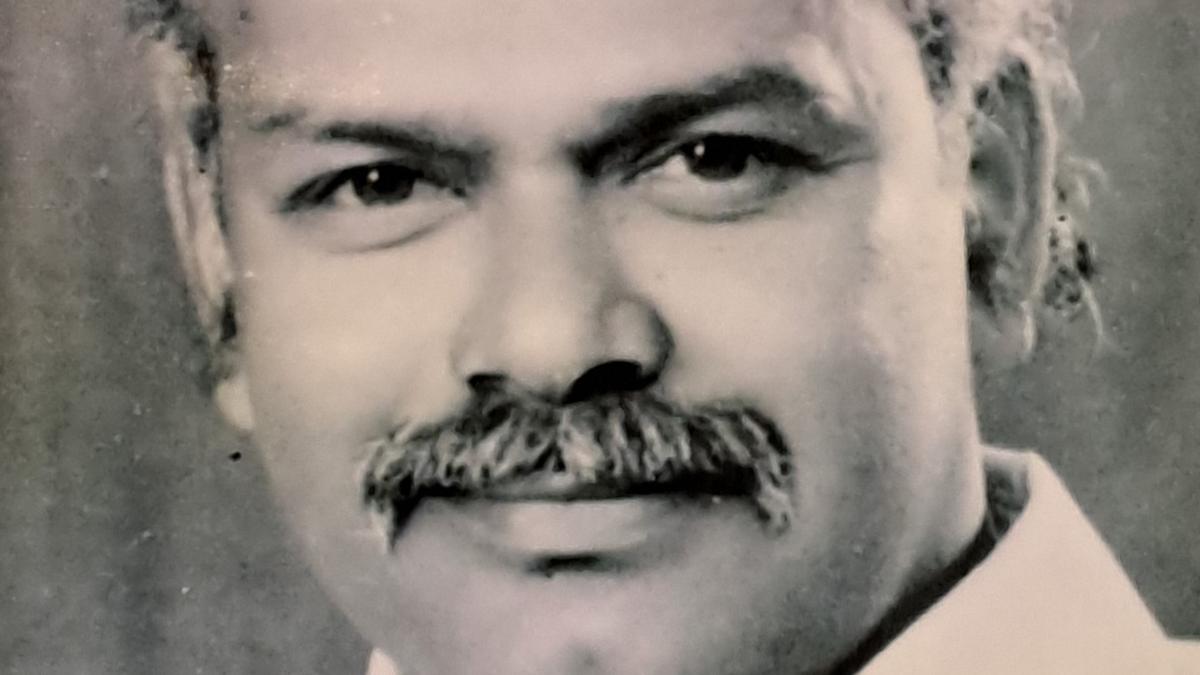
The award was instituted in honour of V.M. Ameer, alias Kottai Ameer, a man who had stood firmly against religious polarisation but fell victim to Islamic fundamentalism. Born to V.P. Muhammed Ibrahim and Jaina Bheevi, the third-generation Muslims settled at Kottaimedu in Coimbatore, Ameer had an early stint in public life while he earned for the family from a real estate business. Though he started his political life with the Indian National Congress, Ameer had his most active period in the public sphere when he moved to the Janata Dal, becoming the district president of its minority wing.
Having grown up at Kottaimedu, a busy urban pocket housing the more than 1,000-year-old Sangameswarar temple; over two-centuries-old Kottai Hidayathul Islam Safia Jamath mosque; and the more than 160-year-old St. Michael’s Church within one-kilometre radius, Ameer very well knew the closely knit secular fabric of his surroundings. The name, Kottaimedu, traces its roots to a battalion of Tipu Sultan deployed in the area as an extension of his fort at Palakkad.
“Kottaimedu was a place known for communal harmony with Hindus and Muslims living together. As a social worker and well-accepted personality, my father was a committee member of the Kottai Muthu Mariamman Temple and the Sangameswarar Temple. He also extended support when the Karuvalur Mariamman Temple at Kempatty Colony was consecrated, along with one of its trustees K.M. Selvaraj. He actively supported the activities of these temples while strictly following the principles of Islam,” recalls his son V.M.A. Akbar Basha.
But the communal harmony in the city developed cracks when it could not endure the ripple effects of the demolition of the Babri Masjid in Ayodhya on December 6, 1992. A year later, Al Ummah, one of the dreaded militant outfits in south India, took shape in Coimbatore. It was founded by S.A. Basha, who is serving a jail sentence in the Coimbatore serial blasts case.
“Soon after the Babri Masjid demolition, discontent grew among a section of the Muslims. Many were attracted to the ideologies of persons like Basha and the secular fabric began to disintegrate. My father raised his voice against this divide in the community and appealed for peace. He organised communal harmony meetings and walked through every street, asking people to maintain harmony,” recollects Ameer’s other son C.V.A. Jaleel, who used to accompany him to these meetings. However, protests by Muslims erupted in Coimbatore and tension prevailed.
“The police had to come to deal with one such protest when Muslims assembled in the packed four-corner junction near B.K. Chetty Street a few days after the demolition. Some people threw stones at the police from atop a building. A policeman took his rifle to fire without orders. My father, who was urging the crowd to disperse, pulled the barrel to a side and the bullet pierced through the shutter of a cycle shop,” Mr. Jaleel recalls. A year later, on November 23, 1993, Ameer received an inland letter, which is still preserved by Mr. Jaleel, from an unidentified organisation, which warned him of dire consequences if he continued to engage in peace activities. This was the beginning. Soon, distant relatives started telling Ameer’s wife Noorjahan that a group within the community was unhappy about his association with Hindu people and efforts to bring peace. “Two days before my father’s death, a relative told my mother that there were rumours about a plan to murder him. She was so pious and innocent and ignored it, saying ‘they wouldn’t do it’. When my father learnt this, he said he was ready to embrace death if that was the price of keeping peace,” remembers Mr. Akbar Basha.


Mangaluru City Police enforce strict New Year guidelines, including a 12:30 a.m. curfew and measures against violence and harassment.

Kaneri Math seer defends his language use against Lingayat seers, emphasizing colloquial expressions and urging unity within Hinduism.

Kundapura police charge book shop owner for illegally storing firecrackers linked to a fire that damaged multiple shops.

Mumbai civic polls: Congress's alliance with VBA falters as 20 seats remain uncontested, prompting a potential strategy rework.

BJP and Shiv Sena set 143-8 seat sharing formula for Nagpur polls

TNAU students explore high-throughput genotyping and data-driven crop improvement, bridging academic training with industry needs.

Indian-American pop artiste Rhea Raj is in Chennai with her family, including her sister Lara from pop girl group KATSEYE. She reflects on her Tamil roots, and the importance of South-Asian representation in mainstream pop music

BJP's Nainar Nagenthran accuses DMK of undermining the Horticulture Department and misappropriating ₹141 crore in scams.

Puducherry's French quarter becomes a no-vehicle zone for New Year celebrations, ensuring safety and traffic management.

Explore Tamil Nadu's 2025 education landscape, marked by Centre-State conflicts, Supreme Court interventions, and significant policy developments.

Designed around the silhouette and spirit of the world’s longest migratory traveller bird, Terns restaurant in Coimbatore celebrates curated global cuisines

Top news of the day from The Hindu, December 30, 2025

Telangana CETs 2026 schedule announced, with exams set for May and June for various professional courses admissions.