The status of the civil war in Sudan | Explained
The Hindu
Civil war in Sudan intensifies as SAF and RSF clash, leading to humanitarian crisis and failed peace talks.
The story so far: On September 26, the Sudanese Armed Forces (SAF) launched a major offensive against the paramilitary Rapid Support Forces (RSF) in Khartoum and Bahri. Thus, the war which was quiet for a few months has gained momentum again. Eighteen months into the civil war, the UN said that more than 20,000 people have been killed. Additionally, the International Organization for Migration has recorded an estimated total of 10,890,722 internally displaced persons (IDPs) as of October 1. All ceasefire efforts and peace talks have failed so far. The latest offensive comes ahead of the U.S.-led ceasefire talks on the sidelines of the UN General Assembly.
Also Read: Why is Sudan still at war a year on? | Explained
The civil war in Sudan between two military factions, the SAF and the RSF has crossed 18 months. It started as a power rivalry between the military heads of the SAF and the RSF, Abdel Fattah al-Burhan and Hamdan Dagalo respectively. What began as a conflict in the capital city of Khartoum has spread to Omdurman, Bahri, Port Sudan, El Fasher and the Port Sudan cities, as well as the Darfur and Kordofan states.
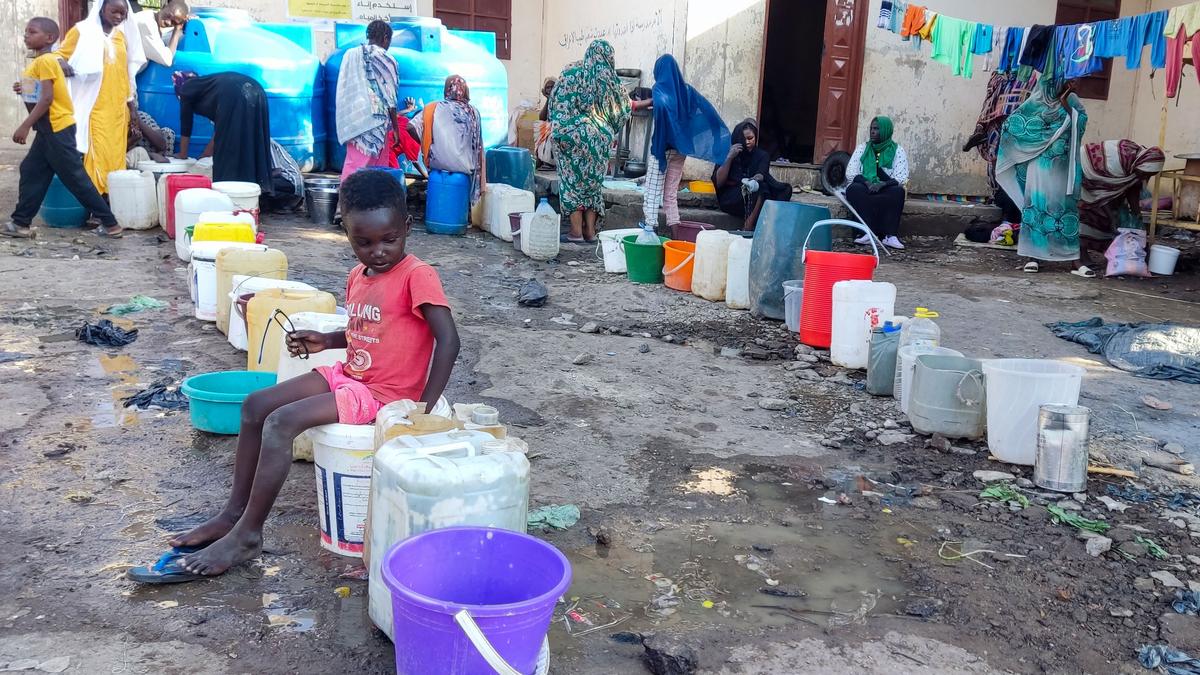
The RSF has an upper hand in multiple war zones. However, since August, the SAF has been carrying out frequent airstrikes and has captured pocket regions around Khartoum. The humanitarian crisis is worsening countrywide amidst limited and restricted access to aid and health care, especially in the Darfur states. The warring sides are also accused of carrying out war crimes including sexual violence and extrajudicial killings in several regions. In August, the UN declared famine in the Zamzam camp in North Darfur which hosts nearly 5,00,000 IDPs. The UN- Integrated Food Security Phase Classification (IPC) Famine Review Committee says that 14 regions in the Greater Darfur, South and North Kordofan, and Jazeera states face conditions similar to Zamzam. According to the latest UN-backed IPC initiative, 25.6 million people, more than half of Sudan’s population, face “crisis or worse” levels of food insecurity. Conditions have further worsened amidst heavy rains and floods and the subsequent spread of cholera. The outbreak has killed more than 200 people.
There is no sign of an end to the war. Firstly, both warring parties are adamant about gaining ground and legitimising their power. The SAF claims to be the legitimate government, with the UN just about recognising their claims, although it came to power through a coup in 2021. However, the RSF has territorial gains around the capital and other war zones. It opposes the SAF’s efforts to represent Sudan internationally, claiming legitimacy. The RSF, a former Arab militia known as Janjaweed, seeks alliances from several Arab countries to support its claim to power.
Secondly, Sudan has been under the UN arms embargo, since the 2004 Darfur crisis, which has recently been extended for another year. However, the embargo has not blocked the flow of weapons. A Human Rights Watch report in July claimed that the warring parties have been using armed drones, drone jammers, anti-tank guided missiles, truck-mounted multi-barrel rocket launchers, and mortar munitions produced by companies registered in China, Iran, Russia, Serbia, and the UAE. Easy weapon procurement and use have aided the continuation of the war.
Also Read: Nearly eight million displaced by Sudan war: United Nations


Explore the escalating Iran-Israel conflict, detailing key events and retaliatory actions over the first five days of war.

VCK will contest eight Assembly seats in Tamil Nadu's upcoming elections as part of the DMK-led alliance, aiming for victory.

Supreme Court reinstates FIR against IAS officer J. Manjunath, allowing bribery probe from 2022 involving Bengaluru Urban administration.

Telangana's screening reveals 26.9 lakh with hypertension and 14 lakh with diabetes, spotlighting a silent epidemic of non-communicable diseases.

KRG Studios appeals against leave granted to producer Kalaipuli Thanu for a suit regarding distribution rights of the film Max.

Supreme Court rejects petition for Q inclusion in census, citing concerns over social division and class creation.

Two RSS workers arrested for hurling a bomb at a policeman’s house in Kannur, Kerala; major tragedy averted.

Three youths radicalised by ISIS and AQIS arrested in Vijayawada for planning terror activities across India.

T.N. CM Stalin challenges PM Modi on government preparedness for West Asia crisis, emphasising leadership responsibility over public outsourcing.

Telangana DCA warns against unsupervised semaglutide use, stressing the importance of medical supervision and safe purchasing practices.

From origami classes at Rosary matriculation school to the two-day Makers Market in Mylapore, Chennai resident Priya Subramaniam has come a long way.

Election Commission bans exit poll results in Tamil Nadu from April 9 to April 29 ahead of Assembly elections.

Residents of Tambaram express concern over inadequate infrastructure amid rapid urban growth, highlighting traffic, drainage, and waste management issues.