The significant, but less talked about, contribution to the freedom struggle
The Hindu
The significant role of the Press in Tamil Nadu's independence struggle, highlighted through the history of The Hindu newspaper.
Earlier this month, the country celebrated its 78th Independence Day and the services of several sections of society were recalled at various events. One of the sections whose role was extremely significant, but less discussed these days, was that of the Press. The field of journalism in Tamil Nadu, known as Madras Presidency during the freedom struggle, occupied no less important space than what it had in the Bengal and Bombay Presidencies. The Hindu was a product of the period of the national movement and it is one of the handful of living institutions established during the British era.
Talking of the role of the Press, A. Berriedale Keith, a professor of Sanskrit and Comparative Philology at the University of Edinburgh, wrote in The Hindu on December 7, 1939: “Without freedom of the Press, indeed the work of the Indian National Congress would have lost much of its effect, for only through the Press could its constitutional aspirations be made widely known and win general support.” The veteran academic went on to quote Thomas Munro, a prominent administrator of the Madras Presidency who was associated with reforms in land tenure, as saying: “A free Press and the dominion of strangers are things which are quite incompatible and cannot long exist together, for what is the first duty of a free Press? It is to deliver the country from a foreign yoke.”
Started in 1878 as a weekly, this paper became a daily in 1889. Talking of its origins, S. Muthiah, a key historian of Chennai, had this to say: “Believe it or not, The Hindu was born in ire. Six angry young men, all barely out of their teens, felt the campaign waged by the Anglo-Indian Press — newspapers owned and edited by the British — against the appointment of the first Indian, T. Muthuswami Aiyer, to the Bench of the Madras High Court was blatantly unfair and should be forcefully rebutted.” He mentioned this in an article published on September 13, 2003, in connection with the 125th anniversary celebration of the paper.
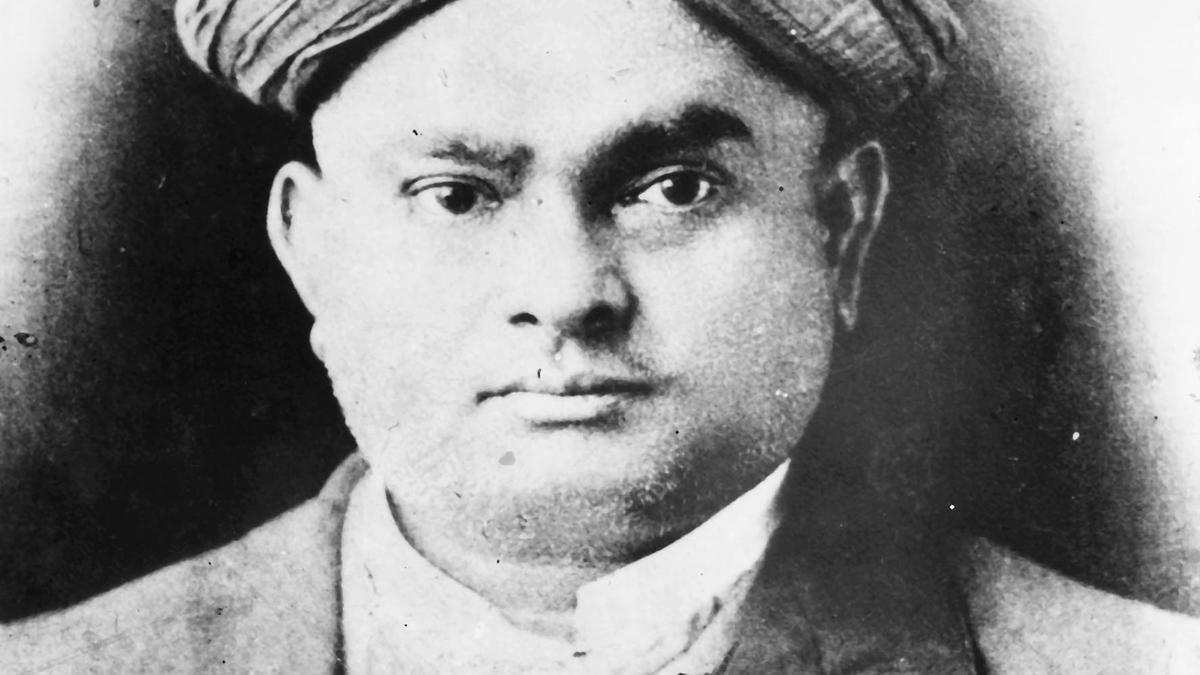
G. Subramania Iyer, Kasturi Ranga Iyengar, and Kasturi Srinivasan were among those illustrious Editors of the newspaper who were also forceful defenders of freedom. While Iyer was also the founder of a Tamil journal, Swadesamitran, Iyengar, while being a colleague of Mahatma Gandhi, did not restrain himself from expressing his differences with the Mahatma publicly on matters including the Non-Cooperation Movement and the entry to legislature.
V.N. Swami, a nonagenarian journalist, points out in his book Viduthalai Poril Patrigaiyalargal (2023) that overcoming financial constraints and the British government’s enmity, Iyengar strove for the growth of the newspaper. Iyer, who established the Tamil journal in 1882, was arrested by the British at Courtallam, now in Tenkasi district, for publishing “nine allegedly seditious articles” in Swadesamitran during January-June 1908. He was under arrest for three weeks in August-September 1908.
A biography of Iyer, brought out by the Publications Division of the Union Ministry of Information and Broadcasting in 1968, mentions that he was under arrest for three weeks. While taking him into custody, the authorities had searched the Tamil journal’s press, his temporary residence at Courtallam where he was recuperating, and his house in Chennai.
Mr. Swami’s book, which covered journalists from all over the country, deals with several distinguished members of the Press from the State. It gives an account of not just the prominent leaders, who also donned the role of journalist, but also less known persons.


BJP's Vijayendra accuses Congress of using money to influence Bagalkot bypolls, urging voters to reject their tactics.

First randomization of electronic voting machines completed in Tirunelveli and Tenkasi districts for upcoming Assembly elections.

RPF seizes 10.12 kg of unclaimed cannabis worth ₹5.06 lakh from a train in Mangaluru.

Kolar's groundwater levels rise to 50-100 ft due to the K.C. Valley project, ensuring clean water and improved health outcomes.

Three smugglers arrested in Sangareddy with 574 kg of ganja valued at ₹2.87 crore during a police operation.

Mysuru MP urges a 'flex-free Mysuru' by discouraging birthday banners, promoting responsible celebrations to preserve the city's heritage.

Farmers of Kalakudi demand payment for paddy bags procured at DPC

BJP's seal on a 2019 Election Commission letter ignites controversy in Kerala, prompting claims of careless handling by CPI(M).

Transgenders go on rally condemning Transgenders Amendment Bill 2026

Supreme Court dismisses plea challenging Sonam Wangchuk's detention, noting the Centre revoked it on March 14, 2026.

Private medical shops in Telangana government hospitals face eviction due to expired leases and ongoing legal challenges, says Health Minister.

A.P. BIE Secretary reviews answer script evaluation, emphasizing transparency and accuracy to ensure error-free marking and timely results.

Join the walkathon in Puducherry to promote oral hygiene awareness and celebrate World Oral Health Day with community participants.