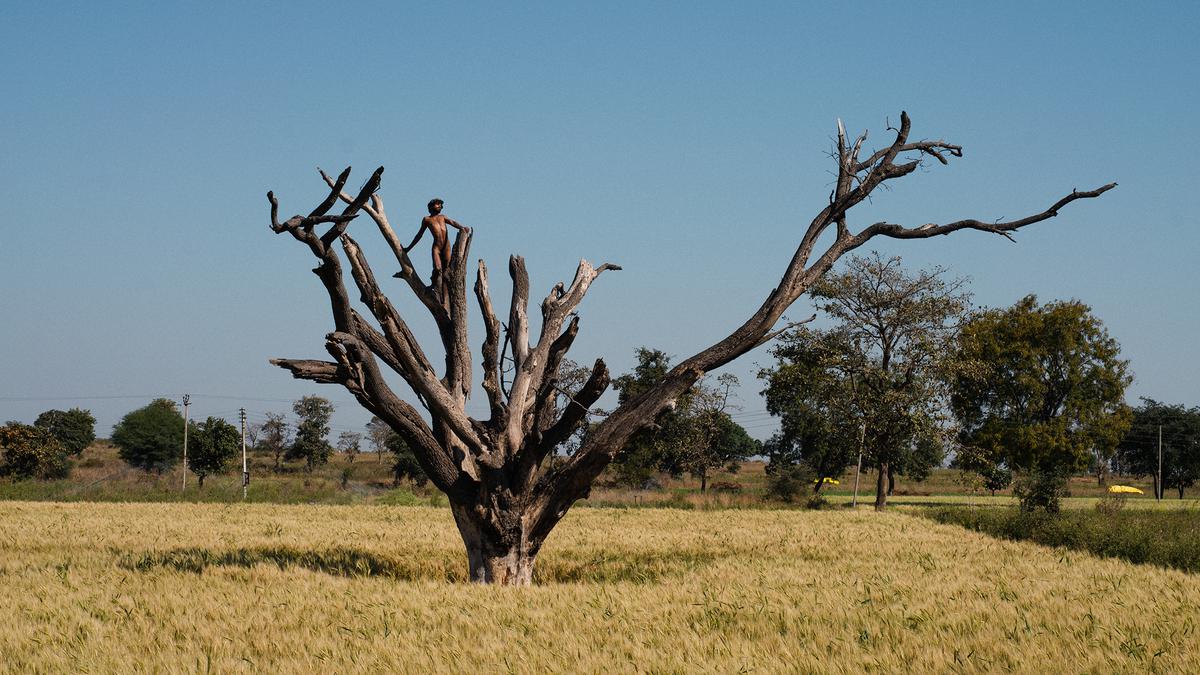
The Pollen Waits on its Tiptoe explores the nine emotions through the medium of art
The Hindu
an art exhibition themed on the Navarasas on display at Bengaluru’s CKP
What are you feeling right now, as you read this — curious, nonchalant, bored, interested? Or is there something else niggling at the back of your mind? Our state of mind is constantly governed by our emotions even if we do manage to master our expressions.
The Pollen Waits on its Tiptoe, an art exhibition themed around the nine emotions or Navarasas, has been curated by Bengaluru-based Manasa Raj.
Manasa says the idea for this show was a long time in the making. “During the pandemic, I noticed how the same situation was eliciting different reactions from different people — some were anxious, others relieved, while few saw it as an opportunity to challenge themselves. It was a time when everyone was undergoing emotional upheaval and I began to wonder about putting together a show around emotions.”
“Then, when the concept of the Navarasas struck me, I thought it would be an interesting way to depict feelings,” she says, adding it all came together while reading a translated work of Kannada poems by Da Ra Bendre where he dwells on the rasas (emotion) and rasika (viewer). “It resonated with the way I had been ideating this concept,” says Manasa.
“The Pollen Waits on its Tiptoe is the title of Da Ra’s work,” says Manasa about the title of the exhibition. “Besides, I find pollen to be an apt metaphor for human emotions — full of life and yet, directionless for the most part. It floats by on a journey of purpose.”
In the works on display, “ A rasa is explained as the emotional state of mind, the purity of emotion, to be shared with the rasika or viewer, partaking in the artist’s expression and interpretation and sharing the moment in a particular state of mind,” she says.
According to the Natyashastra, the nine emotions are adbutha (surprise), bhayanaka (fear), bibhatsya (disgust), hasya (humour), karuna (compassion), raudra (anger), shantha (peace), shringara (love) and veera (courage).


Brett Lee is inducted into the Australian Cricket Hall of Fame, joining cricket legends like Ricky Ponting and Shane Warne.

In this year ender episode of Decode Karnataka, an annual tradition of sorts, we take stock of the events and developments that made news in 2025.

Explore the formation and unique features of the Aravalli Hills, highlighting their geological history and environmental impact.

Why closing the gender gap in STEM starts in the classroom

BJP claims Digvijay Singh's praise for BJP highlights dissent against Rahul Gandhi, criticizing his leadership and Congress's decline.

Congress leaders clash over Bengaluru demolition remarks, with AICC expressing concern over the handling of the eviction process.

Congress marks its 141st Foundation Day, celebrating its pivotal role in India's independence and nation-building efforts.

Congress leaders in Karnataka defend eviction actions in Kogilu Layout, criticizing Kerala's CM Pinarayi Vijayan for misinformation.

Kosovo votes on December 28, 2025, to resolve a political deadlock amid voter disillusionment and critical international funding challenges.

Eight wagons of a goods train derailed in Bihar, disrupting rail traffic on the Howrah-Patna-Delhi route; no casualties reported.

Two men arrested in Manipur with firearms and ammunition, including a 9mm pistol and various cartridges.

Zelenskyy meets Trump to discuss potential peace agreement as Russia-Ukraine war continues, amid escalating tensions and attacks.

The Hindu In Frames: Visual vignettes