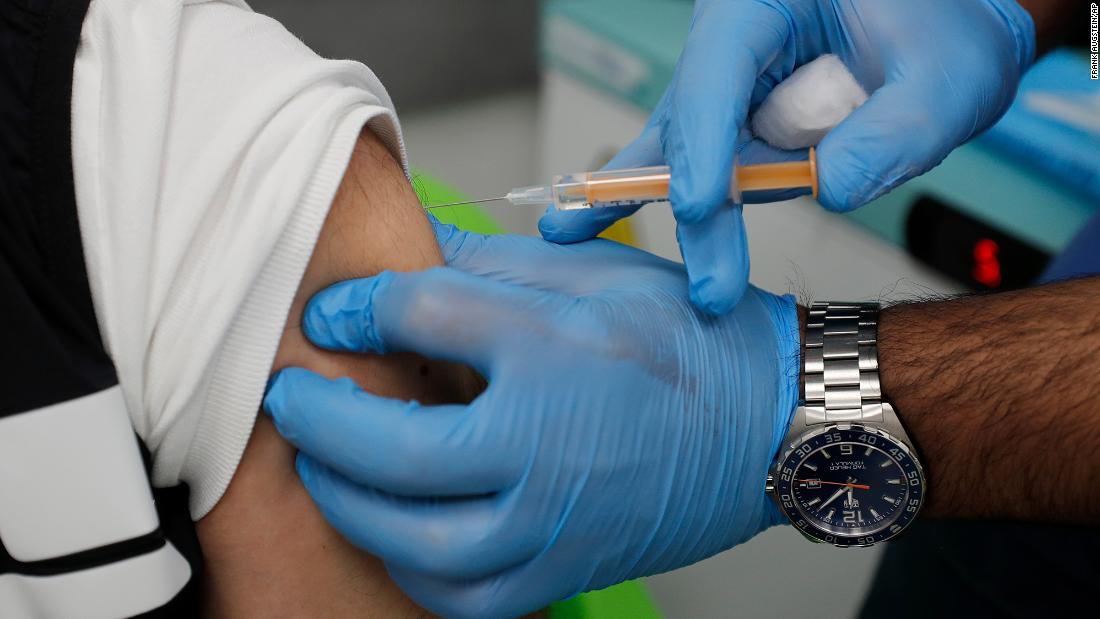
The pandemic is stirring deep resentments in Europe. They may not be quick to heal
CNN
Europe's had a torrid time since the start of the pandemic. For a continent whose prosperity relies on political cooperation, seamless supply chains and the uncomplicated crossing of borders, a crisis that pits nation against nation and demands limited movement is a challenge.
The pandemic has exacerbated gripes that have existed between European nations for decades. Countries have sniped at one another as they scrambled for protective equipment and vaccines, while pointing the finger at one another over their measures to contain the virus. This has been especially true of the 27 member states of the European Union. At the start of the pandemic, countries closed their borders for lack of trust that their neighbors were sufficiently containing the virus. There have been bitter disputes over exactly how the bloc should finance its economic recovery, with wealthier member states in the north contemptuous of financing those in the south, which they believe to be fiscally irresponsible.

As President Donald Trump rachets up the pressure on Cuba’s communist-run government and threatens a US “takeover” of the island, he frequently repeats a central promise: that decades after they left, Cuban exiles will soon be able to return to their homeland.

The first two weeks of the Iran crisis have demonstrated military dominance by the US and Israel, with asymmetrical responses from Iran. How this plays out over the coming weeks will determine the outcome.

Utah mother Kouri Richins was found guilty of murder and all other charges in the 2022 death of her husband, Eric Richins, who died of a lethal dose of fentanyl.

The Virginia man accused of planting two pipe bombs in Washington, DC, the night before the 2021 US Capitol riot asked a federal judge on Monday to dismiss his case, arguing that President Donald Trump’s expansive pardon of January 6 rioters applies to him.

President Donald Trump has repeatedly taken aim at Democratic rival and possible 2028 presidential candidate Gavin Newsom. But lately, he’s become fixated on saying the California governor cannot be president due to his “learning disability.”

Cuba’s electrical grid suffered a total collapse on Monday, the country’s power operator said, marking the latest nationwide blackout in recent years, and the first since the US effectively shut off the flow of oil to the island of roughly 10 million people.

Top Border Patrol official Gregory Bovino, who led controversial immigration sweeps in Democratic-led cities, has told people he plans to retire at the end of the month, according to two sources familiar with the discussions.

President Donald Trump’s handpicked Kennedy Center board of trustees voted Monday to close the storied performing arts institution for two years for renovations.

Florida GOP congressman Rep. Neal Dunn was thrust into the spotlight after Trump said he had a heart problem and underwent surgery

White House chief of staff Susie Wiles has been diagnosed with early stage breast cancer, President Donald Trump announced Monday.

An Afghan man who served alongside US special forces and fled his native country after its takeover by the Taliban died over the weekend shortly after being detained by immigration authorities, according to his family and an advocacy group.

5 things to know for March 16: War with Iran, Oscar winners, Travel chaos, Severe weather, US airmen
CNN’s 5 Things AM brings you the news you need to know every morning.

The retirement of Illinois Sen. Dick Durbin after nearly 30 years in office sparked an expensive three-way Democratic primary that has showcased the party’s divisions over how to confront President Donald Trump’s immigration crackdown and introduced pro-crypto forces as an influence seeking to shape the midterm elections. The contest is also setting up a test of Gov. JB Pritzker’s political clout in the state as he eyes a potential 2028 presidential bid.