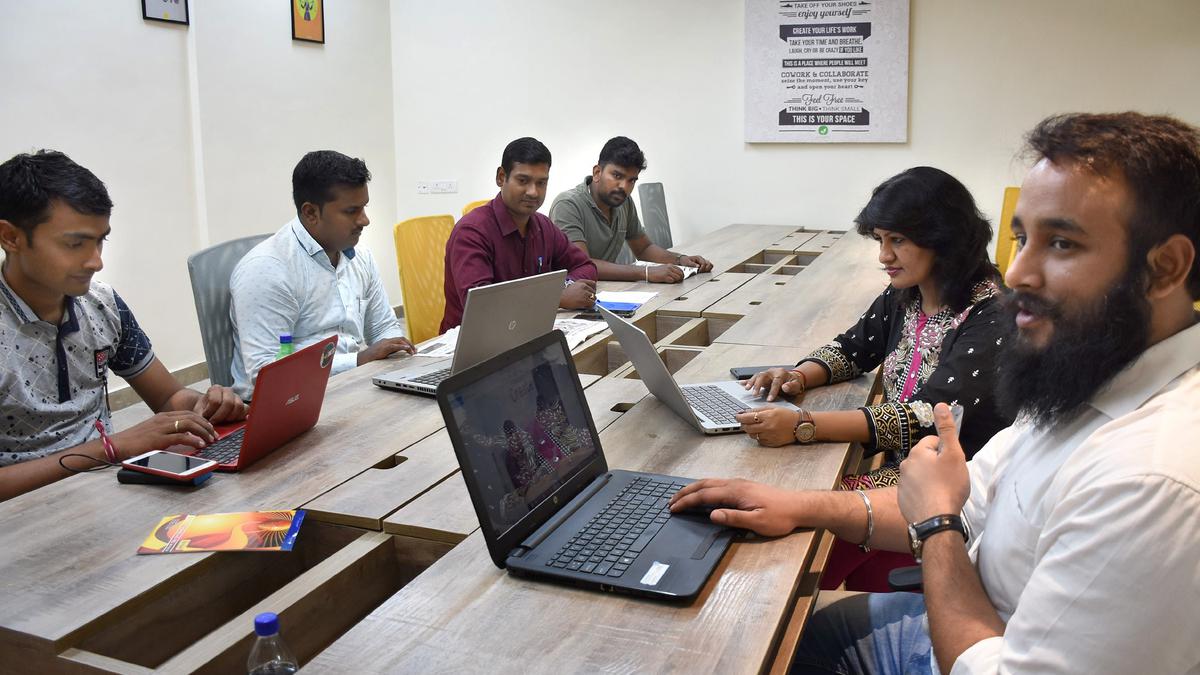
The office comes into focus, the home fades away
The Hindu
Amazon recently joined the procession of companies heading towards a hybrid work model, turning thei
Amazon recently joined the procession of companies heading towards a hybrid work model, turning their back decisively on a fully-remote work arrangement.
This June, eCommerce company Meesho would be replacing “work from anywhere” with “work from office” but with flexibility built into the new format.
Further down the work landscape, there are companies that had experimented with hybrid models, but are making work synonymous with office, setting the clock back to pre-pandemic times.
Mumbai-based tech company Fynd resumed the five-day office week this year, but not before introducing “inducements”, including perks relating to transport and food, to make the switch back to pre-pandemic work systems palatable.
The return-to-office programme by EY Global Delivery Services is pointedly focussed on making the cubicle an inviting space — efforts include “spinning the wheel of fortune” contests and team visits to sports carnival.
Tarun Kochhar, founder and CEO, Carpediem, notes the “work from anywhere” model was a contingency born out of the pandemic. As the crisis has gone — at least, lost its virulence — the work arrangement it birthed might have to go or continue with changes.
“Going forward a blended model of working from home and office is what will be the way to go,” says Kochhar.


Indian markets plunged over 3% amid soaring crude prices, rupee depreciation, and escalating West Asia geopolitical tensions in March 2026.

Government launches ₹497 crore RELIEF scheme providing credit insurance to exporters affected by the West Asia crisis, focusing on MSMEs.

Crude oil futures rise amid Middle East attacks, pushing Brent above $116 on fears of tightening global supply.

West Asia conflict delays India’s FTA talks with GCC and Israel, while UK and EU agreements proceed as planned in 2024.

Russian Urals oil vessels will reach India on March 21 amid stable fuel prices and diversified LPG imports.

Warner Bros. dominated the Academy Awards, but Paramount’s looming acquisition of the studio signals the biggest restructuring of the industry in decades and a battle over the future of Hollywood itself

HDFC Bank board calls Atanu Chakraborty’s resignation baffling, affirms robust corporate governance and strong market confidence.

RNFI and Jio Payments Bank launch cardless UPI QR cash withdrawals for instant access across urban, semi-urban, and rural India.

RBI approves HDFC Bank's chairman transition plan, affirming the bank's strong financials and competent management.

Markets fall 2% as Israel attacks Iran’s South Pars gas field, pushing Brent crude above $112 and rupee below ₹93.

HDFC Bank shares drop over 4% following chairman’s ethical resignation, raising insider trading and management concerns.

Erran Berger, the Vice President of Product Engineering at LinkedIn, thinks the former type of division of labour is rapidly disappearing

India mandates oil and gas firms to share import and export data to mitigate consumer shortages amid rising global prices.