The oasis city, at the centre of MBS’s plan to transform the Saudi kingdom Premium
The Hindu
Saudi Arabia's transformation under Crown Prince MBS towards modernity and tourism, with potential benefits for India.
“I bought my grandmother a gold necklace from my first salary and she changed her mind about me working alongside men.”
Ghiwa (name changed), a tourist guide in Madina province of Saudi Arabia, adjusts her niqab as she answers a casually asked question about working women.
Saudi Crown Prince Mohammad Bin Salman, or MBS as he’s popularly known, seems to have used Ghiwa’s household tactic on a national level to herald an era of change in his country. The conservatives are bristling at his Vision 2030 for it breaks to shackles of traditional attitudes and performative religiosity.
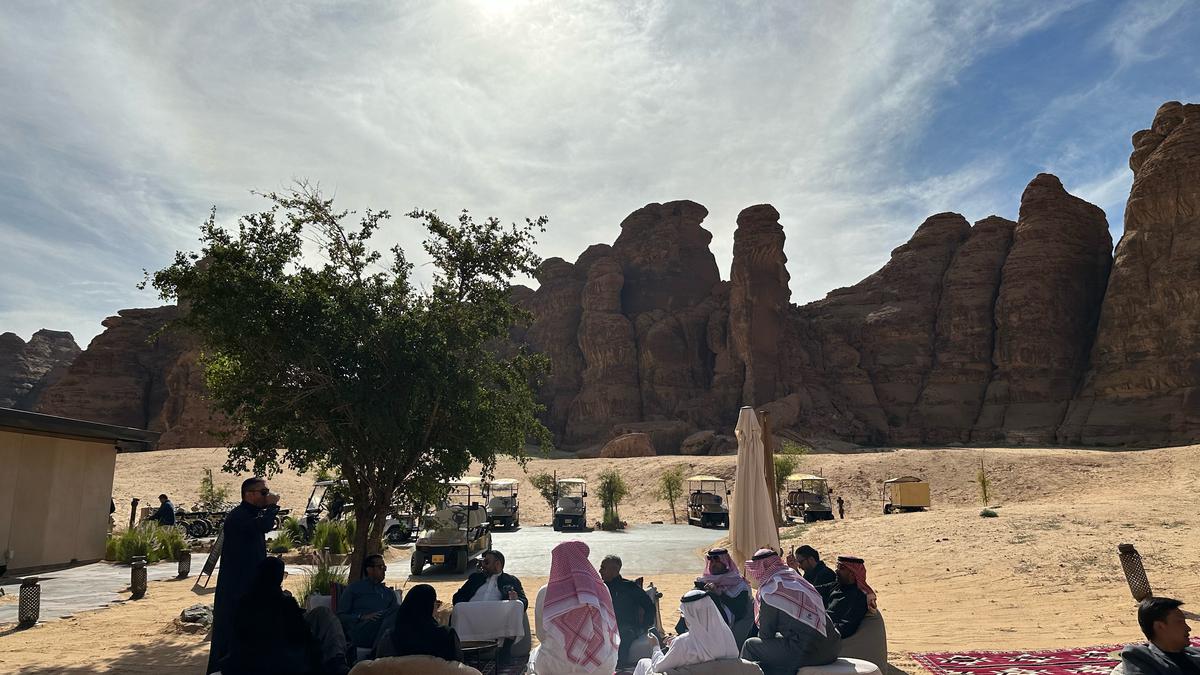
In Al-Ula, a northwestern city in the Madina province, one can barely hear the muezzin’s call for prayers. This oasis city, once an important market along the historical incense route, sits at the centre of MBS’s ambitious plan to steer Saudi Arabia away from dependence on oil and pilgrimage and match the beat of modernity. Interestingly, Al-Ula is considered a cursed city in the Islamic worldview as its residents fell for idolatry and are thought to be punished by God for the same. MBS may have cheekily played on this reputation while setting up the Royal Commission for Al-Ula which seeks to capitalise on the wealth of archaeological wonders in and around the city.
“Traditionalists say that a Muslim should avoid staying, eating, or drinking in Al-Ula. Hell, yeah!” Samir (name changed), a Pakistani-American tourist at the most expensive luxury resort in Al-Ula bursts out laughing. His wife and children are frolicking in the pool. Ever since it opened its doors for tourism, Saudi Arabia has been seeing a growing number of tourists who wish to explore the country beyond the pilgrimage sites.
This interest in touring the country sits with its newly-forged idea of nationalism which is not essentially linked with religion. Mohammad (name changed), a photographer from Riyadh says, “Change is good for our country. Saudi Arabia has been late in stepping along the course of time. But we are getting there”. He proudly shares how his sisters were better at driving cars than many of his friends. “If a woman drives, she can handle household chores independently.” Empowerment starts with convenience.
Saudi Arabia has been at pains to project a new image of friendliness towards the ‘other’, be it the Abraham Accords, easing of the visa norms, opening up the country for popular sport and entertainment events, or opening the first liquor store in Riyadh after seven decades. The Saudi establishment and regular people are recognising the benefits of being welcoming towards the ‘other’ for it results in economic and geopolitical gains. Young Saudi Arabians are participating in this transformation process for the sake of individual liberties as well as in the name of nationalism.


Slovenia's parliamentary election results show a tight race between liberals and populists, signaling potential political instability ahead.

IEA chief warns of a potential energy crisis worse than the 1970s, with 11 million barrels lost daily amid regional conflicts.

Cuba begins restoring power after a nationwide grid collapse, affecting thousands amid an ongoing energy crisis and blackouts.

The Hindu LIVE updates on March 23 2026 on Iran-Israel war. Iran faces deadline of US President Donald Trump warning to open Strait of Hormuz

Brazil's Lula condemns renewed colonialism and U.S. interference in developing nations at a summit in Colombia.

Saudi Arabia expels Iranian military staff amid escalating tensions and ongoing missile attacks during the U.S.-Israeli war on Iran.

Russia claims control of Potapivka village in Ukraine's Sumy region amid ongoing military efforts to establish a buffer zone.

Iranian missile strikes on Israeli towns cause widespread damage and injuries, marking a significant escalation in the ongoing conflict.

As Gor makes first trip as U.S. Special envoy to South Asia, Delhi watches strategic signals closely
Sergio Gor's inaugural trip as U.S. Special Envoy to South Asia signals strategic U.S. engagement amid regional tensions.

Slovenians vote in a tight election between liberal and populist candidates, impacting the country's future domestic and foreign policies.

Netanyahu asserts U.S.-Israel alliance fights Iranian threats, emphasizing global security after missile strikes on Israeli and European targets.

Israeli settlers attack Palestinian villages in the West Bank, causing injuries and destruction amid ongoing settlement expansion.

Britain asserts no evidence of Iran planning missile strikes on Europe, despite Israeli claims of missile capabilities.