The new fight to reform the UN’s colonial-era world order
CNN
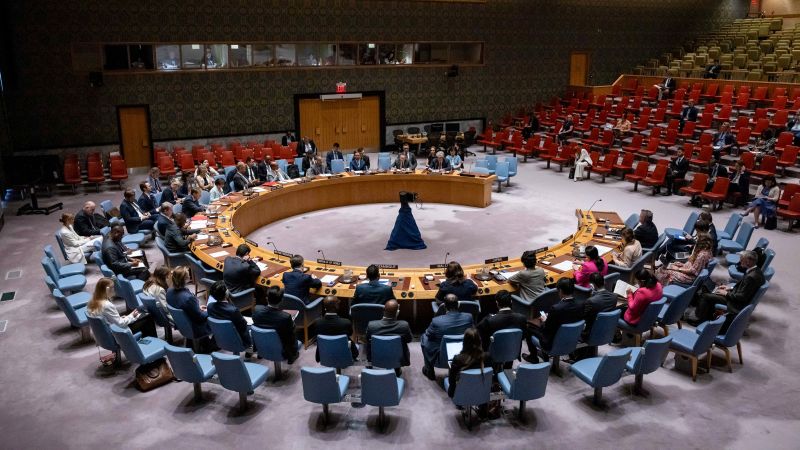
In a city known for its private members clubs battling for exclusivity, one gilded room in Manhattan reigns supreme: a powerful club of countries within the United Nations headquarters that has resisted adding a new member for nearly eight decades.
In a city known for its private members clubs battling for exclusivity, one gilded room in Manhattan reigns supreme: a powerful club of countries within the United Nations headquarters that has resisted adding a new member for nearly eight decades. The UN Security Council has been dominated by just five countries (the United States, China, Russia, France, and the United Kingdom) since its inception from the ashes of World War II, when much of the world was still under colonial rule. Today, countries around the world get to take turns in the council as non-permanent members, but no country in the Middle East, Africa, Latin America or the Caribbean has the permanent members’ crucial veto power. The veto allows permanent members, known as the P5, to block any resolution, ranging from peacekeeping missions to sanctions, in defense of their national interests and foreign policy decisions. But there is a renewed push to reform this colonial-era world order. As world leaders prepare to return to the UN headquarters for the annual General Assembly this September, Sierra Leone’s President Julius Maada Bio has reiterated Africa’s longstanding pitch to reform the council, including two new permanent member spots for African countries.


Unpaid Transportation Security Administration workers are struggling to stay afloat – and on the job – amid a partial government shutdown that has frustrated travelers inching through security lines that stretch for hours, with wait times only expected to worsen this weekend.

As Havana calls on Cuban exiles to invest in the island, many in the United States are rejecting the offer outright, viewing it as a desperate move by a government under mounting pressure.

After weeks of stalemate — and mounting airport delays nationwide — leaders in both parties are scrambling to work out a deal to reopen the Department of Homeland Security, though it remains unclear if a compromise is in reach.

Trump administration officials are making a desperate push to secure every available barrel of oil amid a worsening energy crisis — even if it means lifting sanctions on the very country that they’re fighting against.

A federal judge on Friday voided various parts of a restrictive press policy rolled out by Defense Secretary Pete Hegseth last year, ruling that they trampled on the constitutional rights of reporters who seek to cover the US military from within its sprawling headquarters.

President Donald Trump is reshaping a Colorado Republican primary by offering one of the candidates a role in his administration and returning his endorsement to the incumbent, whom he called a “RINO” just last month.

More than a month into the Department of Homeland Security shutdown, lawmakers on Capitol Hill are reckoning with their own travel privileges amid anxieties the funding crunch could exacerbate issues at already understaffed airports around the country.

TV host and comedian Bill Maher has been chosen to receive the prestigious Mark Twain Prize for American Humor, two sources close to the Kennedy Center told CNN.

Conventional wisdom has set in that President Donald Trump’s base is sticking with him on the Iran war, but he has alienated significant portions of his voters — and risks alienating more.

US officials are furiously trying to avert a potential monthslong closure of the Strait of Hormuz, privately acknowledging that reopening the key waterway is a problem without a clear solution and dependent at least in part on what lengths President Donald Trump is willing to go to force the Iranian regime’s hand, multiple administration and intelligence officials tell CNN.

The chief executive of Live Nation testified Thursday that it was “disgusting” that a top ticketing employee talked about “robbing fans blind” in internal messages.

Supreme Court revives First Amendment lawsuit from street preacher who called concertgoers ‘sissies’
The Supreme Court on Friday revived a First Amendment lawsuit from a street preacher who used a loudspeaker to call people “whores,” “Jezebels” and “sissies” as they tried to enter an amphitheater to attend concerts in a suburban Mississippi community.

As millions of Americans braced for a series of brutal storms this winter, the senior official in charge of the federal government’s disaster response had been on the job only a few weeks — and had previously claimed on podcasts that he once teleported to a Waffle House.