The human side of the mighty Chola kings and queens
The Hindu
The man Kanisetti is referring to is the Chola emperor, Parantaka, “the foe-destroyer”, a third-generation ruler who “killed his half-brother, took the Chola throne and set about marrying women left and right,” at least 10 others, in addition to Kokkilan, all from “rich, landed families.”
Anirudh Kanisetti’s Lords of Earth and Sea: A History of the Chola Empire opens with a poignant scene. It describes the Cheran princess Kokkilan Adikal wiping the tears off her cheeks as she leaves her native Malabar coast in a palanquin, travelling east to be married to “an up-and-coming king with a dangerous reputation.”
The man Kanisetti is referring to is the Chola emperor, Parantaka, “the foe-destroyer”, a third-generation ruler who “killed his half-brother, took the Chola throne and set about marrying women left and right,” at least 10 others, in addition to Kokkilan, all from “rich, landed families.”
This scene, one of the many vivid episodes described in Kanisetti’s book about the Imperial Chola empire, was read and discussed recently at The Bangalore Room, Indiranagar. What came out in the conversation between writer and podcaster Ramjee Chandran and Kanisetti were intriguing aspects of the lives and reign of the Cholas, including the rationale behind the building of massive temples, the role of women in shaping this clan’s history and the centrality of the merchant guilds to the success of the empire.
The discussion also touched upon how the book draws on literary techniques such as character-building, scene-setting and plot development to delve into “the human part of history,” as Chandran puts it. The traditional way of approaching history as taught in school makes it “a very dry and boring litany of kings and their successions, their battles and dates, dates, dates.” History, however, can also be told “at the junction of different possibilities…for example, architecture, art, culture, language, epigraphy,” believes Chandran. “Where it all overlaps is where the story blossoms.”
In the introduction of Lords of Earth and Sea, Kanisetti writes that the Cholas were a “peasant clan” that arose in the Kaveri floodplain “seemingly out of nowhere” more than a thousand years ago, from the mid-9th century till the mid-13th century. During this period, the Chola dynasty would evolve into one filled with “great King-of-Kings.”
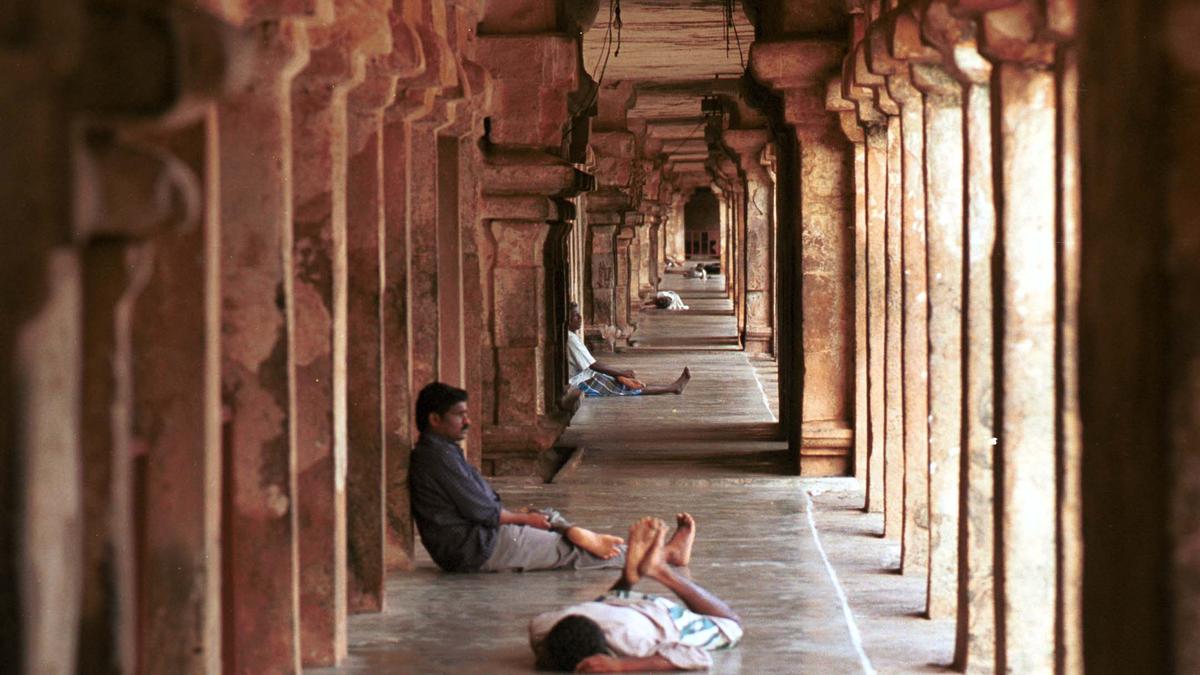
So, what made the Cholas so unique? “There are so many that I could possibly get into. But where I’d like to begin is with the fact that they are willing to break the wall in all kinds of possible ways,” responds Kanisetti. Take, for starters, their building prowess. The Cholas built massive, magnificent temples, such as the Brihadisvara Temple at Thanjavur (built by Rajaraja Chola I and now a UNESCO World Heritage Site), which was much larger in scale than other temples in that part of India. “It was conceived in a completely new kind of architectural plan that was connected deeply with the political incentives of the Chola state,” he explains.
According to him, building these large temples was a clever “media strategy,” with royal edicts inscribed on these temple walls specifying why someone like Rajaraja Chola I, for instance, deserved to be the emperor and was worthy of being worshipped. The practice, he believes, is in the same spirit as modern-day politicians advertising themselves in “places where people are likely to congregate.”


Tiruchi's Smart City projects face underutilisation despite completion, raising concerns about planning, execution, and revenue generation.

Election Observer Anubha Shrivatsava inspects polling booths in Western Ghats, ensuring smooth arrangements amid challenging conditions.

A.P. Minister announces ₹9.8 crore development of Barashaheed Dargah and ₹20 crore international school for minorities in Nellore.

Vice-President Radhakrishnan advocates for modern university syllabi to enhance employability and skill development in today's evolving job market.

A poignant protest at Palakkad Medical College highlights ongoing developmental challenges, initiated by a symbolic wreath-laying by a young girl.

A three-year-old girl was tragically killed by a truck while walking with her mother near Bengaluru.

Iran's President calls for U.S.-Israeli aggression cessation and urges BRICS to ensure regional peace and security.

Harish Rao accuses govt. of cancelling ₹1,070 cr. work sanctioned to Siddipet

Panelists highlight emerging engineering roles and skills in AI, assuring future success for engineers at VIT webinar.

Industries in Bengaluru report LPG shortages affecting operations, while exploring alternatives like piped natural gas to mitigate disruptions.

Bengaluru plans more biogas plants to enhance wet waste processing, boosting renewable energy and sustainable waste management efforts.

BRS to move private member bill on six Cong. guarantees in ongoing session

Parliamentary committee urges Election Commission to ensure no genuine voters are removed during electoral roll revisions, emphasizing fairness and safeguards.