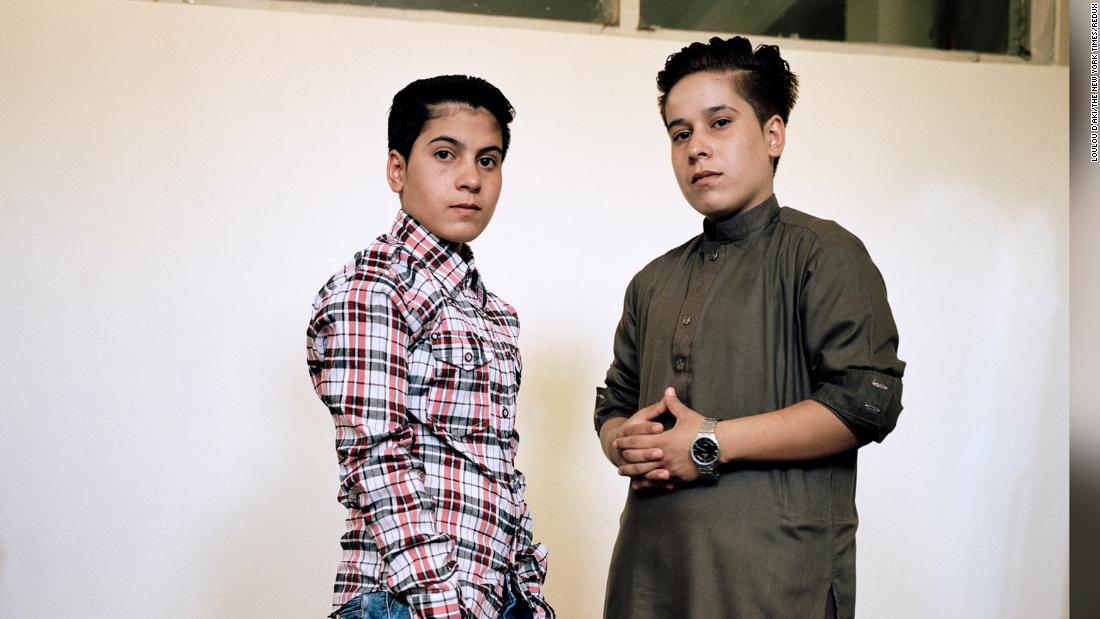
The future looks bleak for girls in Afghanistan — even those living as boys
CNN
For a select few girls in Afghanistan, there has historically been a temporary reprieve from some aspects of girlhood. Now, "bacha posh," a tradition in which a family designates a girl to live as a boy before puberty, may be threatened.
As a report from the Congressional Research Service put it, "Taliban prohibited women from working, attending school after age 8, and appearing in public without a male blood relative and without wearing a burqa. Women accused of breaking these or other restrictions suffered severe corporal or capital punishment, often publicly." Afghanistan routinely edges toward tops lists of the worst places in the world for women and girls, but some things had improved after the United States invaded in 2001. The maternal mortality rate decreased (though it is still alarmingly high). More women held jobs like doctors, politicians and journalists. And more girls were educated: The World Bank showed almost no girls receiving a primary education in 2000, but more than 85% going to school by 2012. Some even got to be on a robotics team.

The high-profile deployment of Immigration and Customs Enforcement agents to airports has renewed support on the right and fear on the left about the possibility of ICE going to the polls in November.

The House Oversight Committee released videos Tuesday of closed-door depositions with two men in Jeffrey Epstein’s inner circle as part of its probe into the late convicted sex offender.

The House Intelligence Committee voted Tuesday to give federal prosecutors classified records related to John Brennan, according to a committee spokesperson, signaling the Justice Department’s investigation into the former CIA director may be heading towards possible charges.

North Carolina State Senate leader Phil Berger on Tuesday conceded his primary race to Rockingham County Sheriff Sam Page, a political earthquake that took down arguably the most powerful politician in a pivotal swing state.

It’s looking like the Department of Homeland Security shutdown could soon be over. The two sides seem to have made serious progress, and President Donald Trump hasn’t rejected anything, even if he’s a little sour. But it’s likely the resolution will disappoint many Democrats.

California Gov. Gavin Newsom said that he regretted using the word “apartheid” to describe the Israeli government’s treatment of Palestinians, though he warned “that’s a word you may hear others use” if Prime Minister Benjamin Netanyahu pushes for territorial gains.

Haiti is about to get a new set of foreign boots on the ground. The goal sounds simple: fight the gangs that have brought life to a standstill.

Oklahoma’s governor picks energy executive Alan Armstrong to fill US Senate seat through end of year
Oklahoma’s governor on Tuesday appointed energy executive Alan Armstrong to serve in the US Senate through the end of the year and finish the term of Republican Markwayne Mullin, the new homeland security secretary.

Newly confirmed Homeland Security Secretary Markwayne Mullin told senators during his confirmation hearing that he wanted to keep the department out of the headlines. That won’t be easy.

A trader made nearly $1 million since 2024 from dozens of well-timed Polymarket bets that correctly predicted US and Israeli military actions against Iran, according to an analysis shared with CNN.

Travelers have been dealing with worsening airport wait times as ICE agents deploy to more than a dozen airports. Follow for live news updates.

President Donald Trump voted in Tuesday’s state House special election by mail even as he suggested on Monday that “mail-in voting means mail-in cheating.”

CNN’s 5 Things AM brings you the news you need to know every morning.