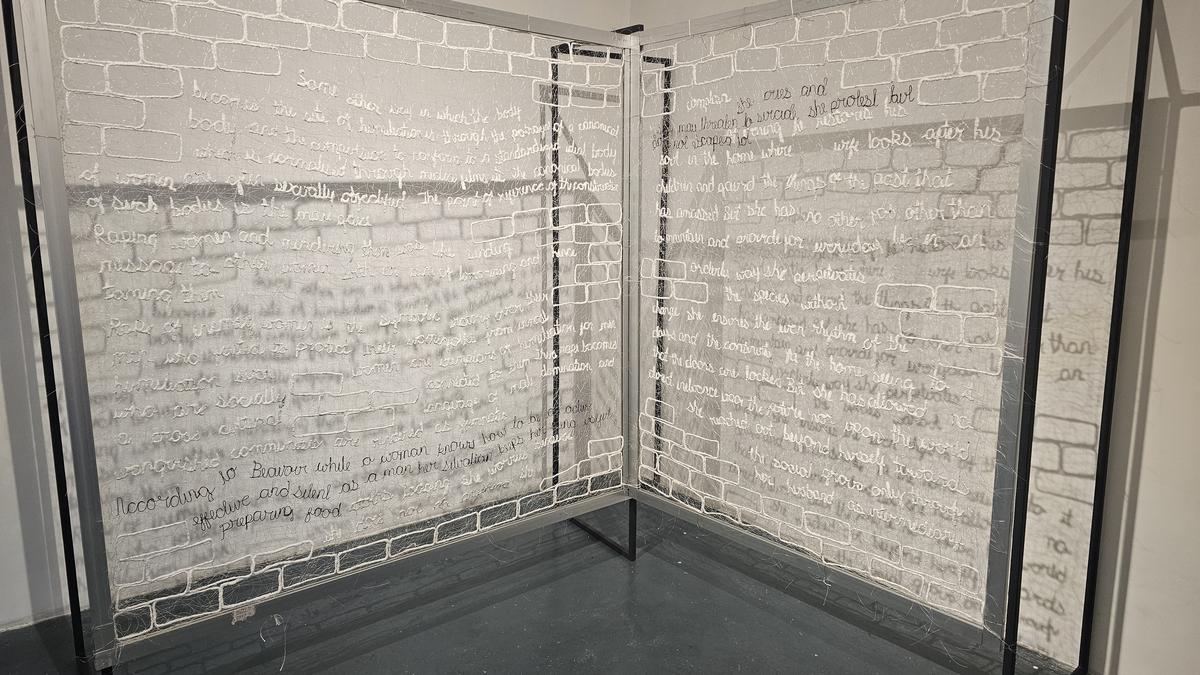
The exhibition Entwined edition 2 at Delhi’s Bikaner House puts the spotlight on textile-based art crafting cultural narratives
The Hindu
Entwined edition 2 at CCA Gallery showcases diverse textile artworks reflecting diverse cultural heritage and innovative artistic expressions using fibres and textiles as the medium.
More than 200 artworks spread across six halls and multiple corridors on two floors at the CCA Gallery in Bikaner House showcase how fibre and textiles are integral to our lives. They are not just functional but feed into our daily lives as conversations, connect us to our surroundings and serve as symbols of cultural heritage and diversity.
For the capital’s art connoisseurs, Entwined edition 2has brought collections from the eighties to the present , tribal and traditional to contemporary pieces by 59 artists who have woven powerful narratives of cultural identity, intellectual vitality and artistic expressions using tactile and flexible textiles.
Gallerist Sharan Apparao, who curated the first edition of Entwined in Chennai earlier this year, says, she wanted to keep the spotlight on textiles as a medium because textiles are preservers of the past and inspirations for the future and are seeing a revival of interest around the globe.
“Every artist thinks and enables art to take the shape of a narrative that transcends beyond the medium; it is interesting to see how people take to the idea,” she says of Entwined edition 2, which is divided into two parts.
The first part is categorised under three sections: The Body features artworks that integrate landscapes and elements of Nature to create a dialogue on the impermanence of life and the interconnectedness of living things. The Mind features an array of abstract, figurative and mythological narratives to illustrate the mind’s power and takes the viewer to a space of silence in thought and reflects on simplicity. The Soul conveys emotional and spiritual experiences through an interplay of threads and fibres.
The second part is dedicated to timeless relevance of Mahatma Gandhi who spun and wove khadi, as a transformative and political tool against the colonial rulers.
Gunjan Jain’s Hanuman Chalisa in Telugu stands out on a bright orange silk for its extraordinary technique borrowed from Odisha’s ikat. This hand woven calligraphy does not repeat the weaves for the 40 verses. An embroidered crochet with cotton and wool yarn is a haunting self-portrait of Manasa Priya Dhulipalla with its hanging threads depicting a state of dilemma. Megha Joshi’s Hair series comprises thread drawings of women whose hair is the focal point in acts of resistance or compliance.


Review meeting held in Dharmapuri with election observers and nodal officers to discuss upcoming Assembly elections.

Execution of development projects, infrastructure augmentation to occupy centre stage in electioneering

Telangana Cabinet approves Hate Speech and Parents Support Bills, ensuring accountability for neglecting elderly and curbing hate-driven offences.

EU and Australia finalize a free trade agreement and establish a new defense partnership to enhance economic and military cooperation.

U.S.-Israeli war on Iran LIVE: Iran faces deadline of US President Donald Trump warning to open Strait of Hormuz. Follow The Hindu for more LIVE updates on March 23 2026 on Iran-Israel war.

KPCC chief Sunny Joseph emphasizes UDF's focus on Sabarimala and corruption while expressing confidence in winning Kerala's upcoming Assembly elections.

A military plane crash in Colombia leaves 125 aboard, with at least 48 survivors rescued amid ongoing recovery efforts.

‘Symposium’, a new platform to promote lifelong learning and counter misinformation among youth, was launched in Hyderabad.

By using TB as an entry point, integrated healthcare delivery can optimise and improve public health efficiency

Residents of Chettichavadi express concerns over deteriorating groundwater quality due to long-standing garbage dumping issues in Salem West.

Community Health Officers in Vijayawada protest for reduced workload and continued incentives amid growing dissatisfaction over salary changes.

Telangana faces 13,929 healthcare vacancies, primarily in doctors and nurses, as recruitment efforts aim to address the shortage.

For most patients with TB who are severely underweight, nutritional support is an essential and not optional part of treatment