The dancers who stumble from boyhood stardom to adulthood anonymity Premium
The Hindu
Gotipua dancers in Odisha face challenges as they transition from traditional dance to modern livelihood opportunities.
Sradhananda Behera’s hands move with a rhythm, as he mixes cement and sand at a construction site in Odisha’s coastal district of Puri. In his early 20s now, Sradhananda’s mind goes back to the days he had danced in France, Morocco, and Portugal — a journey unimaginable for most in his village.
His brother, Gadadhar Behera, now 27, had also felt the thrill of international applause and the bustle of foreign airports. Today, he drives a tractor, transporting construction material across their village in Piteipur, just 20 kilometres from Puri town.
“The guru [who is also the troupe manager] would organise performances in India and abroad,” says Gadadhar, who now earns Rs. 300 a day.
In this traditionally revered boys-only dance form, a child’s journey as an artiste often concludes at puberty, leaving them without the education required for an office job or the skills for a tradesperson.
Now, akhadas , where boys are nurtured into graceful dancers, are finding it difficult to attract disciples.
There are approximately 10 to 15 akhadas in Odisha where Gotipua is taught in the traditional gurukul style, though most of them are non-residential. Each one has four to five students, all under the age of 14. About 30 years ago, there used to be about 20 students at the each akhada .
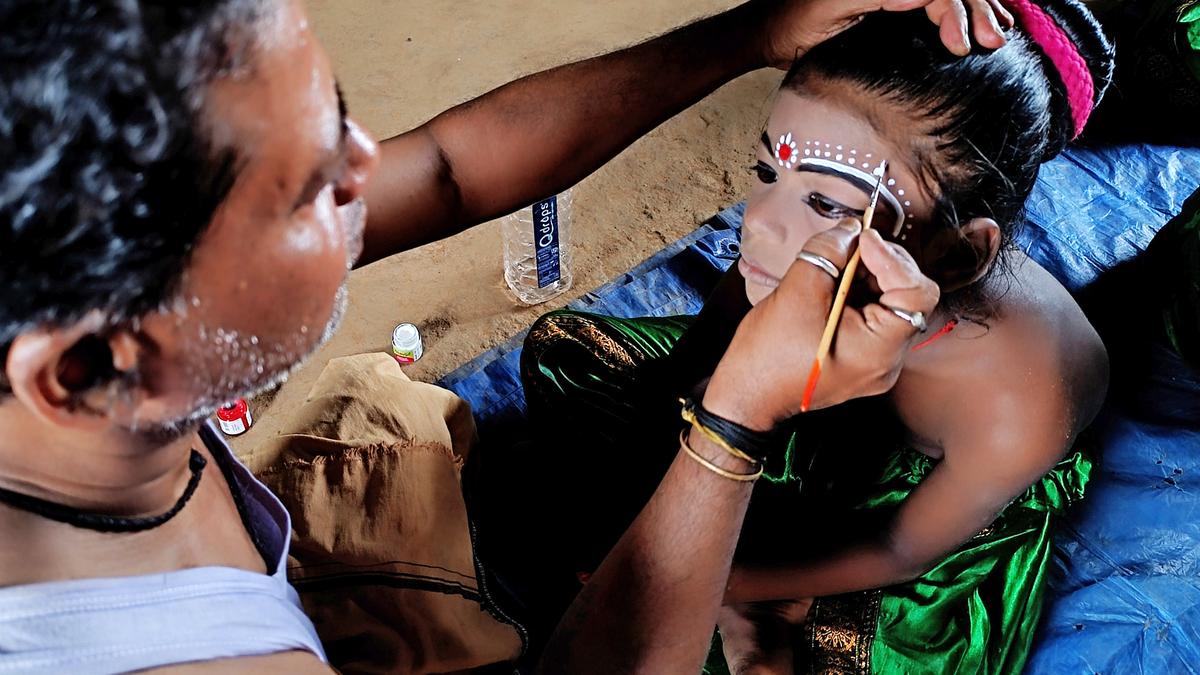
The journey for Gotipua dancers involves over 20,000 hours of rigorous training spanning 10 years, dressing as girls on stage, sacrificing their education, and staying away from their families.


Explore the escalating Iran-Israel conflict, detailing key events and retaliatory actions over the first five days of war.

VCK will contest eight Assembly seats in Tamil Nadu's upcoming elections as part of the DMK-led alliance, aiming for victory.

Supreme Court reinstates FIR against IAS officer J. Manjunath, allowing bribery probe from 2022 involving Bengaluru Urban administration.

Telangana's screening reveals 26.9 lakh with hypertension and 14 lakh with diabetes, spotlighting a silent epidemic of non-communicable diseases.

KRG Studios appeals against leave granted to producer Kalaipuli Thanu for a suit regarding distribution rights of the film Max.

Supreme Court rejects petition for Q inclusion in census, citing concerns over social division and class creation.

Two RSS workers arrested for hurling a bomb at a policeman’s house in Kannur, Kerala; major tragedy averted.

Three youths radicalised by ISIS and AQIS arrested in Vijayawada for planning terror activities across India.

T.N. CM Stalin challenges PM Modi on government preparedness for West Asia crisis, emphasising leadership responsibility over public outsourcing.

Telangana DCA warns against unsupervised semaglutide use, stressing the importance of medical supervision and safe purchasing practices.

From origami classes at Rosary matriculation school to the two-day Makers Market in Mylapore, Chennai resident Priya Subramaniam has come a long way.

Election Commission bans exit poll results in Tamil Nadu from April 9 to April 29 ahead of Assembly elections.

Residents of Tambaram express concern over inadequate infrastructure amid rapid urban growth, highlighting traffic, drainage, and waste management issues.