The curious case of puffed-up academic rosters
The Hindu
Arappor Iyakkam uncovers faculty member duplication at Anna University, demanding DVAC investigation into widespread affiliation irregularities.
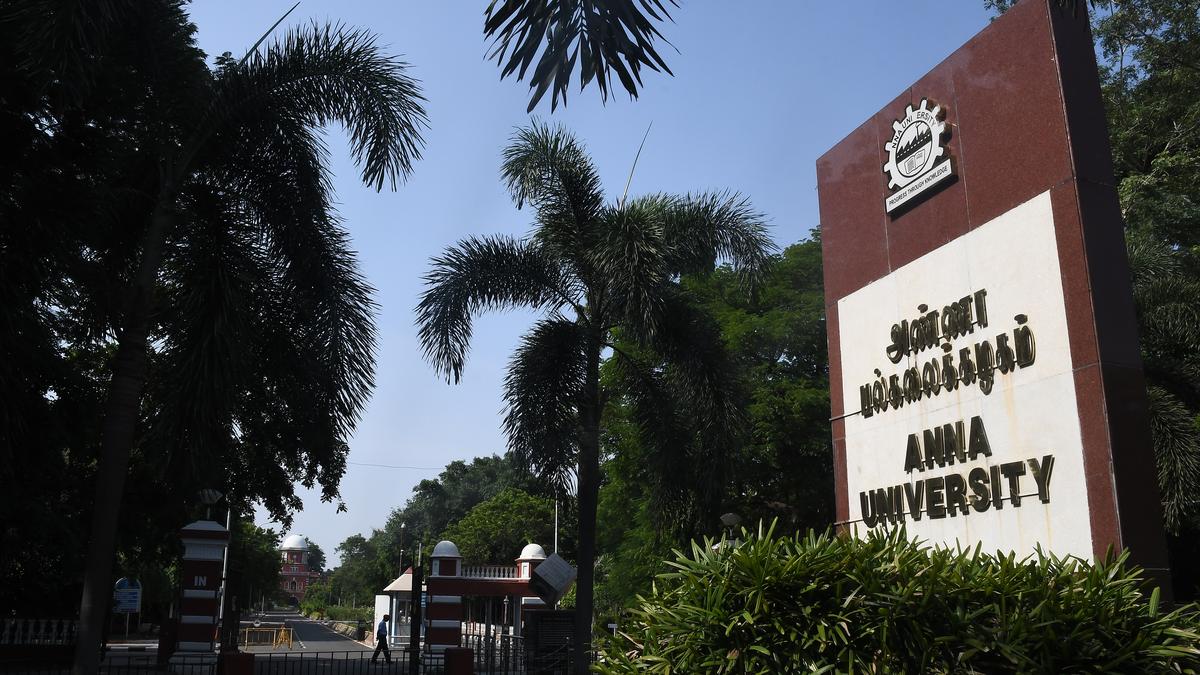
On a day when the country was busy with the Union Budget, a non-governmental organisation announced that it had found irregularities in the affiliation process of Tamil Nadu’s premier engineering sciences institution: Anna University. It also demanded an investigation by the Directorate of Vigilance and Anti-Corruption (DVAC) into the issue not only at Anna University, the affiliating body, but also at the All India Council for Technical Education (AICTE) and hundreds of engineering colleges in the State.
Arappor Iyakkam found the names of faculty members listed at multiple engineering colleges — duplication of staff or having them on the roster just in name — to secure affiliation. Then, Arappor Iyakkam registered a complaint with the DVAC. The very next day, Anna University announced that it had initiated action against hundreds of faculty members who had been listed at multiple colleges. The university has around 52,500 faculty members under its purview, according to Vice-Chancellor R. Velraj.
The NGO found that at least 352 faculty members were working at multiple colleges. While the names of three faculty members were found at 11 colleges, three other faculty members of Anna University were found listed at 10 colleges each. Over 230 faculty members worked at two colleges each at the same time. The NGO also demanded an investigation into the Centre for Affiliation of Institutions of Anna University, the AICTE, and the erring engineering colleges. The AICTE was included as it was responsible for approving the colleges before their affiliation, Arappor Iyakkam convener Jayaraman Venkatesan said. “Had the university’s inspection team verified the provident fund statements for six months for the faculty, the malpractice could have been identified internally,” he added.
Professor Velraj told The Hindu that the officials used the same method that the NGO had used — cross-verification of the date of birth of the faculty members. The university’s survey found that the names of 76 teachers from one college appeared on the roster of other colleges. In some cases, a faculty member’s name appeared at two colleges. “We used the faculty members’ date of birth to identify the malpractice. Sometimes a person may have quit and joined another college, leading to the name appearing in two institutions simultaneously, for a short while,” he explained.
The survey also found that one person’s name appeared at 23 colleges at the same time. Professor Velraj said 292 colleges were involved in the scam in the academic year 2023-24, and 295 institutions were involved in the current academic year. However, such malpractices are not new, say former Vice-Chancellors of Anna University.
When E. Balagurusamy was the Vice-Chancellor of the university from 2002 to 2005, it had 243 affiliated colleges, with 4.5 lakh students on the rolls. “It is the duty of the Vice-Chancellor to ensure that the colleges comply with norms strictly,” he says. When he found that an institution was giving the list of the same faculty members at three colleges, he sent three teams of professors from the university to the three colleges for a simultaneous inspection. When he received complaints that colleges returned books (purchased for the college library) to the distributors after inspection, he instructed the inspection teams to stamp the university’s seal on the books so that they couldn’t be returned. “I disaffiliated 23 institutions for similar violations,” he recalls.
M.K. Surappa, the Vice-Chancellor from 2020 to 2022, says multiple affiliations by faculty members had emerged during his tenure too. “The institutions had to link the Aadhaar, PAN and AICTE ID numbers of the faculty members. The affiliation team identified more than 100 colleges that had overlapping members and punished most of the colleges. We reduced admissions and the committee had at least one member from outside the university — from institutions such as the NIT, the IITs, and the IISc. We had two colleges with the same management showing the same faculty members. We disaffiliated five to six colleges for violations. We sent notice to colleges to take responsibility for verification of the details,” he says. When a college took the matter to the Supreme Court, it upheld the university’s action, he adds.


Decomposed body of a missing 25-year-old man discovered in Dindigul stone quarry, prompting calls for investigation and quarry closure.

SVEEP activities launched in The Nilgiris aim to boost voter turnout at 13 polling booths with low participation rates.

Learn who can vote by postal ballot in the upcoming Tamil Nadu Assembly election, including seniors and persons with disabilities.

Shorts News:Watch: UDF linked to communal forces in Kerala: CPI(M) leader A Vijayaraghavan

Karnataka government postpones Deendayal Upadhyaya event at KSOU Mysuru due to protocol violations and lack of government involvement.

Sameer Wankhede denies bribery allegations involving Shah Rukh Khan’s son in drugs case during Bombay High Court proceedings.

What does it take to design gloves, masks and uniform that factor in the various challenges faced by workers on the waste beat? Indore, Bengaluru and Pune have an answer

Gaurav Gogoi files nomination for Jorhat Assembly seat, marking his electoral debut in the upcoming Assam elections.

A round-up of events and programmes held at colleges in Tiruchi and other Cauvery delta districts

CPI(M) and Congress clash over accusations of aiding BJP, threatening the LDF-UDF duopoly ahead of Kerala Assembly polls 2026.

Shivamogga veterinarians demand accountability for the death of trainee vet Dr. Sameeksha Reddy, citing systemic failures in zoo administration.

BJP launches 'Mana Ooru–Mana Jenda' campaign on April 6 to strengthen grassroots connections and promote development in Andhra Pradesh.

Anuradha Jonnalagadda took over as in-charge Vice-Chancellor of the University of Hyderabad, focusing on continuity during the transition.