The cost of dating in India: Inflation, GST and the rise of frugal romance
The Hindu
The cost of dating in India: Inflation, GST and the rise of frugal romance
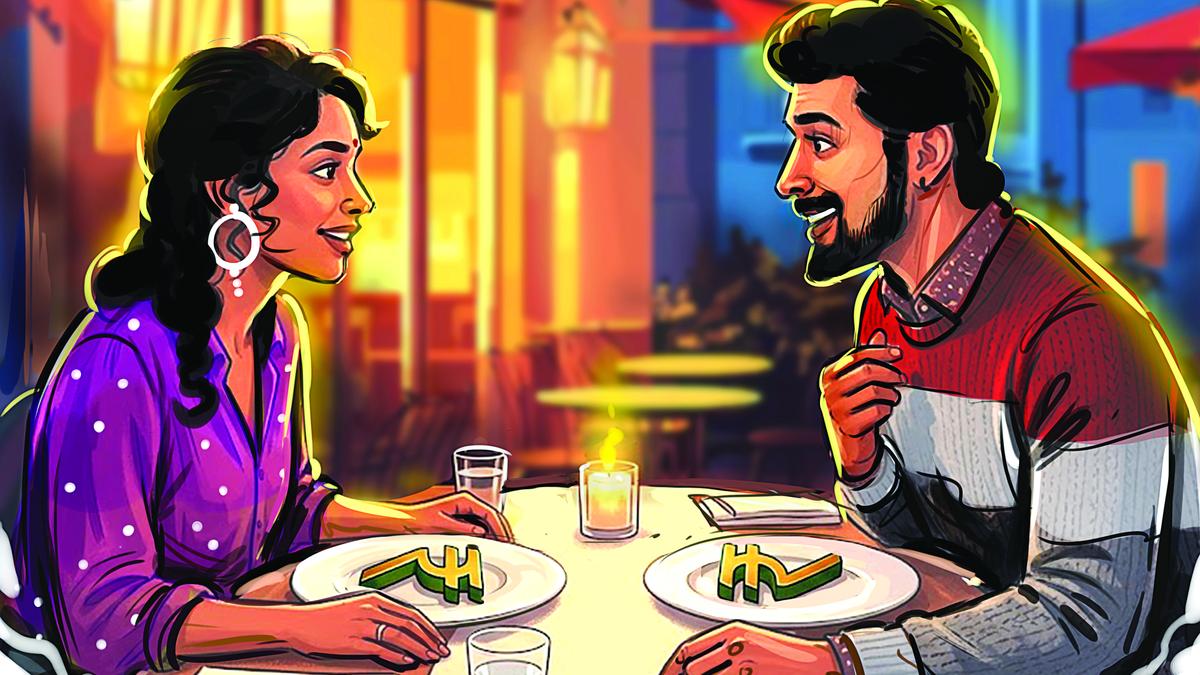
An older millennial acquaintance, who considers himself fiscally cautious, gainfully employed, and chronically single, confessed to keeping a mental ledger of his dating life. Each evening out costs him between ₹6,000 and ₹7,000. With three to four such outings a month, he is spending close to ₹25,000 on dates and returning home, more often than not, with the distinct sense that he might have preferred a book and an early night. “This,” he told me, “is my economic reckoning.”
On paper, of course, none of this should feel particularly alarming. India’s retail inflation in early 2026 stands at 2.75% year-on-year, well within the Reserve Bank of India’s 2–6% tolerance band, according to Government Consumer Price Index (CPI) data released by the Ministry of Statistics and Programme Implementation. Food inflation is hovering just above 2%. The macroeconomic story is one of stability, even restraint. Groceries are not spiralling, fuel prices are not detonating, and yet dating in an Indian metro exists in a microclimate where the CPI feels like a distant abstraction. The CPI basket does not account for ₹1,500 cocktails, the 5% GST levied on most standalone restaurant bills, the 18% that may apply in certain hotel establishments, or the State excise duties that keep alcohol outside the GST framework altogether and firmly in its own expensive republic.
Alcohol, the quintessential date-night indulgence — even as Gen Z experiments with sober-curious evenings and artisanal mocktails — remains the millennial-coping mechanism of choice, particularly when the conversation falters. A 37-year-old marketing consultant put it plainly: “If the date is boring, at least let the drink be strong. But now the drink is weak, and the bill is strong.” She still pregames, unapologetically. “One gin at home, one cocktail outside. I’m not paying ₹1,500 for diluted rubbish most bars serve. I’ll be lucky if I get 60ml of alcohol despite the tall claims.” Between excise duties, GST on food, service charges that hover near 10%, and the rising operational costs restaurants quietly pass on, a casual dinner for two can potentially cross ₹4,000 before uttering the word dessert.
What is emerging, then, is not miserliness but a kind of romantic recalibration. Frugal dating, as several people described it to me, is less about austerity and more about value. A 29-year-old start-up founder has moved his first dates from bars to bookstores, where the stakes are lower. “You learn more about someone by which shelf they linger at,” he said, with the serenity of someone who has abandoned the tyranny of reservations. “Worst case, I leave with a book. Best case, I leave with both.”
In Bandra, a 41-year-old divorcee has instituted what she calls the walk test. No dinner or drinks, just a long amble along Carter Road. “If we can walk for an hour and not check our phones, I’ll consider feeding you,” she told me. “Food is now a second-date privilege.” There is something radical in this sequencing of intimacy, where conversation precedes consumption and stamina trumps spectacle.
A Gen Z consultant in Bengaluru has her own rules, shaped as much by ideology as by budget. “We split everything. Even the auto ride,” she said. “I don’t want romance built on financial resentment.” For her, coffee is the perfect first-date instrument: a ₹300 cappuccino that buys 45 minutes of assessment. “If it’s bad, I’ve only lost caffeine.”


The Clamorous reed warbler is as loud as they come, but in the urban environment, it is outshouted. Weed clearing in urban habitats brings down its home, the bulrushes. Bulrushes in wetlands are not encroachments, but ‘legal homes’ to birds in the crake and rail family and warblers, so government line agencies ought to tread on them thoughtfully

Uttar Pradesh ATS arrests a dental student for alleged connections to an ISIS online module, probing extremist recruitment activities.

Rajinikanth refutes TVK leader's claims about DMK threats preventing his political entry, expressing gratitude to supportive political figures.

Tamil Nadu CM Stalin celebrates the Union government's approval for archaeological excavations, crediting DMK's persistent advocacy for the win.

Dilip Ghosh will contest Kharagpur Sadar in the 2026 West Bengal polls, aiming for increased BJP votes.

A hotel fire in Pahalgam leads to one death from a reversing fire tender; multiple LPG blasts hinder firefighting efforts.

The Clamorous reed warbler is as loud as they come, but in the urban environment, it is outshouted. Weed clearing in urban habitats brings down its home, the bulrushes. Bulrushes in wetlands are not encroachments, but ‘legal homes’ to birds in the crake and rail family and warblers, so government line agencies ought to tread on them thoughtfully

The people of at least one State will heave a sigh of relief now that the schedule for five Assembly elections — all in April — has been announced.

Four charred bodies discovered in a car near Tirunelveli; police investigate potential murder or suicide.

Five insurgents linked to PREPAK and KYKL arrested near India-Myanmar border; explosives and arms recovered in separate operation.

A.P. DGP pays tribute to Potti Sriramulu on his 125th birth anniversary, honouring his sacrifice for a separate Andhra Pradesh.

Discover the cultural and health significance of neem and jaggery during Ugadi, explained by author Ratna Rajaiah.

A minor fire at Thiruvananthapuram government hospital led to patient evacuations; no casualties reported, situation now under control.