The comic book industry has nearly died before. Some artists fear AI will kill it
CNN
It may surprise some people unfamiliar with the US comic book industry, with its multibillion-dollar movie tie-ins, that it’s been on death’s door multiple times over the decades. Now AI tech tools are adding new fears of a grim reaping.
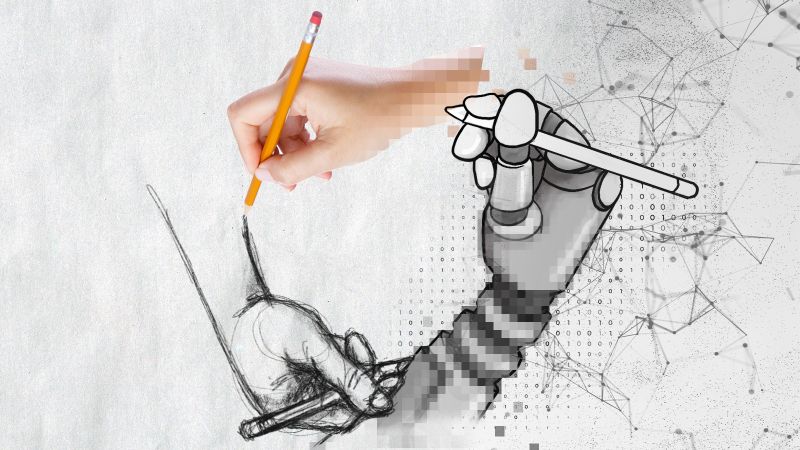
It may surprise some people unfamiliar with the comic book industry, with its multibillion-dollar movie tie-ins, that it’s been on the verge of collapse multiple times over the decades. Now AI tools are adding new fears of a death knell. From political censorship in the 1950s to a sales crash in the 1990s and the modern era of digital distribution, creators can be understandably hostile to a technology widely viewed as a vehicle for copyright theft. Still, some artists are embracing generative AI despite tensions over its use, hoping to ride the disruptive wave like comic book creators have done time and again to survive. In November, comics legend Jim Starlin, creator of the archvillain Thanos of the Marvel films, revealed in an interview with Popverse that he would be incorporating AI in a future book. While he noted he would be transparent about what parts of his work would be touched by AI, he also likened opponents of the technology to Luddites. “Embrace the fact that you can do three book projects at once now where before you couldn’t do one. Embrace the fact that you can take your thing and extrapolate it, you can basically create a world of assistants,” illustrator and AI art instructor Steve McDonald told CNN. “There’s a positive way to look at it is my point.” Comic book publishing platform WEBTOON agrees. In its SEC filing for its IPO earlier this year, the digital publisher pointed to its new AI tools being rolled out for creators to speed up production.


Oil and natural gas prices spiked Thursday, as Iran ramped up strikes on energy infrastructure across the Middle East and attacked one of the world’s most important liquefied natural gas (LNG) facilities in Qatar.

In normal times, the Federal Reserve would more or less ignore an oil price shock like the one we’re in now.

Property brokerage Compass on Wednesday dropped its lawsuit against Zillow, ending a legal clash over how home listings can be marketed online.

Fed officials didn’t make any rate moves at their March meeting and released an updated forecast for the path of the American economy as the war in Iran stretches on.

Fed officials are set to announce their latest rate decision Wednesday afternoon, along with a new forecast for the path of the American economy as the war in Iran stretches on.

“The speed with which American democracy is currently dismantled is unprecedented in modern history,” one of the world’s top democracy researchers says in a new report.

Oil prices held steady Wednesday after Iraq clinched a deal to resume some crude exports via Turkey. It’s not a ton of oil, but it’s what amounts for good news these days as the Strait of Hormuz remains largely blocked.

The US-Israeli war with Iran, now stretching into its third week, is dashing hopes that the Federal Reserve will lower interest rates at all this year.

A federal judge says the Trump administration must let more than 1,000 sidelined Voice of America employees return to work by next week.

Former judges side with Anthropic and raise concerns about Pentagon’s use of supply chain risk label
Nearly 150 retired federal and state judges have filed an amicus brief on Tuesday supporting AI company Anthropic in its lawsuit against the Trump administration for designating it a “supply chain risk,” CNN has learned.

Attacks on commercial ships in the Middle East this month have all but closed the vital Strait of Hormuz to oil tankers. One of the few alternative routes for oil exports from the region goes through the Red Sea. But now even that lifeline is in danger.

When Mona Panjwani opened One40 Rooftop, a swanky restaurant in lower Manhattan last year, one of the biggest dilemmas besides the menu was choosing the reservation platform.

What could get more expensive because of the war in Iran?