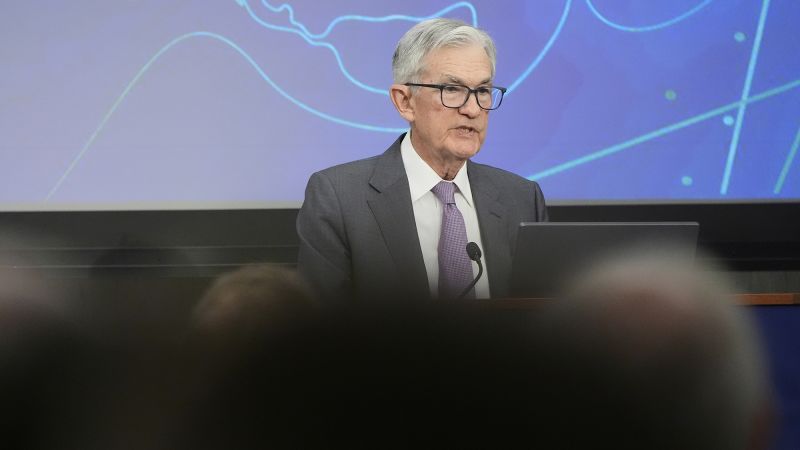
The attacks in the Middle East could make it harder for the Fed to cut rates
CNN
President Donald Trump has repeatedly demanded the Federal Reserve slash interest rates. But Fed officials have stood pat, waiting to see how his administration’s sweeping policy changes affect the economy first.
President Donald Trump has repeatedly demanded the Federal Reserve slash interest rates. But Fed officials have stood pat, waiting to see how his administration’s sweeping policy changes affect the economy first. Now there’s another factor that could delay a rate cut: the conflict between Israel and Iran. On Friday, Israel struck at Iran’s nuclear and military sites in an unprecedented attack that sent global oil prices surging. Investors and analysts fretted that a spiraling conflict could send inflation rising across the world, including in the United States. And that could give the Fed further pause at a two-day policy meeting next week. “If this situation were to deepen further and oil prices were to stay durably higher, it would just add to the challenges that the Fed is already facing with the potential for tariffs to push up inflation,” Robert Sockin, senior global economist at Citigroup, told CNN. “Fed officials have emphasized that they’re not in a rush to cut rates because they don’t know how the tariffs will exactly play through into the economy, but if you have even more upside risks to inflation, you’re probably looking at an end-of-year rate cut only,” he added. Trump’s policy shifts on everything from trade to immigration could all raise unemployment and jack up prices. And his frenetic back-and-forth on tariffs has made it complicated for forecasters to estimate with any confidence what the economy could look like in the future.


The war with Iran is complex, but the reason why the Middle East conflict matters to your financial well-being comes down to three simple facts.

The efforts to mitigate an global oil shortage did little to dampen the rise in crude prices

Buzzfeed, the digital media company that took the mid-2010s by storm, said on Thursday it has “substantial doubt” about its ability to continue as a business.

A bipartisan group of senators passed a bill Thursday aimed at improving housing affordability.

Stocks fell and oil prices surged Thursday as the war with Iran continued to stoke fears of higher energy costs and disruptions to the global economy.

Ever since the US and Israel struck Iran, the jump in oil and gas prices has become a major focus for markets and consumers alike. But that’s only the top of a long list of goods that stand to get more expensive.

Stocks have climbed, bond yields have fallen and the US dollar has weakened across President Donald Trump’s second term so far — market movements the president has welcomed.

Meta, the company that changed its entire brand identity five years ago on the promise of a technology it turned out no one wanted, just spent an undisclosed sum to acquire Moltbook, a “social network” built for “AI agents.”

Dozens of countries have done the unprecedented, releasing an historic amount of crude from emergency reserves to prevent high oil prices from crippling the economy. If that doesn’t work, there’s only one serious option left: ending the war and opening the Strait of Hormuz.

In an era marked by President Donald Trump’s wars and trade turbulence, Chinese leader Xi Jinping is counting on a plan to shield his country from the storm and win its race with the US: driving innovation to transform China into a global tech superpower.

Oil prices surged past $100 per barrel again overnight, three days after it hit a four-year high, as the US and Israel’s war with Iran continues to have a historic impact on global fuel supplies.

Brent crude oil prices shot up as the US and Israeli war against Iran disrupted oil supplies in the Middle East. CNN’s Word of the Week asks: How did the benchmark barrel of oil get the name “Brent”?

Annual inflation was unchanged last month at 2.4%, according to the latest Consumer Price Index, released Wednesday.