The age of hyper-lapse consumerism
The Hindu
Consumers and businesses should be mindful of the consequences of their actions
Consumption is an important element of human civilisation. The success of modern economies is dependent on, and measured a great deal by, the level and nature of consumption. From the hunter-gatherers whose consumption was survival-centric to the millennials for whom consumption is about fulfilling aspirations, the nature of consumerism has seen tremendous shifts.
The notion of consumption has changed and today, several streams of thoughts co-exist. The ancient Greek philosopher Diogenes famously showed his contempt for material things by living in a barrel. Since the industrial revolution, the rise of the middle class in developed countries has led to a growth in consumption. While on the one hand, the acquisition and display of material wealth are acceptable and even appreciated by a large section of society, another stream of thought advocates minimalism. The COVID-19 pandemic brought shifts in consumer behaviour. Lockdowns brought more people into the e-commerce fold. Due to the economic impact of the pandemic, the world witnessed a shrinkage of demand. But post-pandemic recovery and suppressed consumerism is now leading to ‘revenge shopping’.
Modern-day consumerism is not only about wanting more but also wanting it fast. We are in an age of ‘hyper lapse consumerism’ — there is a clamour to be the fastest to reach the consumer. The ubiquitous growth of the Internet and the rise of e-commerce have fuelled hyper lapse consumerism, which refers not only to the kinds of products being sold but also to the ease with which consumers order them and the speed at which such products are delivered. According to a study by Invesp, 56% of online consumers between the age of 18 and 34 years expect the goods they have ordered to be delivered on the same day, whereas 61% want their packages even faster — within 1-3 hours of placing an order.
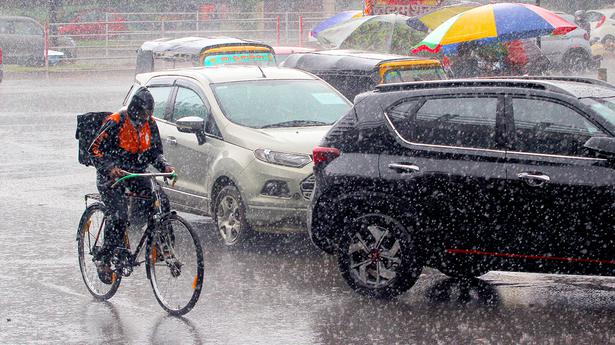
After e-commerce companies made delivery their core competence by putting boots on the ground and even drones in the sky, the competition to deliver faster and better is shaping consumer behaviour and industry patterns. Recently in India we saw food and grocery delivery companies announcing 10-minute deliveries for consumers in select cities. This is being done by strengthening the hyper-local logistical network, leveraging predictive algorithms, process optimisation and, in some cases, providing incentives and disincentives for delivery partners. When the 10-minute delivery plan was announced, policymakers and experts raised concerns that delivery professionals might resort to reckless driving and put themselves and others at risk in their rush to stick to timelines. Indiscriminate work pressure can lead to fatigue, mental health issues and other health issues among delivery professionals. In an industry which offers little to no social security for gig workers, this could have serious consequences. A NITI Aayog report, ‘India’s Booming Gig and Platform Economy’, suggests extending social security for gig and platform workers, including paid sick leave, health access and insurance, and occupational disease and work accident insurance.
Hyperlapse consumerism is not without its benefits. According to NITI Aayog, in 2020-21, about 7.7 million workers were engaged in the gig economy, accounting for 1.5% of the total workforce in India. This is expected to grow to 23.5 million workers by 2029-30, making up for 4.1% of the total livelihood in India. According to a report titled ‘Unlocking the Potential of the Gig Economy in India’, by Boston Consulting Group and the Michael and Susan Dell Foundation, India’s burgeoning gig economy has the potential to provide up to 90 million jobs in the non-farm economy alone, generate over $250 billion in the volume of work and contribute 1.25% to the country’s GDP in the long term.
At the core of the gig economy growth are behavioural shifts among consumers. Along with being fast, shopping has become more impersonal. The local kirana store owners have paved the way for ‘delivery buddies’ and OTPs. Many people don’t buy groceries on a monthly basis any more; they buy them in a more piecemeal fashion. Often, they prefer getting meals delivered at home instead of going out.
Going ahead, there are two paths. Either we continue with hyper lapse consumerism or shift back to a more laid-back delivery model. In the rush to come up with better value propositions for the customer, businesses often tend to ignore the social, ethical, environmental and personal costs of business decisions. These decisions get influenced by, and further influence, consumer needs and behaviour. While advertising serves a positive purpose by educating consumers, much attention has been focused on the question of whether advertising is manipulative.


Discover the key changes in the New Income Tax Rules 2026, simplifying compliance and enhancing deductions for taxpayers.

Palantir, which won a contract to supply AI systems to Britain’s Financial Conduct Authority, will not have access to regulatory intelligence, an FCA official said

Arm Holdings announced a new artificial intelligence data centre chip on Tuesday which it said will add billions of dollars of revenue

Amazon said on Monday its Amazon Web Services region in Bahrain has been “disrupted” amid the current conflict in the Middle East

Petroleum Ministry directs reforms to enhance natural gas infrastructure, streamline approvals, and ease transition from LPG to PNG.

The Sora decision means the end of a blockbuster $1 billion deal between Disney and the ChatGPT maker that was announced a little more than three months ago.

Regulator mandates city gas distributors to provide piped gas to educational institutions within five days, supporting India's transition from LPG to PNG.

NHAI's Raajmarga InvIT listed on BSE, enhancing investor participation in highway infrastructure with strong demand and oversubscription.

HDFC Life Insurance faces ₹172 crore Income Tax order for alleged violations, plans to appeal the decision.

Air-conditioner makers in India are looking forward to FY27 with hope as the war in West Asia threatens to impact plastic component availability and consumer sentiment, adding to the challenges around raw material price and new energy label, a senior executive of a leading company has said.

Rupee falls 23 paise to an all-time low of 93.76 against the U.S. dollar amid foreign fund outflows and global uncertainties.

Stock markets surged nearly 2% as Trump paused strikes on Iran, boosting investor confidence amid easing geopolitical tensions.

Coal Minister urges State leaders to maintain stable coal prices amid rising global costs, assuring ample domestic supply.